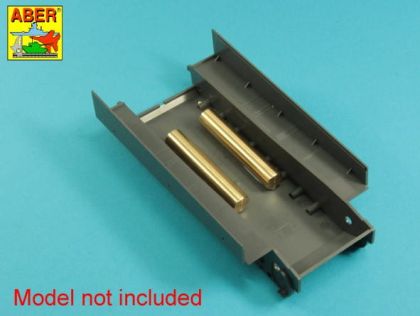
Model weights are small, dense metal pieces glued inside a fuselage or body shell so the finished build sits the way it should. The classic case is a nose-wheel aircraft: without ballast ahead of the main legs the machine tips back onto its tail and the whole stance reads wrong. The same trick balances a car model or adds mass to the underside so a finished piece does not topple on its base. Most come as flat, elongated slabs that slide in behind a bulkhead where round shot would never fit.
Ballast belongs at the very start of the build — it goes in before the fuselage halves close, usually held by a drop of cyanoacrylate or a mix of two-part epoxy. Test the balance dry first and only then glue, because adding mass to a finished model means breaking it open again. The heaviest users are aircraft kits, where the instructions often state the required weight outright, followed by wheeled subjects that need to stand square on a display base. Where the space behind a bulkhead is awkward, cut the slab into smaller pieces and distribute them until the model balances on its own.