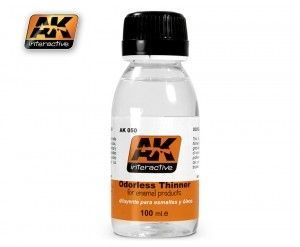
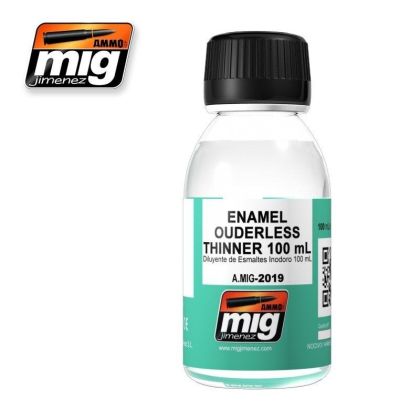
On a weathering bench the thinner is not a consumable afterthought — it is the tool that does half the work. It dilutes a wash to the consistency where capillary action takes over, it lets you pull an oil streak into a long fade, it carries pigment down a vertical surface, and hours later it still lets you take an effect back off without disturbing the paint beneath.
Which one you reach for depends on what you are moving and what is underneath it. The notes below cover the differences that actually matter in practice, and the one mistake that ruins a finished model.
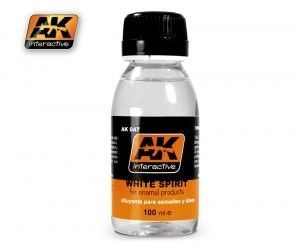
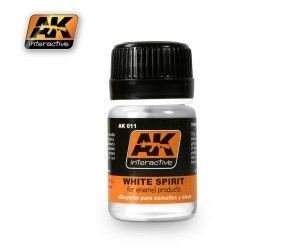
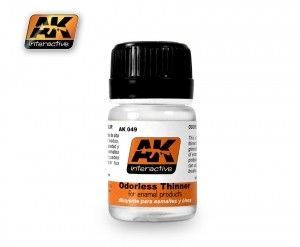
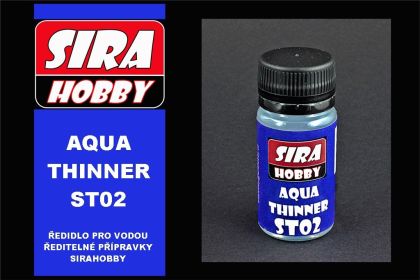
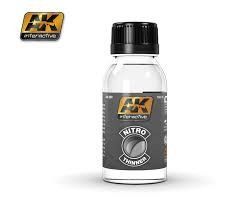
Odourless enamel thinners in small and large bottles, white spirit in the same two sizes, a nitro-based thinner for stronger solvents, and a water-based aqua thinner for acrylic products. Bottle size matters more than it looks: the small ones live on the bench, the large ones are for refilling and for cleaning brushes.
These are the everyday choice for enamel washes, filters and oils. They evaporate slowly, which is precisely what gives you a long working window to blend oil brusher streaks or lift a wash back out of a panel. Odourless versions are the gentler of the two and the safer bet over acrylic paint; white spirit bites a little harder and shifts dried enamel more readily.
Far more aggressive, for cleaning hardened residue out of tools and for solvent-based products that will not move otherwise. It will attack most paint films, so it does not belong anywhere near a finished model.
For water-based washes, filters and pigment suspensions. It thins without breaking the acrylic binder, which plain water does once you add too much of it.
Enamel thinners soften acrylic paint on contact. A clear coat from varnishes and clear coats between the paint and the weathering is not optional — it is the layer that lets you make mistakes and undo them.
For removing or blending, load a cotton bud from cotton swabs and squeeze most of the thinner out. A soaked swab floods the area and carries the effect somewhere you did not intend; a damp one takes off exactly what you touch.
Most weathering failures are products used too strong. A filter should barely register on the first pass, and a wash should look alarmingly watery in the dish.
For how each effect type uses its carrier, see weathering products.