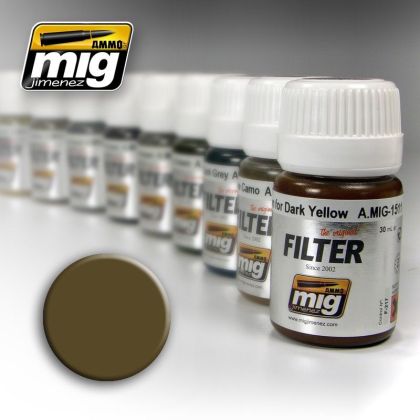
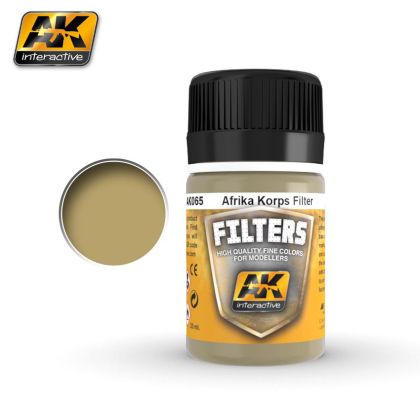
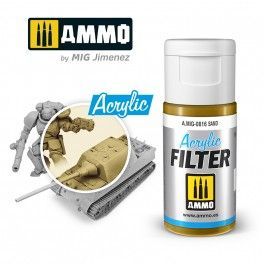
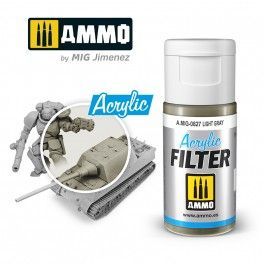
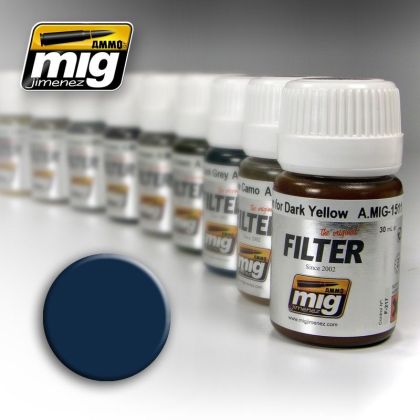
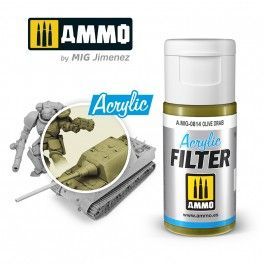
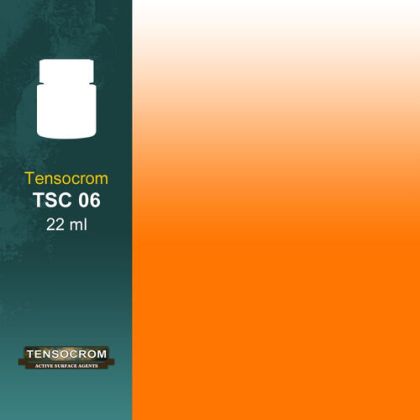
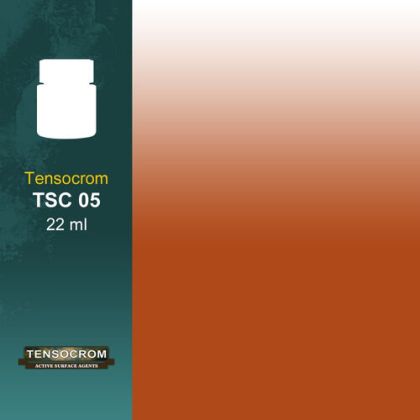
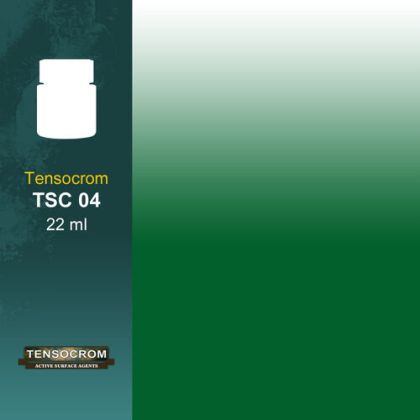
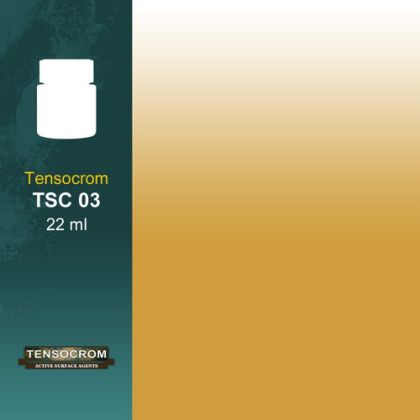
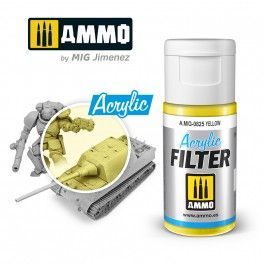
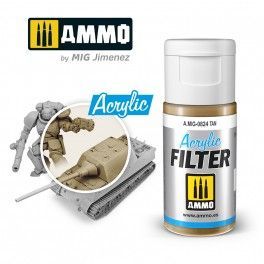
A filter is the most dilute product on the weathering bench: a translucent colour thinned so far that one coat barely registers. It is not meant to create a mark. Its job is to shift the tone of an entire area — warm a grey towards brown, cool a sand towards green, knock the brightness off a factory-fresh base — while leaving every panel line and rivet visible through it.
That is also the easiest way to tell filters from washes and from effect paints: a wash goes into recesses and gets wiped off the surface, a filter stays on the surface everywhere and nothing gets wiped. Build the tone in two or three passes and you can stop at the point that looks right.
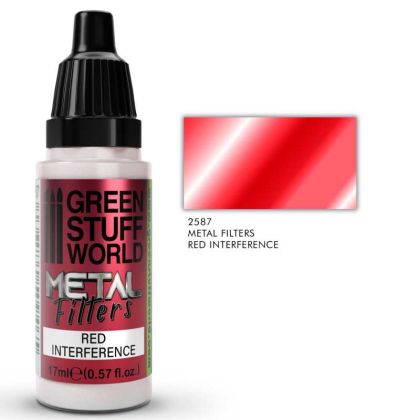
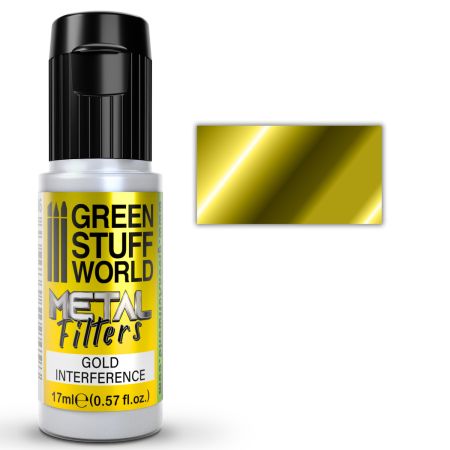
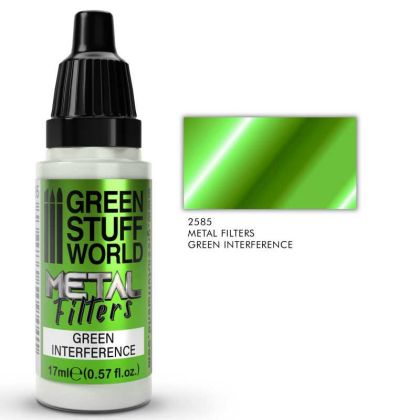
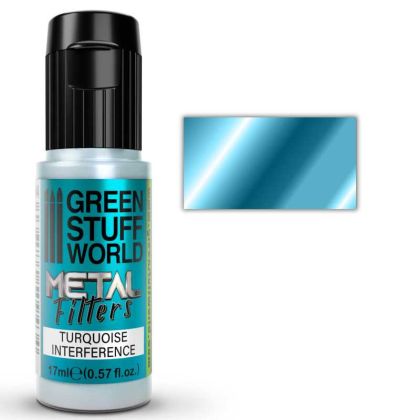
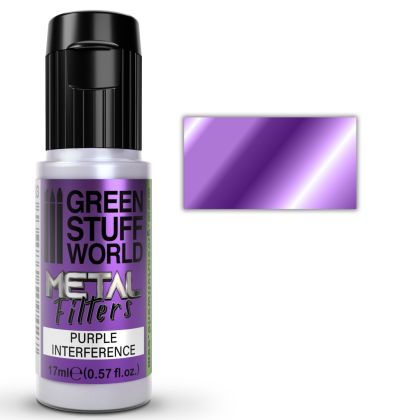
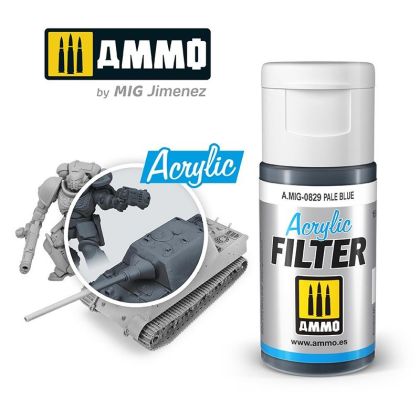
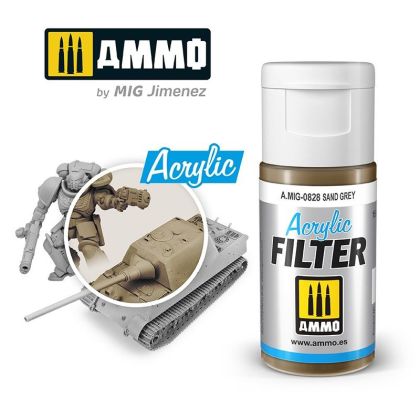
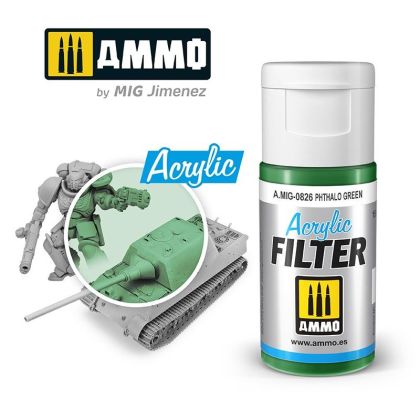
Enamel filters in earth, grass, rust, kerosene and fuel tones; acrylic filters in sand, tan, pale blue and greens for use over water-based paint; oxide filters for faded whites and light greys; and interference filters that shift colour with the viewing angle, used to give bare metal a tinted sheen rather than to dirty it.
Load a soft flat brush, wipe most of it out, and lay the colour across a single panel in one direction. Let it dry fully, then judge whether a second pass is needed. Two light passes look like weathered paint; one heavy pass looks like tinted varnish.
Real aircraft and vehicles fade unevenly because panels were replaced, repainted or exposed differently. Use a slightly different filter or a different number of passes on neighbouring panels and the surface gains depth that no single base colour can give it. A good set of modelling brushes with a broad flat tip makes this far easier than an airbrush would.
Enamel filters and their solvents will soften acrylic paint. Put a clear coat from varnishes and clear coats down first, and keep odourless thinner on the bench — not only for dilution, but to lift a filter back off while it is still workable.
Most builders filter after the panel line work, so the shadows are already locked in and the filter unifies everything above them. If you filter first, expect the wash to look stronger than you intended.
For the full sequence of effects see weathering products.