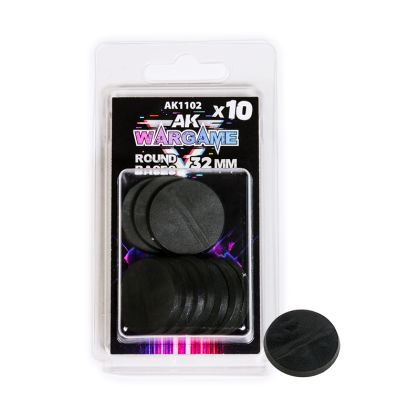
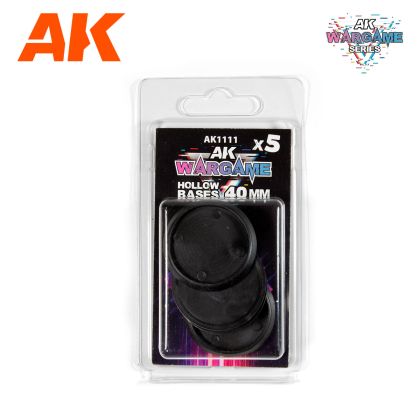
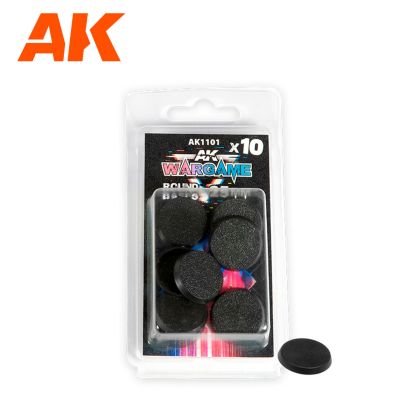
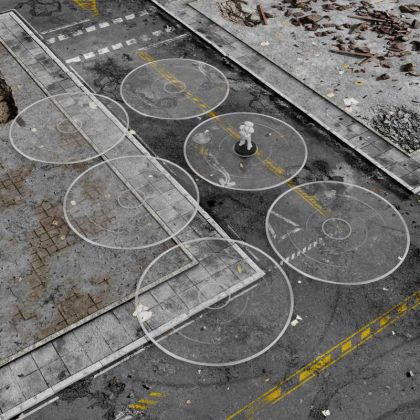
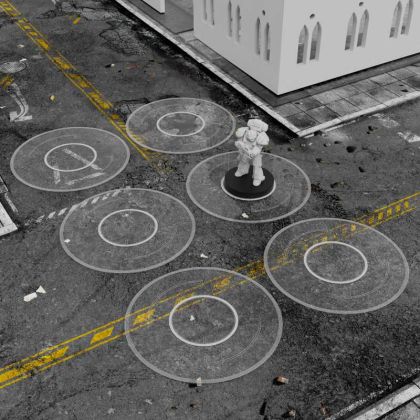
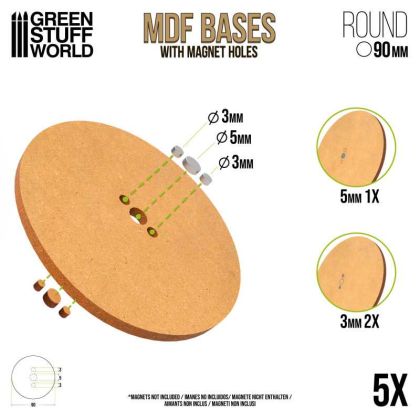
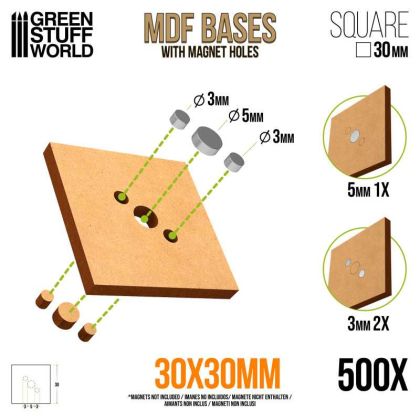
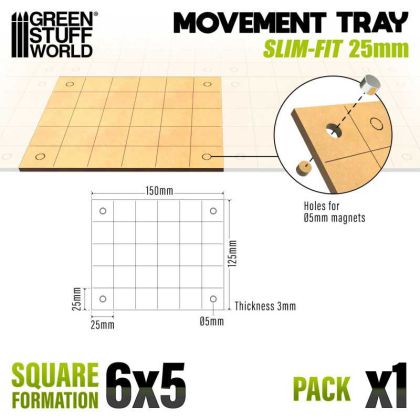
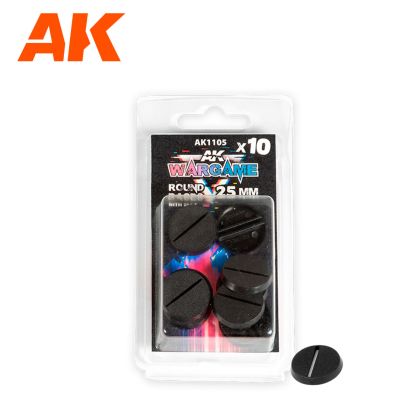
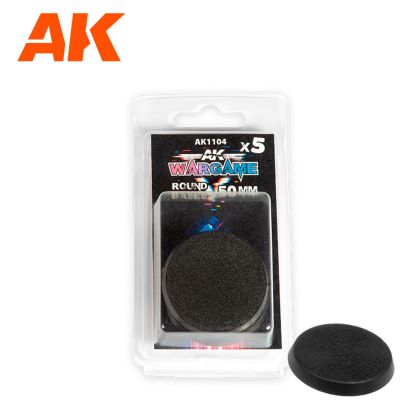
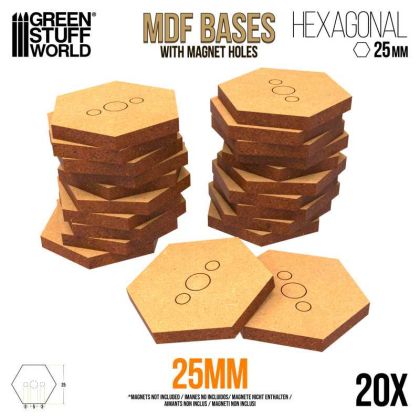
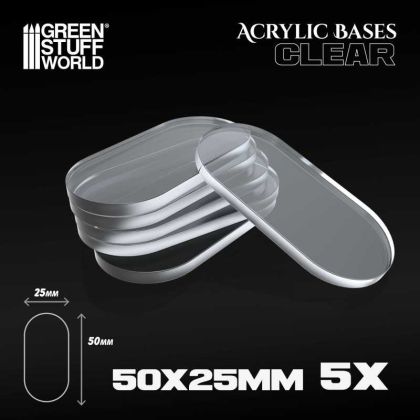
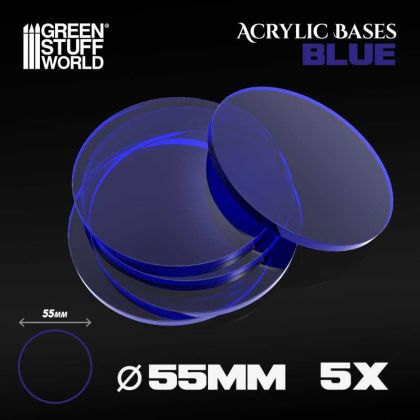
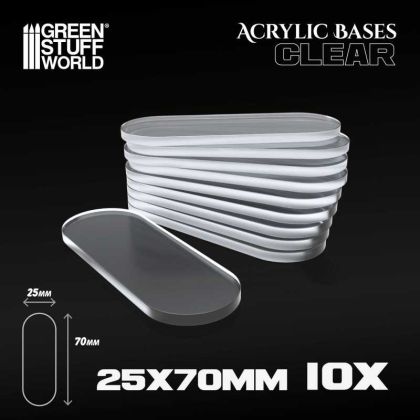
In wargaming a base is not decoration. It governs how a model moves, where line of sight is measured from and how much room it takes up in a unit. This section therefore stocks bases in defined dimensions – round, oval, square and hexagonal, in MDF, plastic and clear acrylic – together with movement trays, objective markers and rings for noting skills.
Below we explain how the dimensions are chosen, how the three base materials differ in use, and what it takes to make a bare base look finished rather than forgotten.
A display plinth is chosen by taste. A game base is chosen by rule: the diameter or footprint is written into the system and it helps determine reach, visibility and how tightly a formation packs. That is why bases are bought in packs of one size rather than one at a time, and why changing size part way through a force is a painful decision.
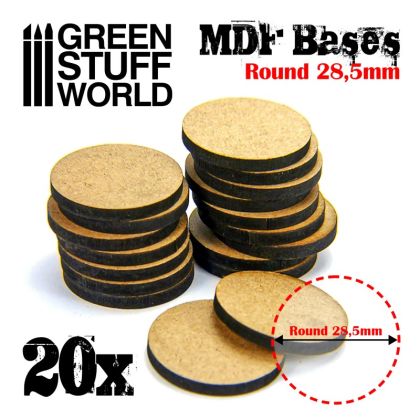
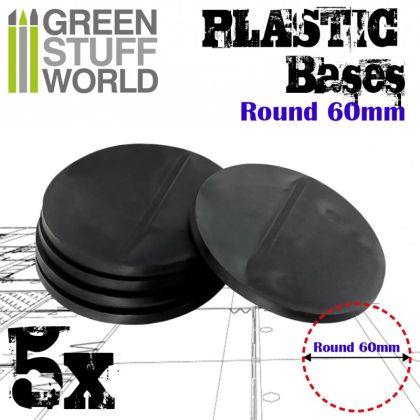
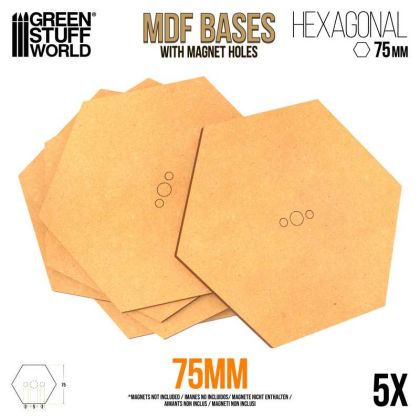
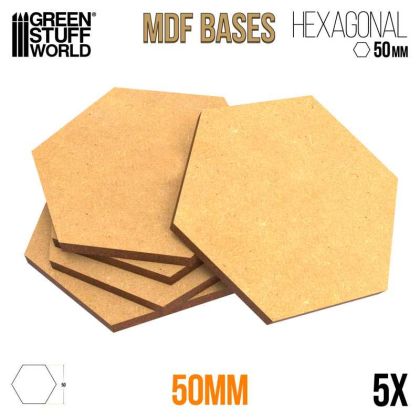
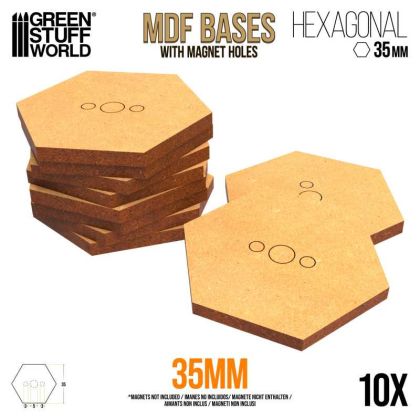
Round bases from twenty-five millimetres upwards are the most common, with ovals for models in motion and for larger miniatures. Hexagonal shapes are used where the game is played on a hex map. Match whatever you already have part-painted, so the unit looks like one unit.
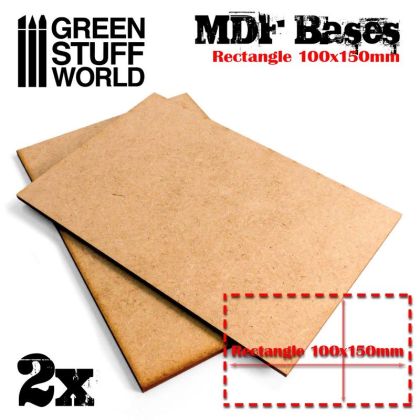
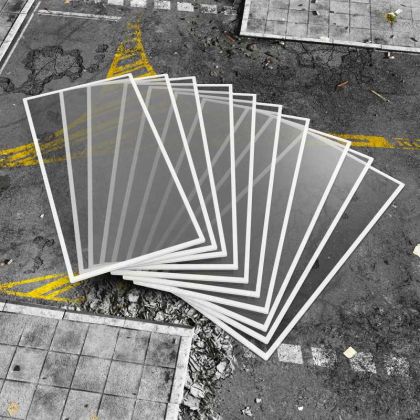
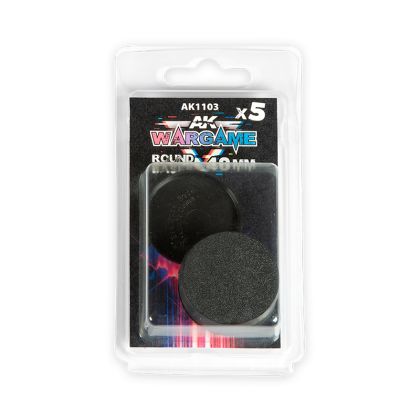
MDF bases are light, flat and pleasant to texture, because the surface drinks both glue and paint. Plastic bases tend to be thinner and often have a raised rim, which gives scatter material somewhere to sit. Clear acrylic is used for flying models and wherever you do not want the base to interrupt the pattern of the playing surface.
Trays hold a group of models together so a formation moves in one go. Objective markers, tokens and lettered rings record state on the table. The wider run of small items for play is in wargame accessories.
An empty base looks unfinished however good the model on it. The quickest route is a thin layer of paste or glue with scatter pressed into it, a base coat, and a dry brush to pick the texture out. Materials are in scatter materials and static grass, and texture pastes give relief in a single pass.
Check the size against the system you play before buying a whole pack; a pack of the wrong diameter is harder to use up than it sounds. Other kinds of plinth are in display bases.