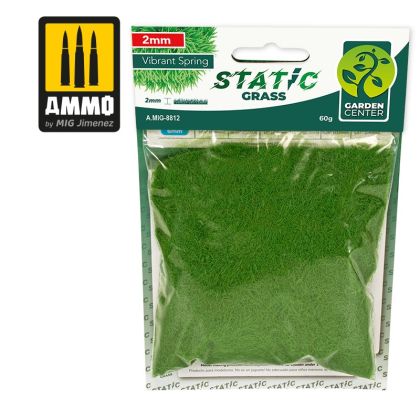
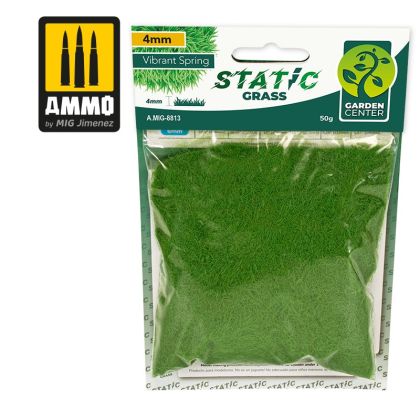
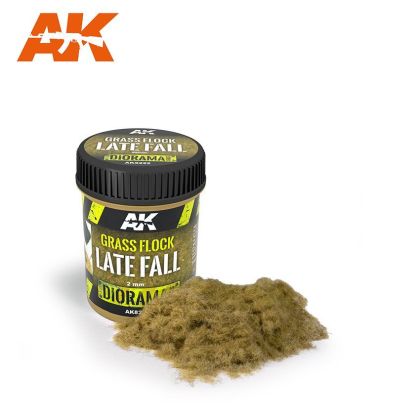
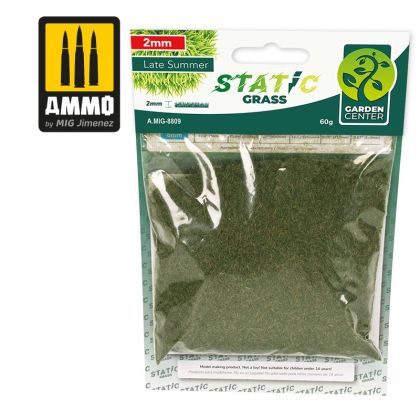
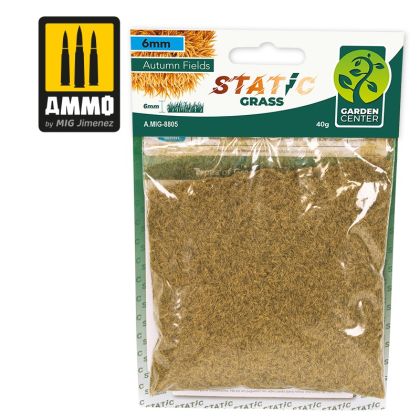
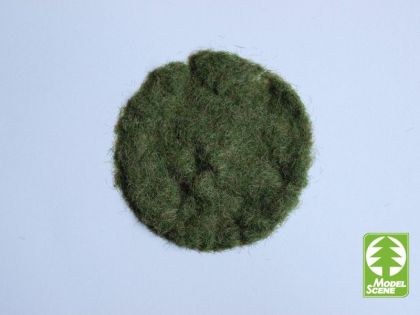
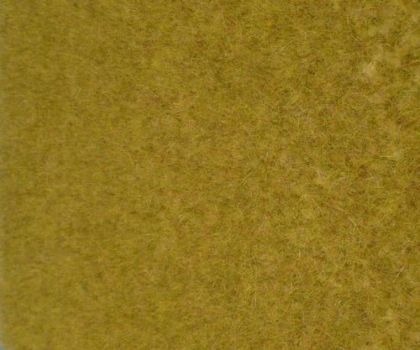
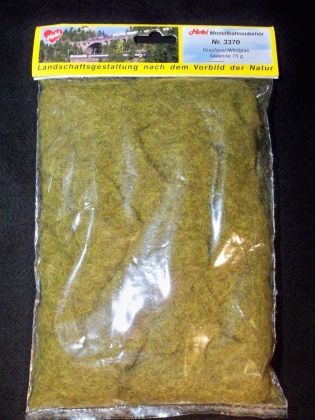
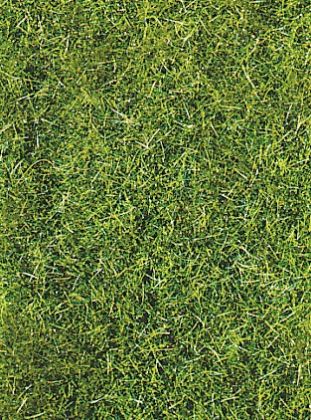
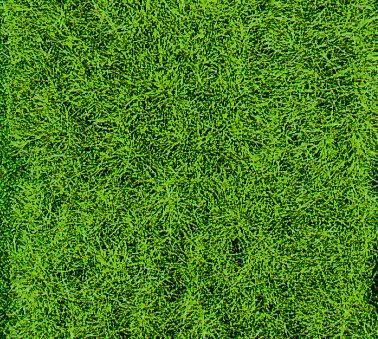
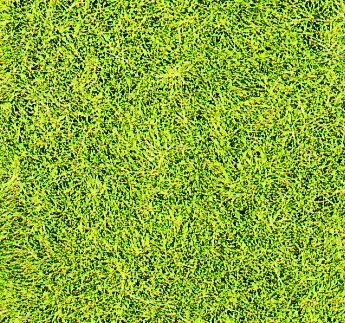
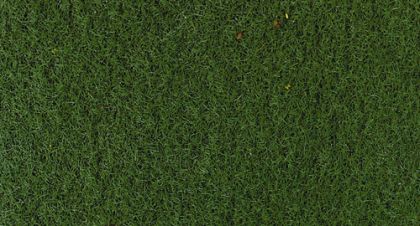
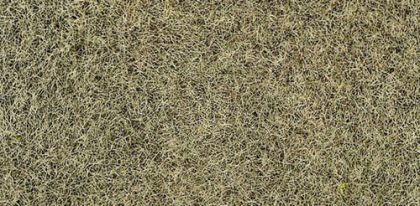
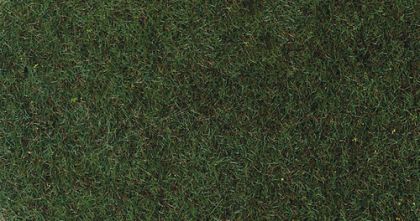
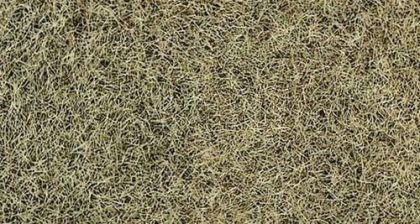
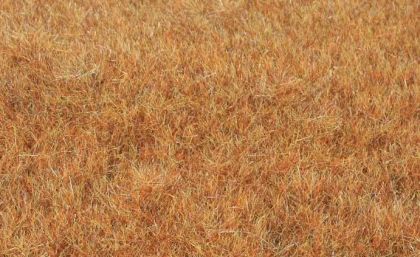
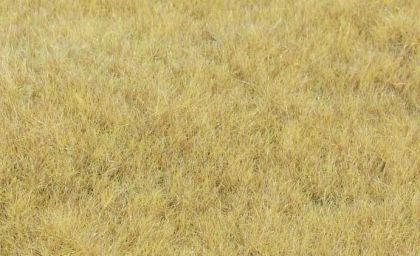
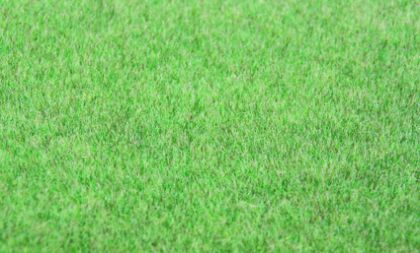
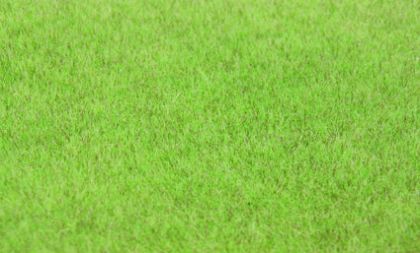
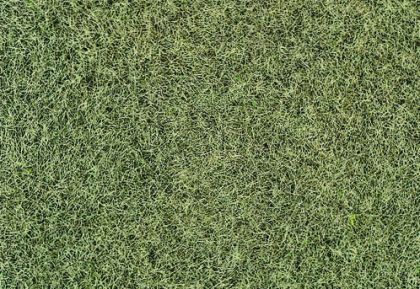
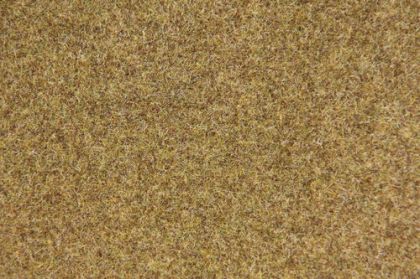
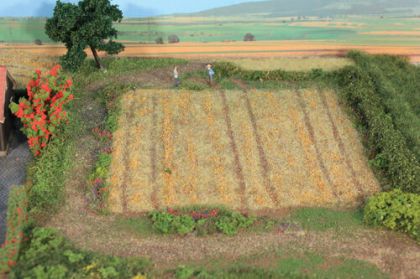
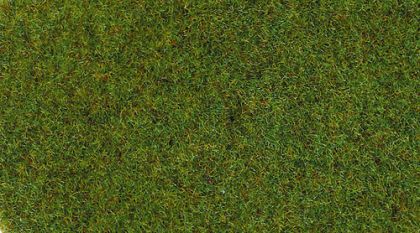
Static grass comes closest to real growth, because its fibres stand upright. There are lengths of two to three millimetres for mown areas, five to six millimetres for verges and neglected ground, and ten millimetres for tall growth, in shades from spring and summer green through savannah, prairie and stubble to autumn and winter tones. Pack sizes run from twenty grams to hundred-gram bags.
How the fibres are made to stand, and why one over-long fibre spoils a whole scene, is described below.
Static fibres carry an electrostatic charge from an applicator. Scattered onto damp glue they repel one another, embed themselves vertically in the layer and dry that way. Anyone can tell the difference at a glance: instead of a green area you get standing growth with shadow at ground level. Without an applicator the grass can be scattered flat, but then you simply have another foliage rather than a lawn, and ready-made tufts are the better answer.
Two to three millimetres matches a kept lawn in 1:35 and an established meadow in 1:72. Five to six millimetres is an uncut verge, a ditch or a field margin. Ten-millimetre fibre belongs beside water and in reed beds. One over-long fibre ruins the scale of an entire scene, so always check the length against a figure.
A real meadow has several shades and several heights. Work in two or three passes: a shorter base layer first, then, once it is dry and the surplus vacuumed off, longer fibres only in places. Mix green with yellow and brown - nine parts to one is enough to take the factory look off an area.
Apply glue as a thin continuous film rather than in drops, and work in small areas so it does not skin over. After twelve hours, vacuum the loose fibres off through a stocking stretched over the nozzle - the material can be used again and the area is cleaned up at the same time.
A good lawn is recognised by the absence of any regularity in it. Work small areas, in several passes, with differing shades, and then add height with materials from scenic accessories.