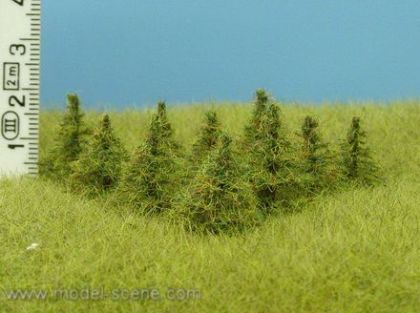
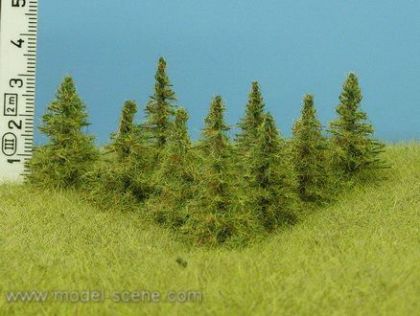
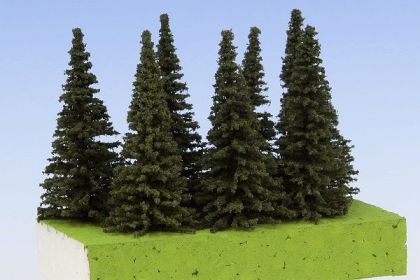
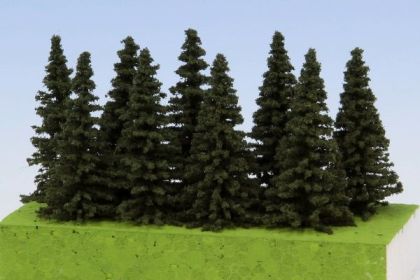
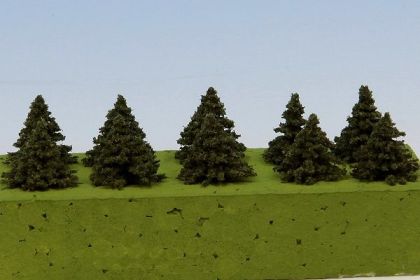
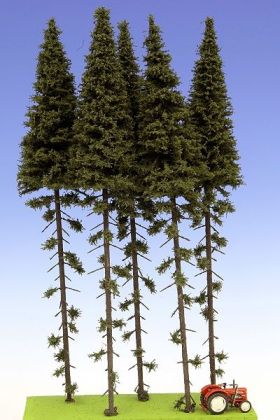
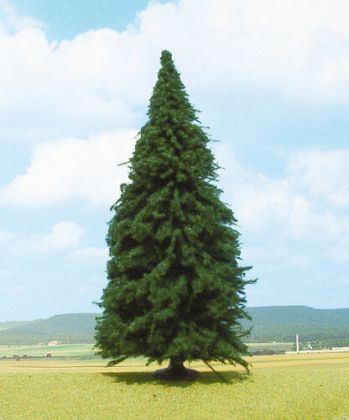
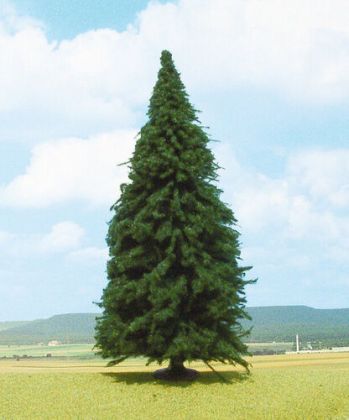
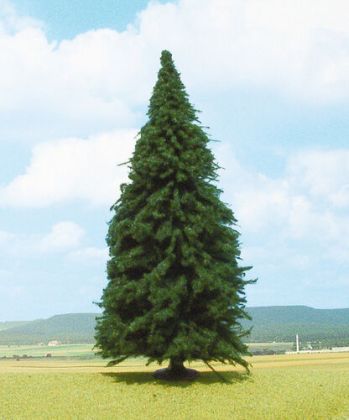
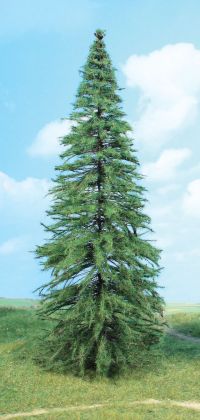
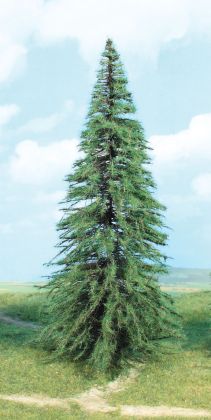
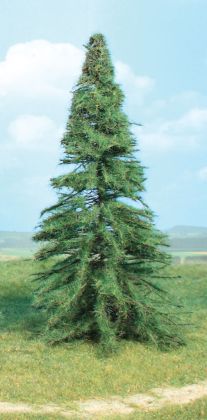
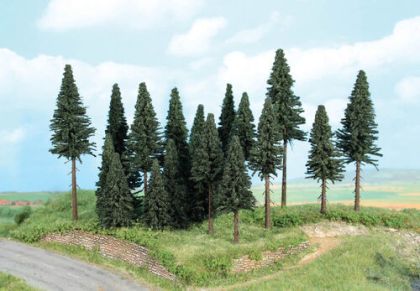
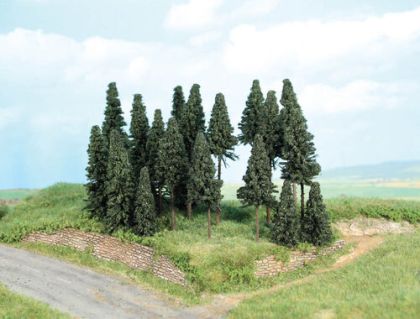
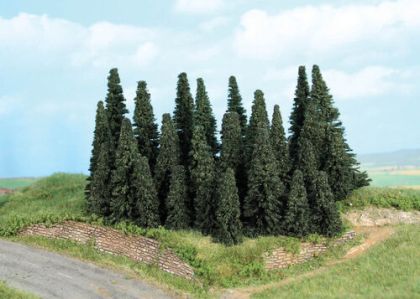
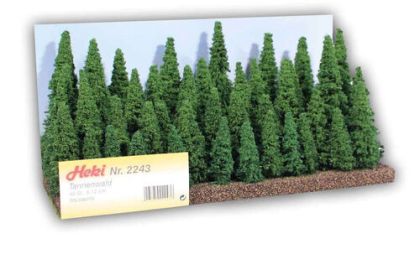
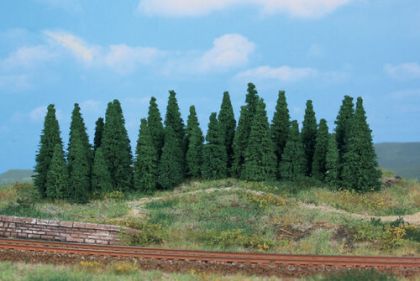
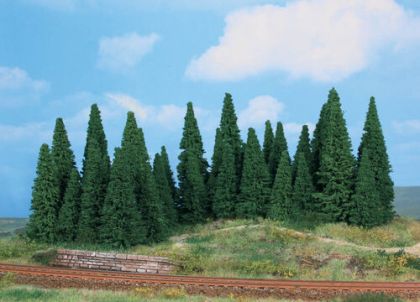
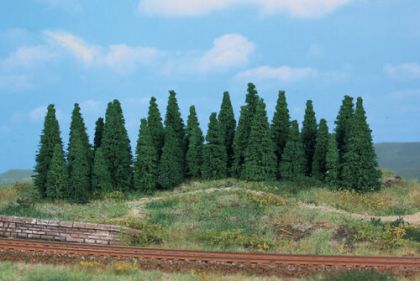
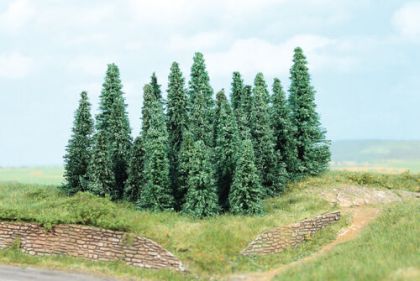
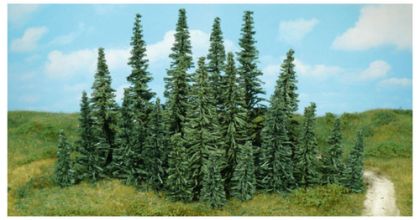
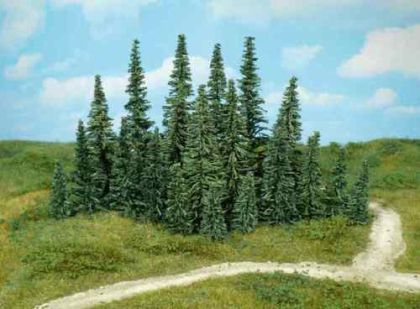
Model trees run the whole span from three-centimetre saplings in packs of a hundred and twenty to single firs thirty-eight centimetres tall. There are conifer woods in sets running from twenty pieces up to a hundred and seventy-five, trees in graded height ranges of five to twelve or nine to fifteen centimetres, and individual large specimens for the foreground.
Below you will find how to space trees so a wood reads as a wood rather than as an orchard, and why the foot of a trunk decides the whole effect.
Choose a tree's size by scale and by the part it plays. In 1:72 a fifteen-centimetre tree is a mature fir; in 1:35 the same tree is a sapling. Large single specimens go in the foreground, where the viewer looks at them closely and where it pays to work up both trunk and canopy. Sets of dozens of small trees belong at the back and on slopes, where they make the mass of a wood. The combination of the two is what gives depth: a detailed tree at the front, an indistinct green mass behind.
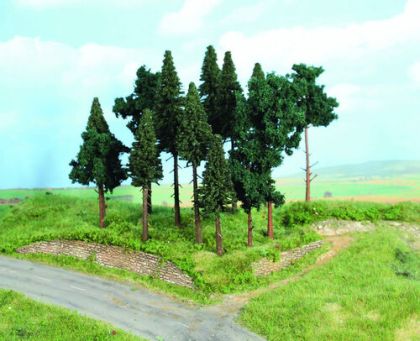
The commonest mistake is even spacing. A real wood grows in clusters, with gaps, fallen trunks and thicket between the mature trees. Plant in groups of three to five, leave clearings, and do not be afraid to stand two trees almost touching.
Sets containing several heights in one pack exist for precisely this. Put young trees at the edge of the stand and in the clearings, mature ones inside. Uniform height reads as a plantation, not as woodland.
A tree pushed into grass looks applied. Always add raised soil around the trunk, fallen needles or leaves, a little crumb and some low greenery. Two minutes of work and the tree stops standing on the surface and starts growing in it.
A wood on a diorama is not made by the number of trees but by their placing. Three well-seated specimens with shadow and undergrowth at the foot achieve more than twenty spaced evenly; the rest of the stand is filled in from scenic accessories.