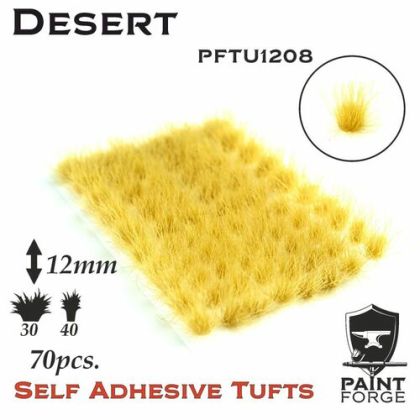
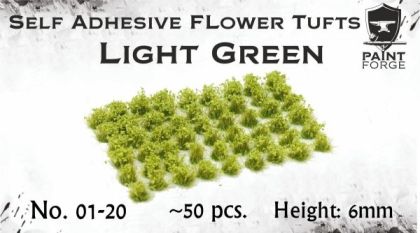
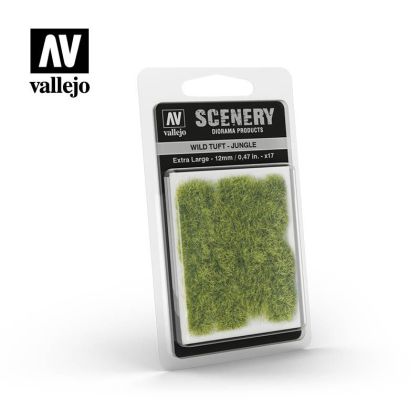
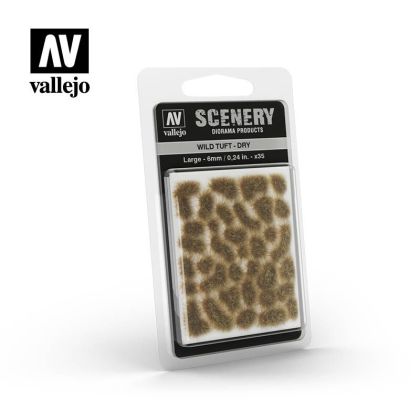
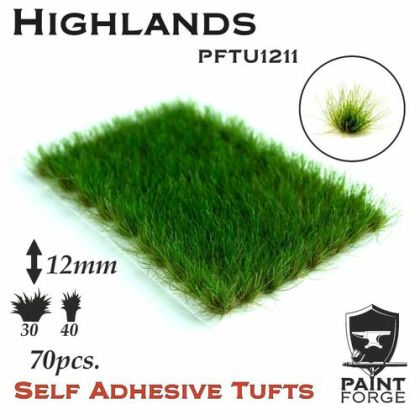
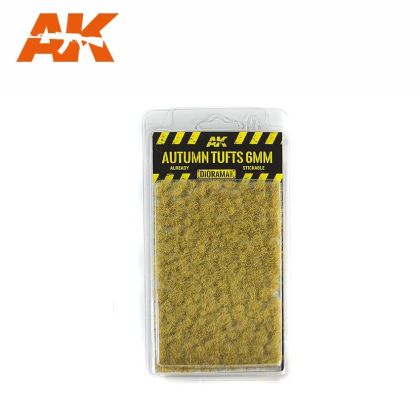
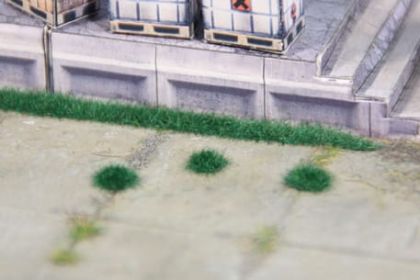
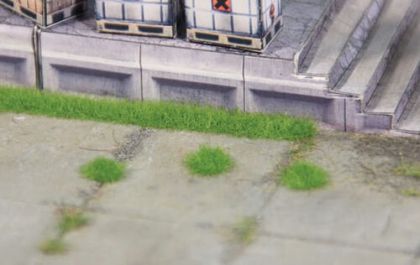
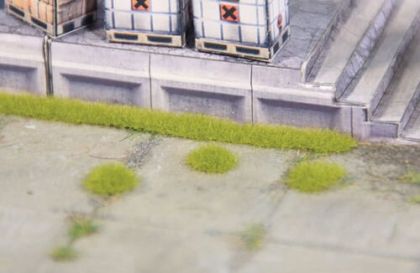
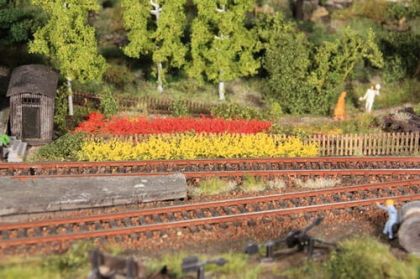
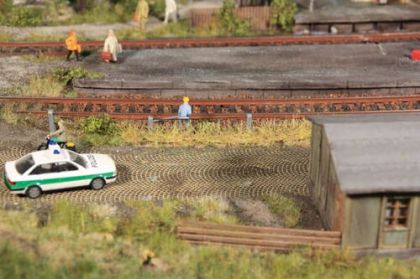
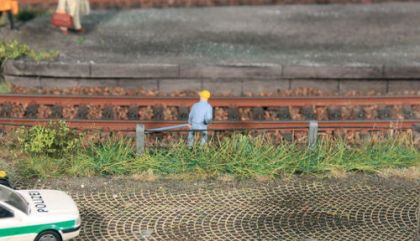
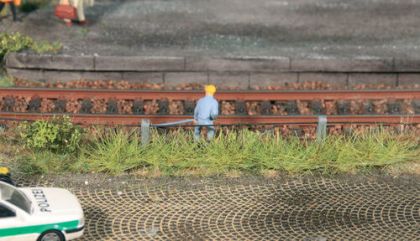
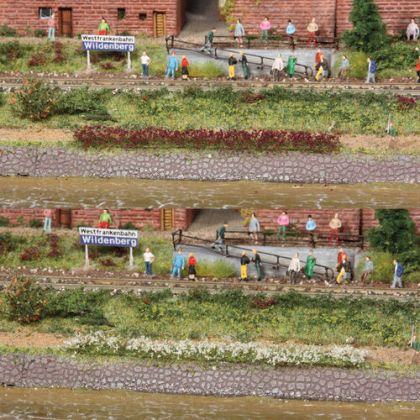
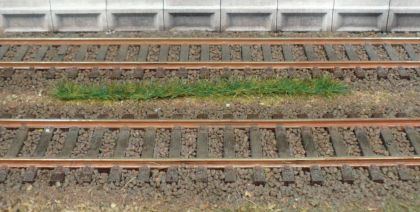
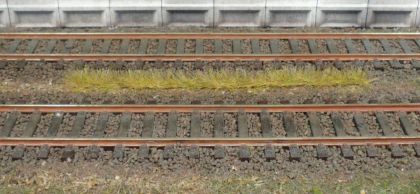
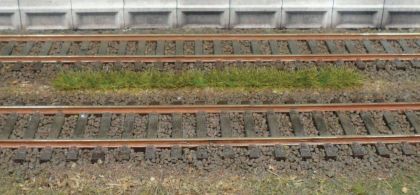
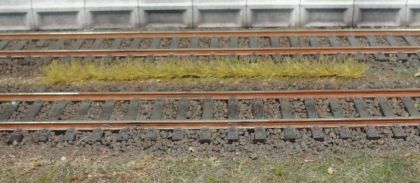
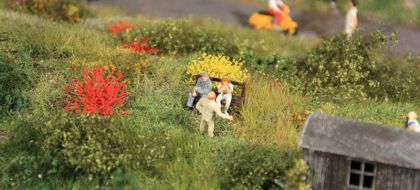
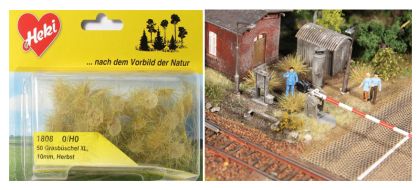
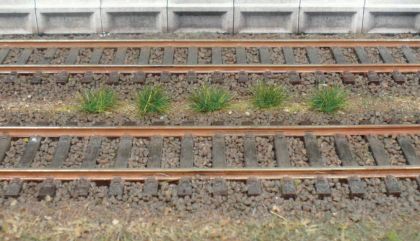
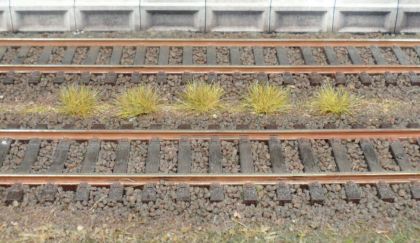
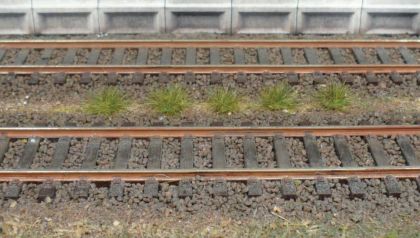
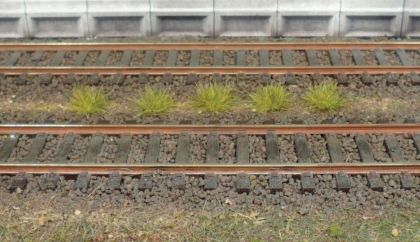
Grass tufts are finished clumps of grass on a self-adhesive backing - peel one off and press it down. They come in sets of fifty to a hundred pieces in heights from two to twenty-two millimetres, in spring, summer, autumn, dark green and yellow-red versions. Alongside the round tufts there are long strips from which the edges of verges, ditches and tracks are cut to length.
Below you will find where tufts belong on a scene and how to take the factory look off them.
A grass tuft is the fastest way to get standing growth onto a scene without an applicator, glue and waiting. The fibres are already upright, the backing is tacky, and the whole job takes a second. That is why tufts are used alongside every other kind of greenery: on matting, on static grass, between paving, into the joint at the foot of a wall. The strip version is the same thing in a ribbon and settles long straight transitions where individual tufts would be laborious.
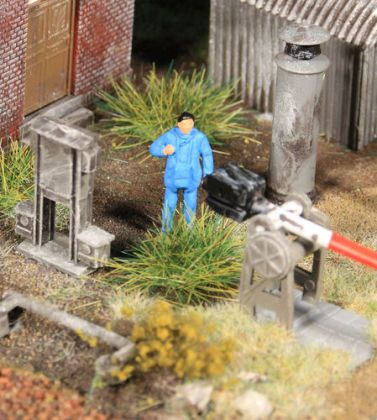
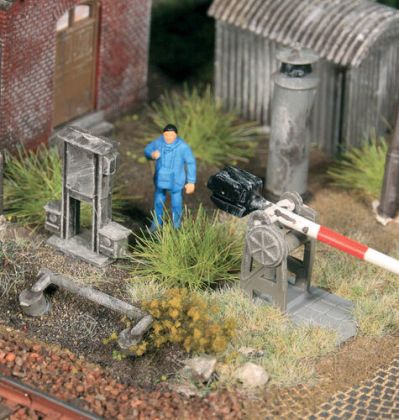
Grass grows in clumps where neither wheel nor boot reaches: at the foot of a wall, in a ditch, between rails, around a post, down the centre of a rutted track. Spreading them evenly across an area is the commonest mistake, because a real landscape distributes tufts according to traffic, not aesthetics.
A tuft out of the pack has a round outline and the same height as all the others. It helps to deform it between your fingers before fixing it, trim some of the fibres with scissors, and press two together so an irregular clump forms. Mix two colours at the same time - a single clean green never looks right on a scene.
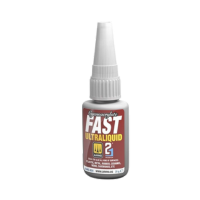
The self-adhesive layer holds on a smooth, clean surface. On loose soil, fixed scatter or dusty texture, back it up with a drop of cyanoacrylate or PVA, or the tuft works loose within days. Then bury the base of the tuft under fine crumb so the round backing does not show.
Tufts are five minutes of work with an effect that otherwise takes an hour. Use them sparingly and in places where they make sense - the rest of the ground cover comes from scenic accessories.