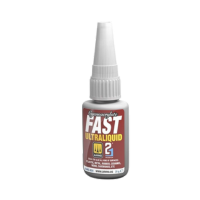
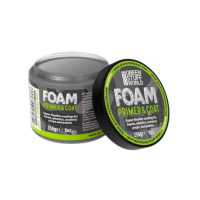
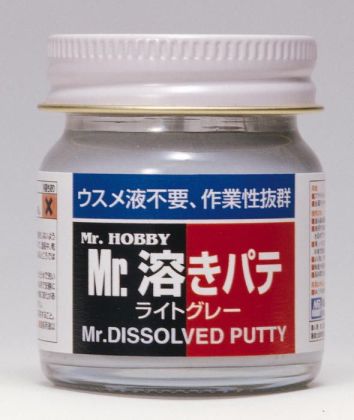
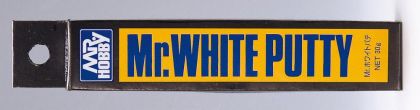
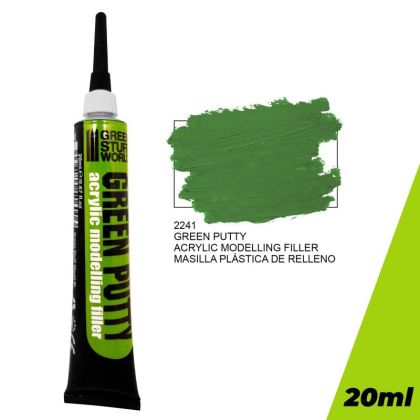
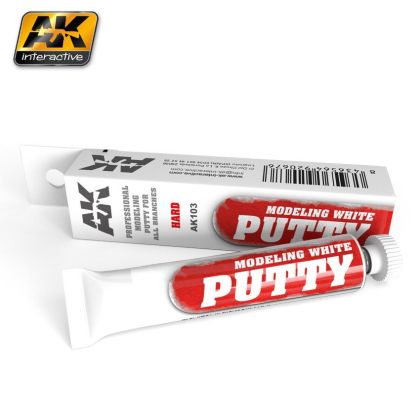
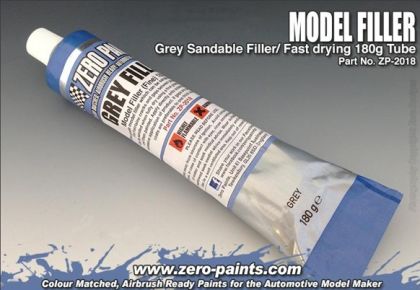
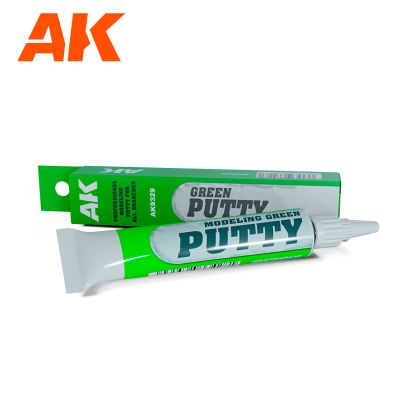
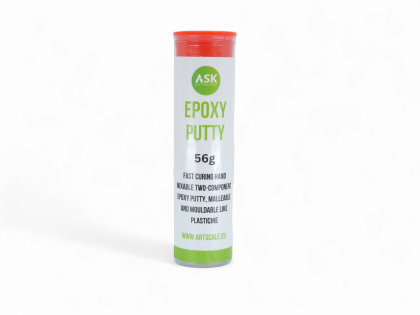
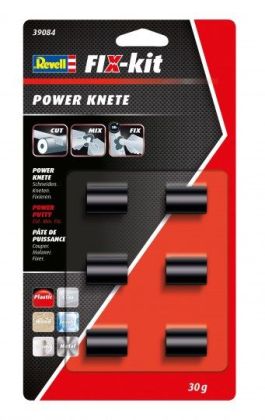
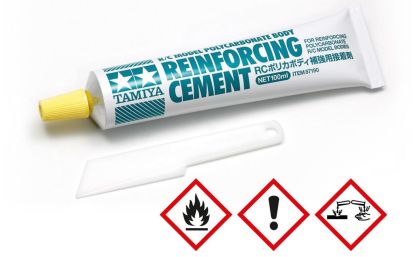
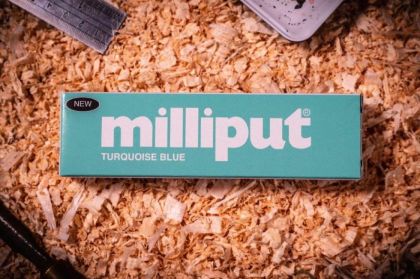
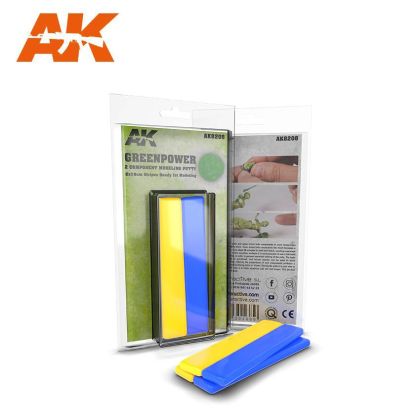
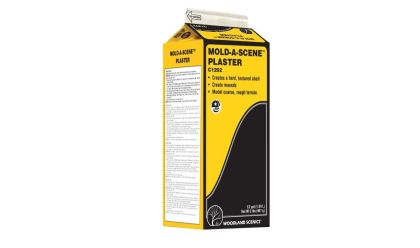
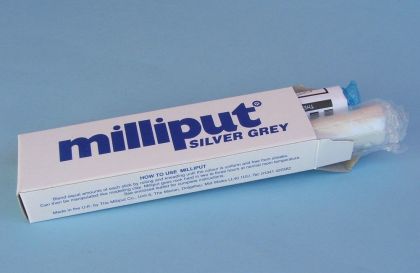
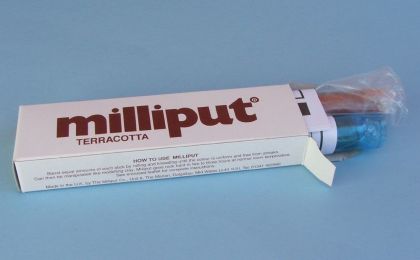
Model filler does the job cement cannot: it closes the groove left along a joint, replaces material that is missing, and hides a sprue scar or a moulding flaw. The section divides into one-part putties, which simply dry out, and two-part products that are mixed and cure chemically. Alongside the classic paste in a tube there are liquid grades brushed straight into a hairline seam and modelling epoxy compounds that can be shaped, carved and sanded once hard.
No kit fits perfectly. A hairline groove survives between fuselage halves, a wing root never quite seats, a resin casting carries a pinhole from a trapped bubble. Filler is the material that brings such a spot back up to the level of its surroundings so that, once sanded, there is no line left to see. Its second role is creative: stiffer compounds become new detail — tarpaulins, mud build-up, transitions on a diorama.
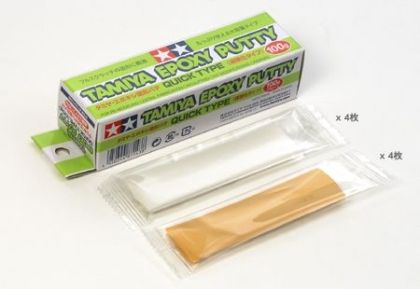
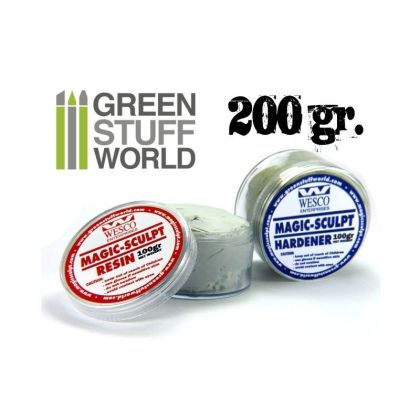
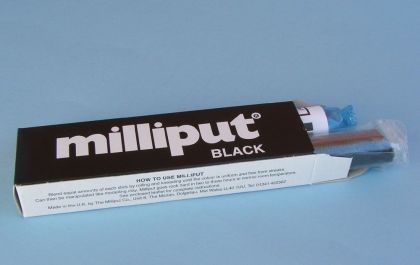
One-part fillers are applied and left to dry. They are convenient, but they shrink a little as the carrier leaves, so a deeper cavity is built up in two passes. Two-part products are mixed to a ratio and harden right through with no shrinkage — the choice for replacing real volume and for anything that has to hold a dimension.
Paste from a tube holds its volume and is used on genuine gaps. A liquid filler brushed on flows into a hairline groove and into porosity, dries almost without a layer and can often be wiped back with a cotton swab dampened in thinner, so it never needs sanding at all. For faint sanding marks that is the fastest route there is.
Epoxy compounds can be kneaded, worked with a tool and smoothed with water before they cure. They suit a missing part, fabric folds, or filling a large volume that paste would never dry through. The tools for them live in sculpting tools.
If the seam opened because the joint is weak rather than because the fit is poor, go back to adhesives first — filler will not rescue a badly cemented part.