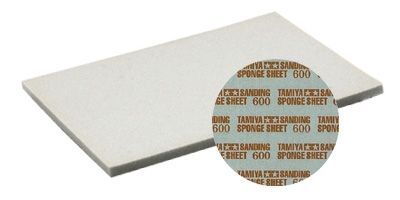
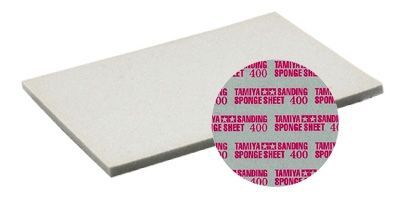
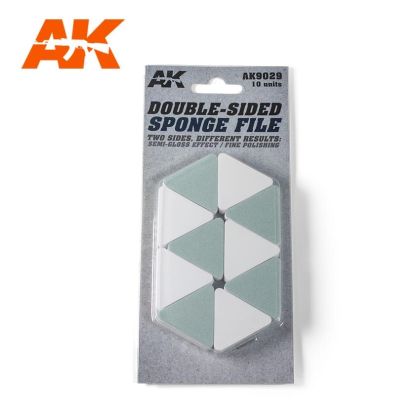
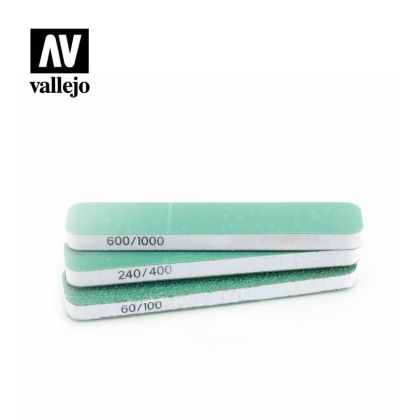
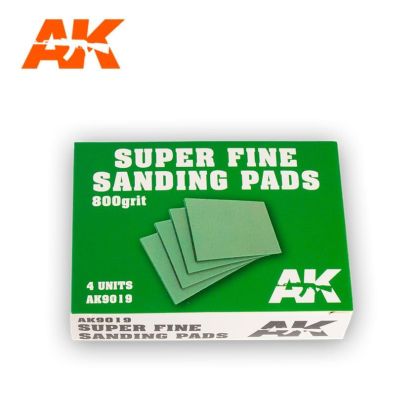
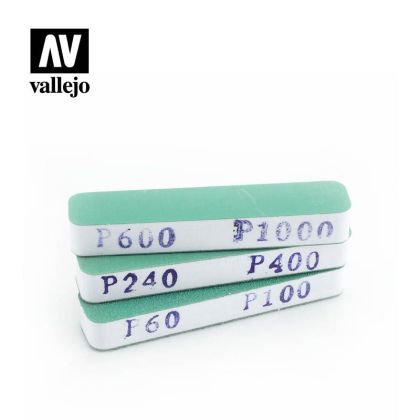
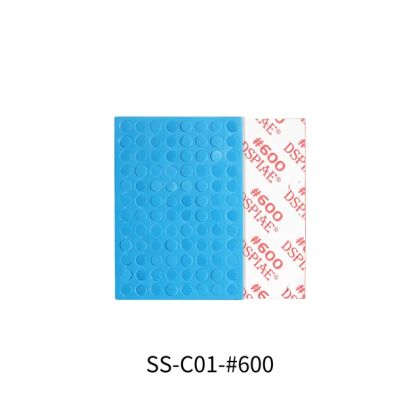
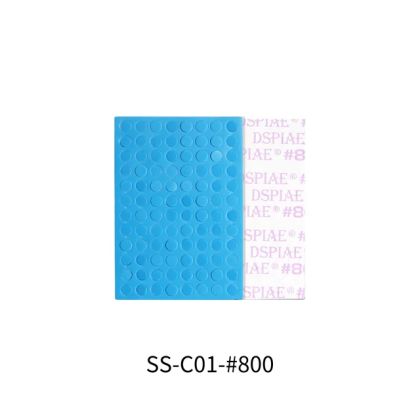
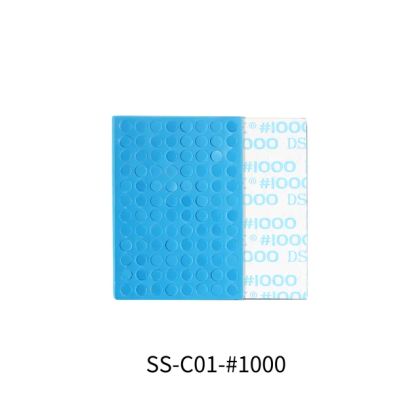
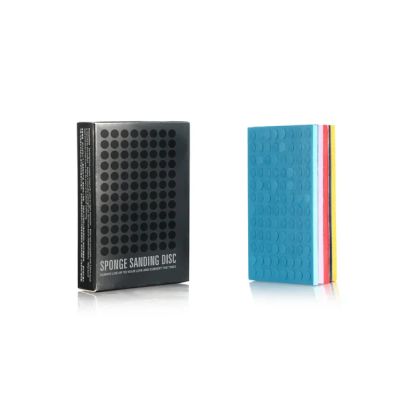
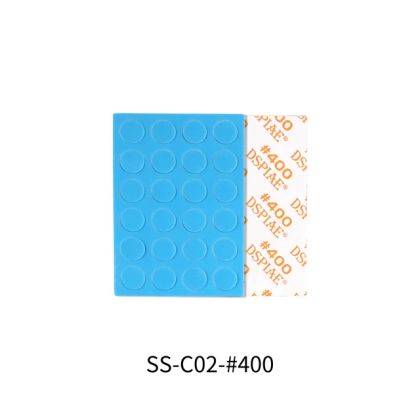
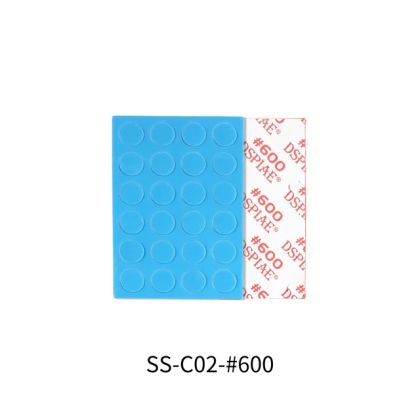
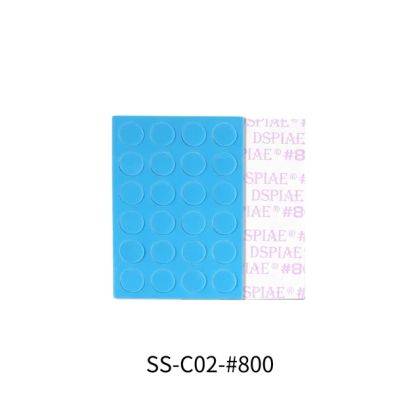
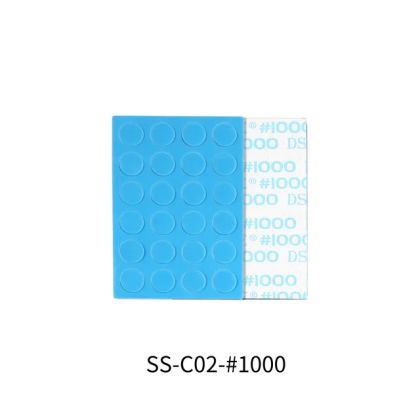
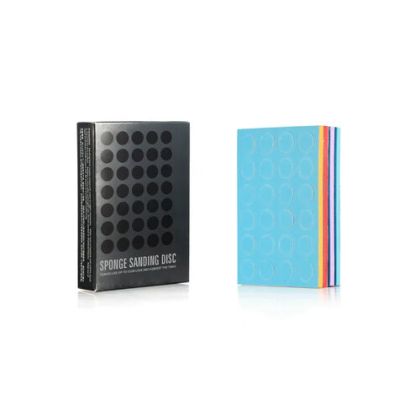
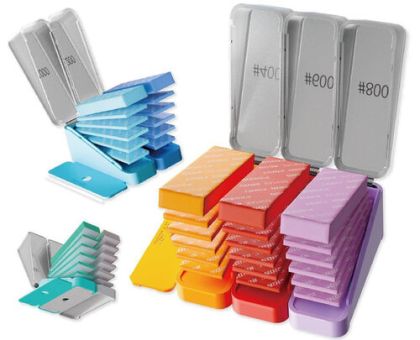
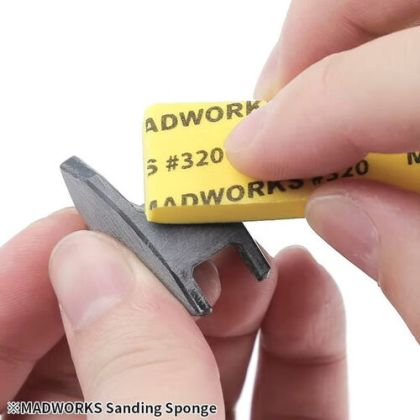
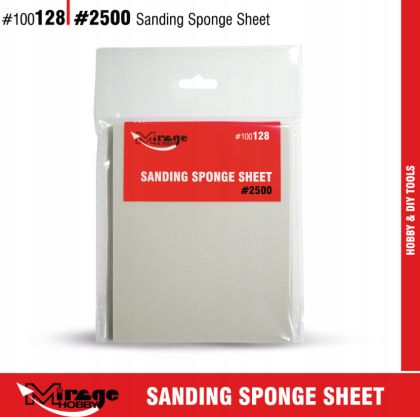
A sanding sponge is a block of foam with abrasive bonded to its surface, and its defining quality is give: it compresses around a curve, so on a rounded fuselage or a bonnet the highest point is not shaved flat. They are made as flat pads, as self-adhesive discs for powered heads and as flexible blocks. Grits run from coarse grades that level surplus filler up to very fine polishing steps. What you are buying is not the abrasive itself so much as the way the backing behaves under your thumb.
In the backing. Abrasive paper is flat and unyielding, so it copies whatever you press it against. A sponge has volume of its own, which compresses under pressure and wraps around the shape of the part. The consequence is decisive: on a cylindrical surface, at a wing root or over the transition of a bonnet, you keep the cut even across the full width. The second difference is life — a sponge can be rinsed out and lasts far longer than a sheet of paper.
The general-purpose shape for most work. They bend over a fingertip, sit in the palm, and one face stays usable while the other clogs. It pays to keep at least three grits to hand and to move through them in order.
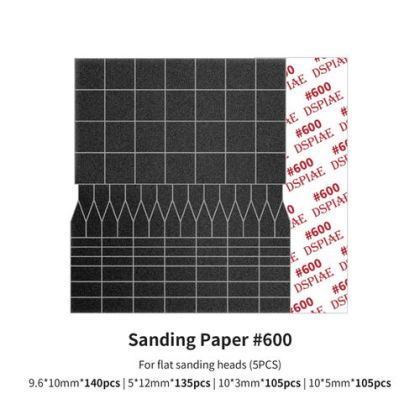
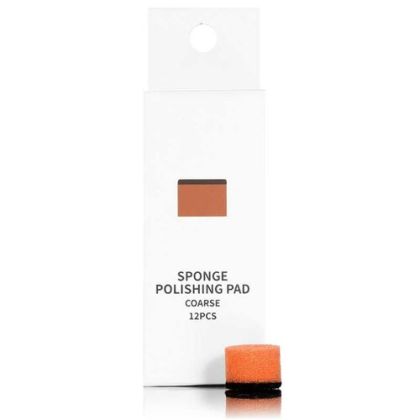
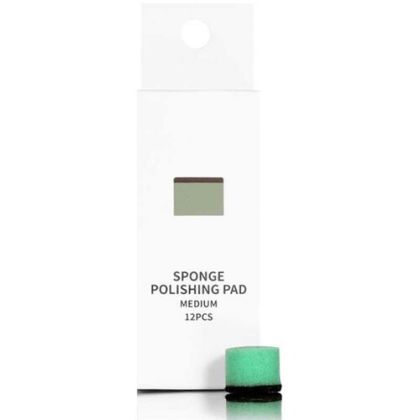
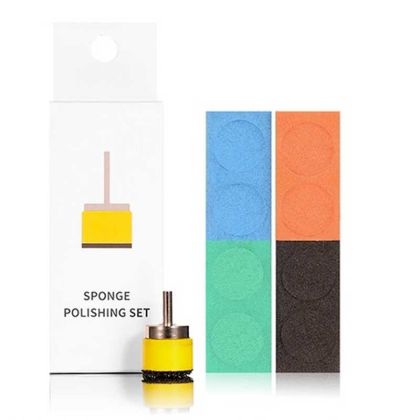
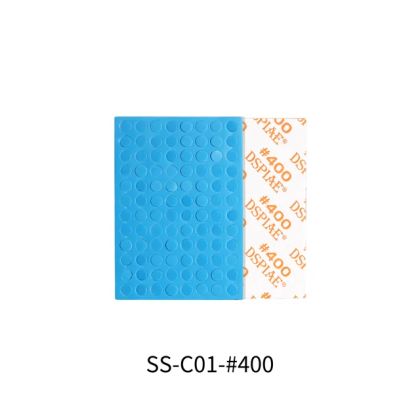
These stick onto the sanding heads of powered tools and are used for fast stock removal or for levelling an area the hand cannot reach. They are consumable, sold in tens, and the speed has to be watched — foam breaks down when it overheats. The tools themselves are in electric tools.
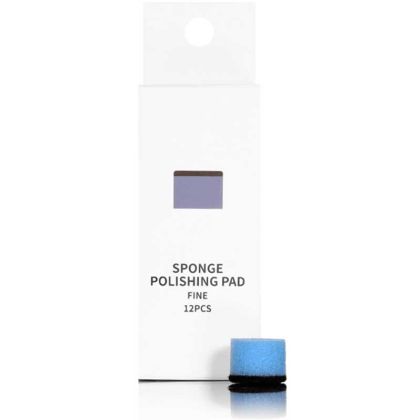
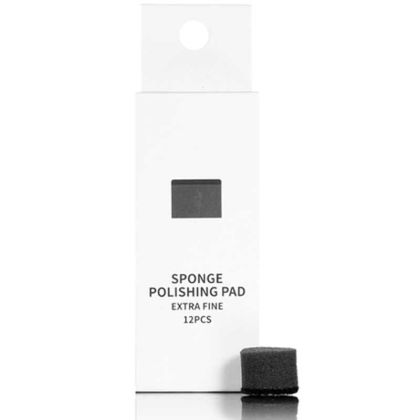
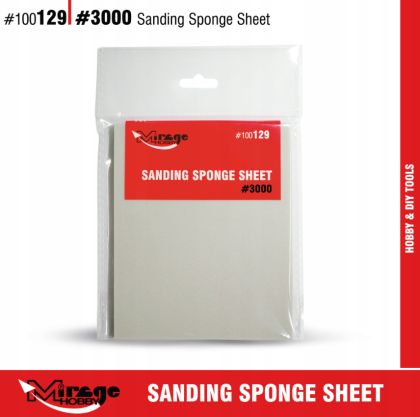
Sponges in very high grits that no longer cut but refine a surface towards gloss. They are used on clear parts, on painted bodywork and on metal surfaces meant to read as a mirror, and they lead on to polishing.
A soaked sponge does not clog, glides better and keeps the dust in the water rather than in the air. Afterwards it is rinsed and dried, so it lasts a long time. On resin and 3D-printed parts, wet sanding is the recommended route without qualification.
Pressing is pointless; the grit cuts, not the force. Too much pressure compresses the sponge so far that it loses its advantage and starts behaving like a hard stick. Vary the direction of the stroke so the scratches do not all run one way.
For heavier initial stock removal a tool from files is quicker, with the sponge kept back for the finish.