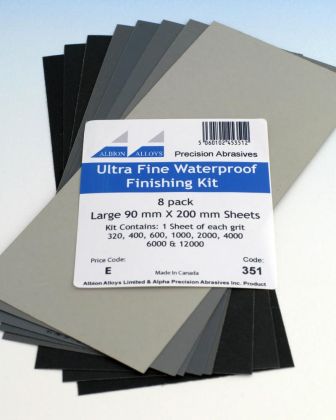
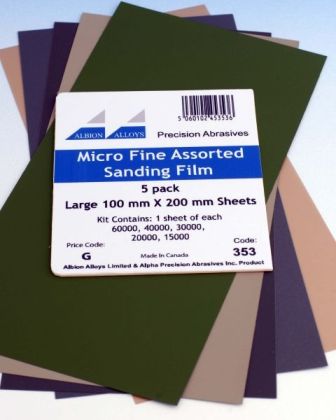
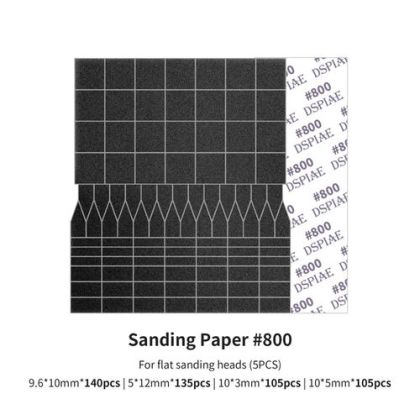
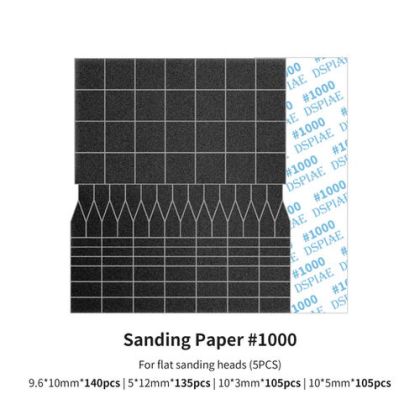
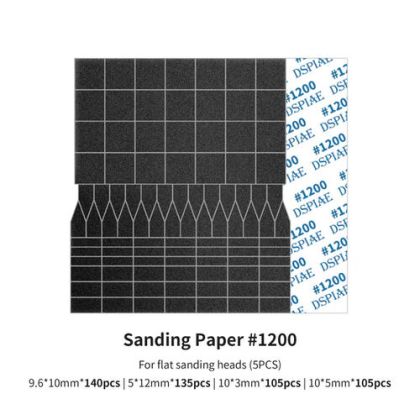
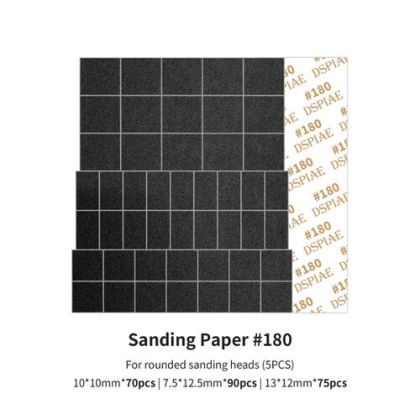
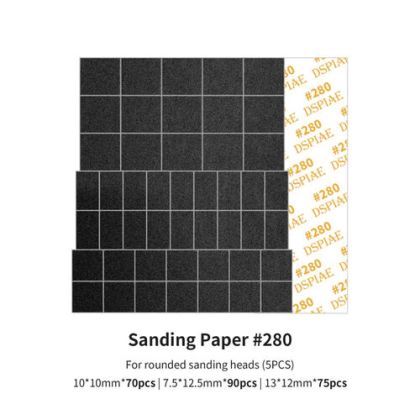
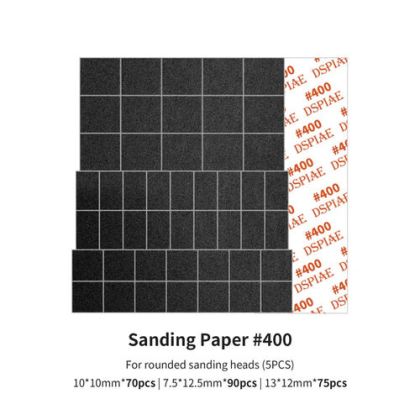
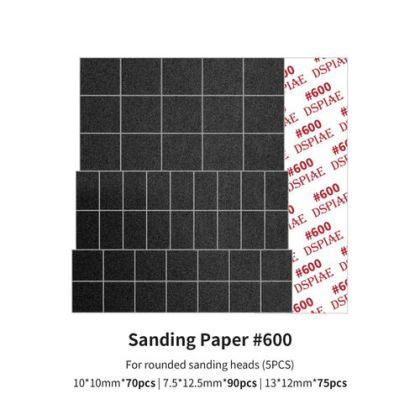
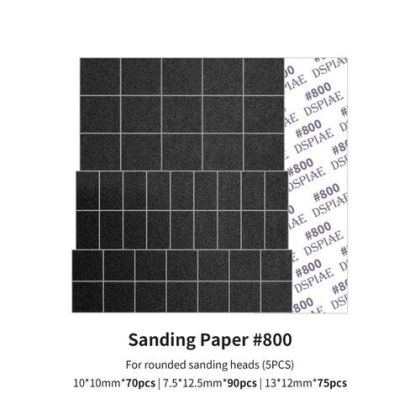
Abrasive paper remains the most used consumable on a modelling bench. Modelling grades differ from workshop ones in fineness and in the quality of the backing: the grit is even, it does not shed, and the paper takes wet work without falling apart. The category offers loose sheets to cut down as you need them, self-adhesive strips for bonding to a sanding stick or a powered head, wet-or-dry papers for wet sanding, and sets of several grits packaged together so the steps follow on.
The number comes from the screen the grit is graded through: it states how many mesh openings fall within one linear inch, so the higher it is, the finer the paper. Here the range starts at a coarse 80 and runs up to polishing grades of 8000. Roughly: 80 to 400 for levelling surplus filler and removing a sprue stub, 600 to 1000 for bringing a surface down before primer, 1200 to 2000 for preparation under a gloss coat and on clear parts, and the grades above 3000 only for polishing scratches out of a finished coat.
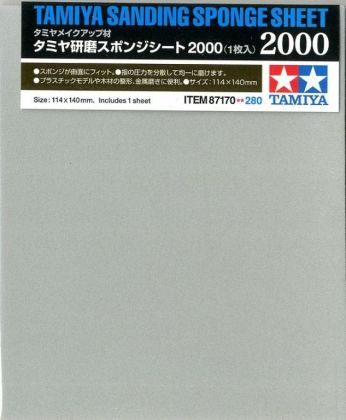
The most adaptable format. Cut exactly the piece you need, wrap it around a stick, a profile or a sanding block and you can reach anywhere. It pays to keep two or three grits in a larger sheet size, because consumption is higher than most people expect.
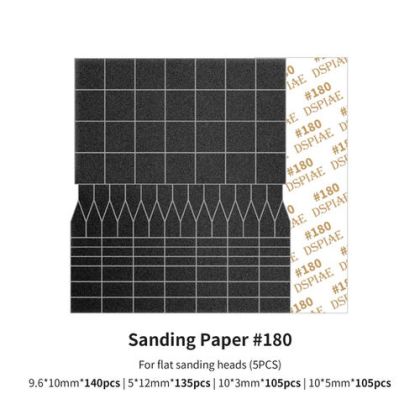
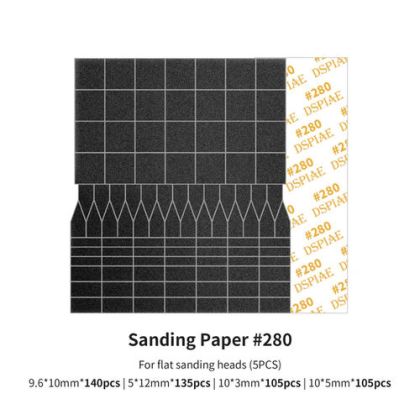
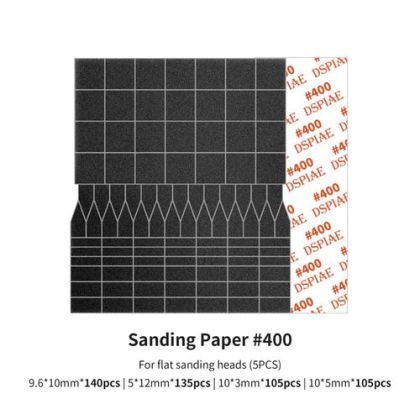
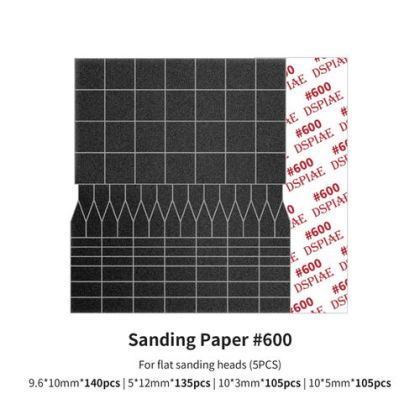
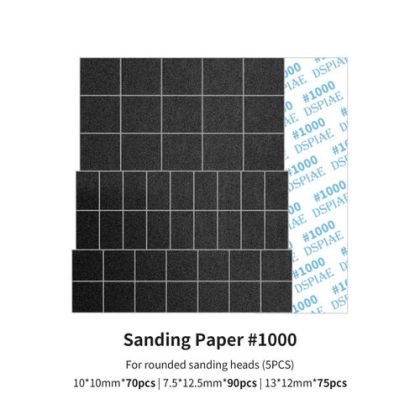
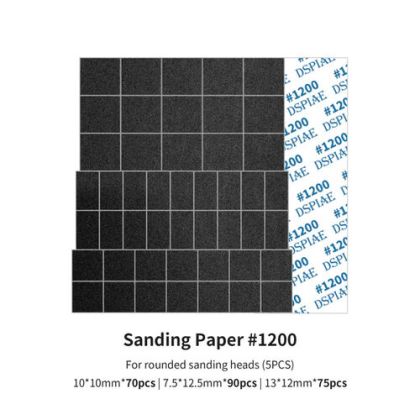
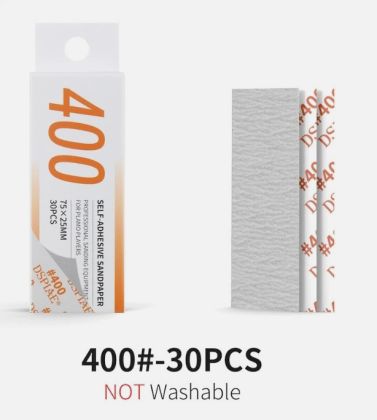
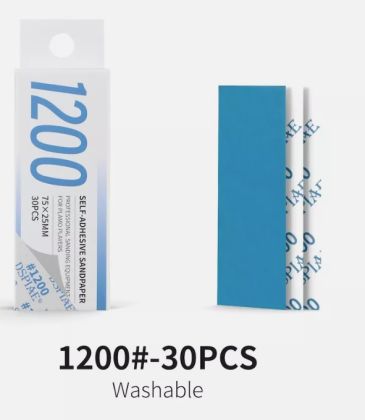
These bond to a sanding stick or to the head of a powered tool. The advantage is that the paper cannot shift or buckle, so the cut stays even. They suit the tools in sanding sticks and powered sanders alike.
Backing and binder are water resistant, so the paper can be used wet. Wet sanding is gentler, the surface comes out smoother, and the dust stays in the water instead of in the air — with resin and printing resins that is a safety argument rather than a preference.
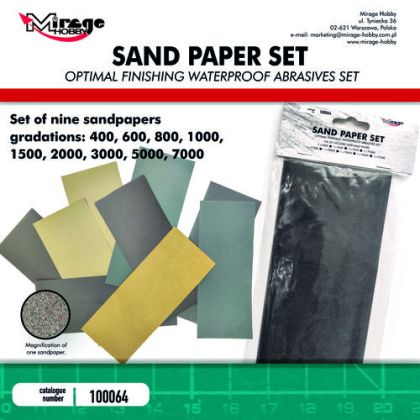
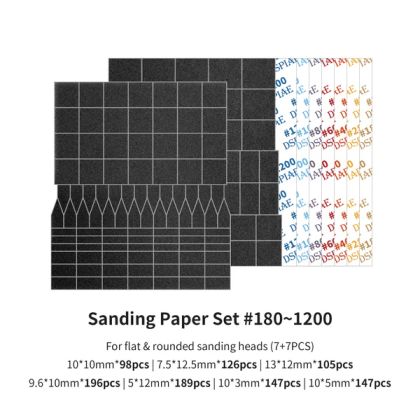
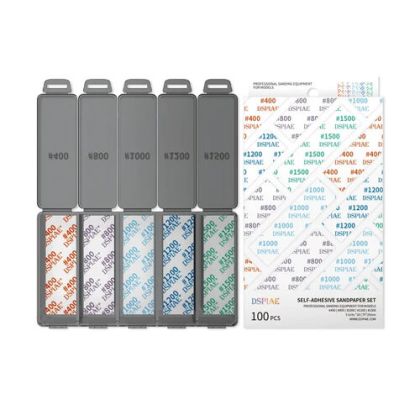
Packs where the grades follow on from one another. They make sense at the start, because there is no decision to make and no step can be skipped by accident.
Never sand a flat panel with bare paper pressed under a fingertip — you will create a hollow. Back the paper with a stick, a strip of wood or a rubber block. Work through the grits in order and rinse the surface between steps, otherwise a stray coarse grain scratches the area you have just refined. Finish with a check coat from surfacers and primers.
For the final gloss on bodywork and clear parts, abrasive paper hands over to products from polishing.