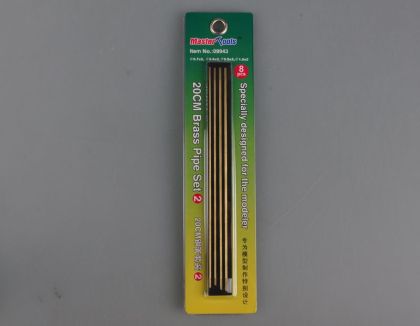
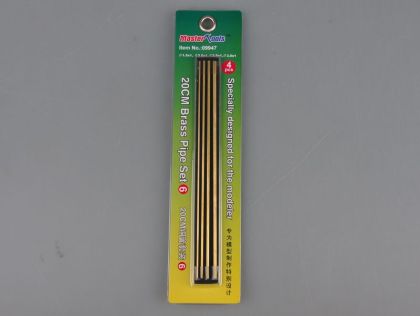
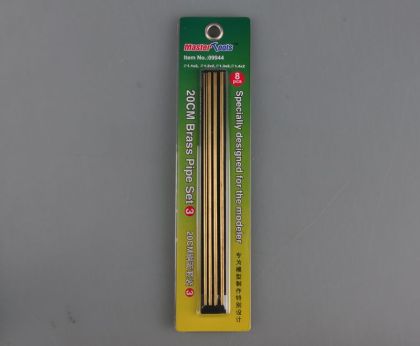
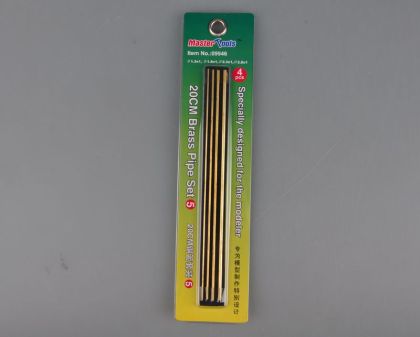
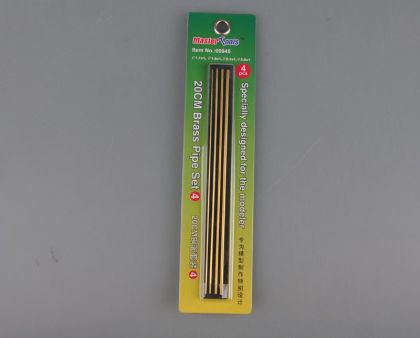
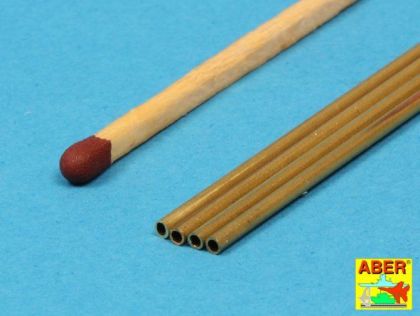
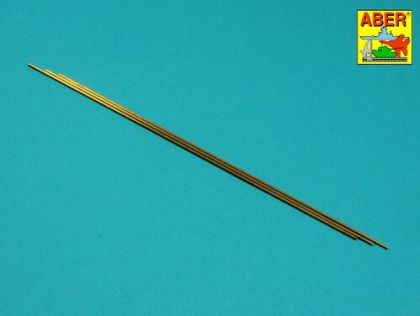
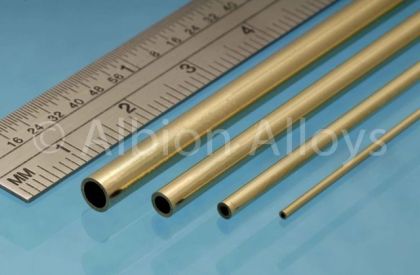
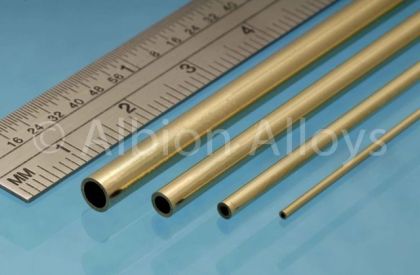
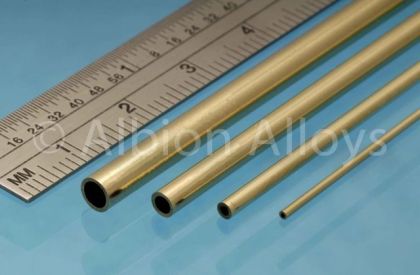
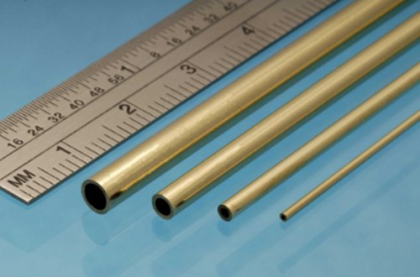
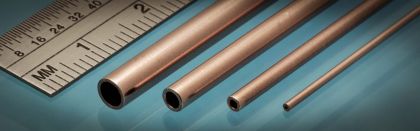
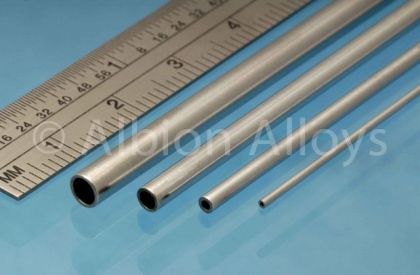
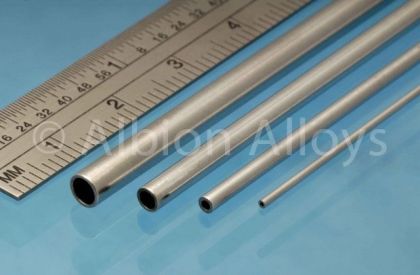
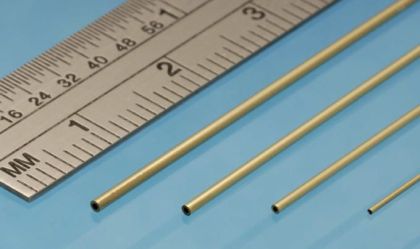
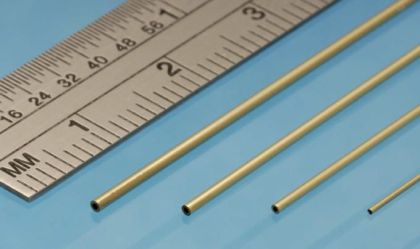
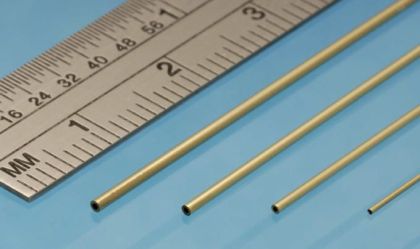
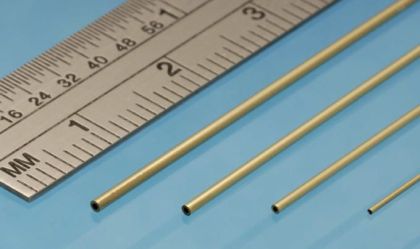
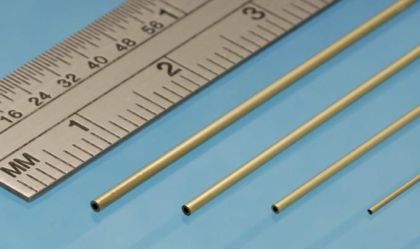
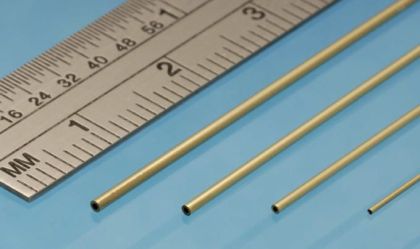
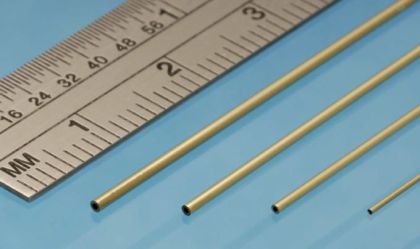
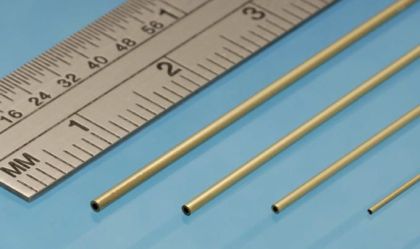
Brass tube is the stock for anything on a model that needs a genuinely thin mouth. Brass, copper and aluminium tube here starts at 0.7 mm outside diameter and runs up to ten millimetres, with walls of 0.25 to 0.45 mm in 305 mm lengths.
From it come gun barrels, exhausts, intake and hydraulic runs, masts and aerials. A thinner tube slides inside a thicker one, so stepped and telescopic assemblies can be built up from stock sizes without turning anything.
The wall decides it. A plastic tube leaves a wall of around 0.6 mm once cut, and in 1:48 that is plate nearly three centimetres thick. A brass tube with a 0.25 mm wall reads as about a centimetre, so the mouth looks right with no further thinning at all. The second reason is rigidity: metal aerials and masts will not bend as a display case is carried, and the open mouth of a barrel survives careful cleaning.
Brass is the hardest of the three, stays straight and can be soldered, which suits barrels, masts and structural parts. Copper is malleable, bends into a curve readily and is used for plumbing and hoses. Aluminium is the lightest and takes a natural metal sheen when polished, so it is sometimes left unpainted on exhausts and intake pipes.
For a stepped exhaust or a telescopic mast, buy two sizes where the outside diameter of the smaller tube is close to the inside diameter of the larger. A difference under a tenth of a millimetre lets the parts push together and the joint then holds itself before any glue goes near it. To fill a bore or make a reducer, use wire and rod.
Barrels and exhausts are the usual reason for buying tube on armour and aircraft. Masts, derricks and lead blocks belong to ship models, where rope and thread follow on. For square sections, carry on to the metal profiles.
Metal barrels and exhausts are among the commonest upgrades to armoured vehicles, so the kits behind them are in the military model kits.