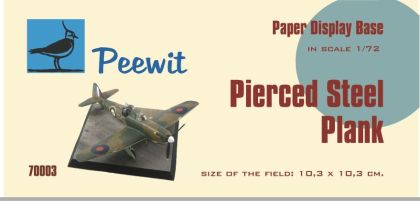
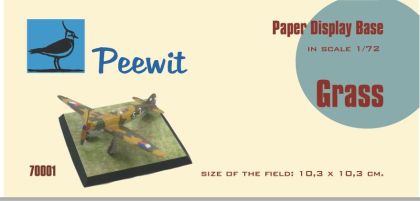
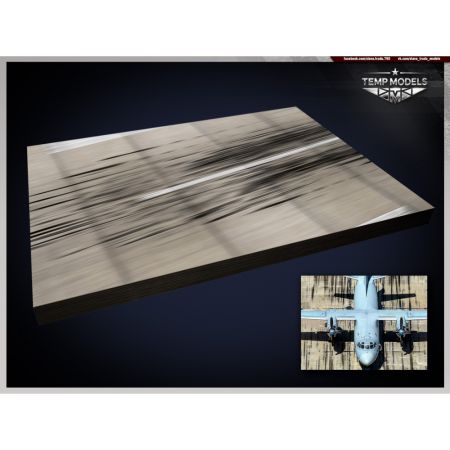
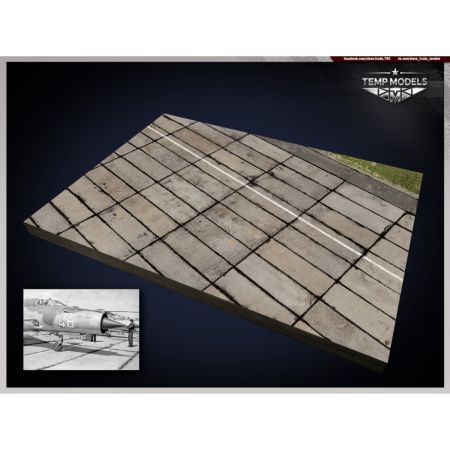
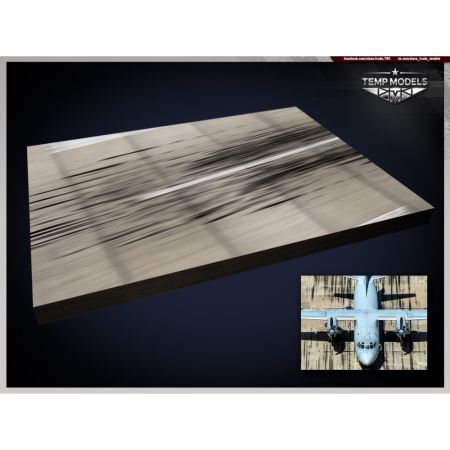
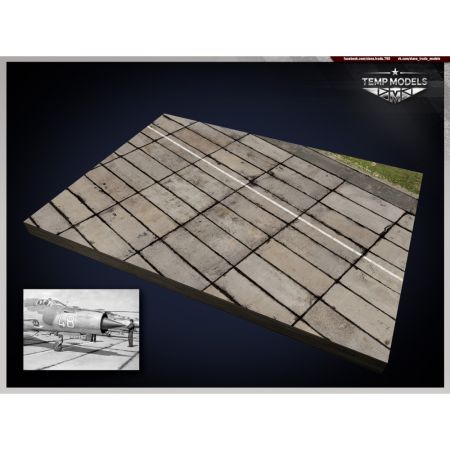
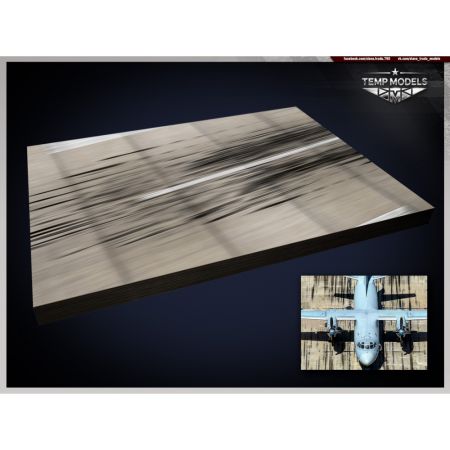
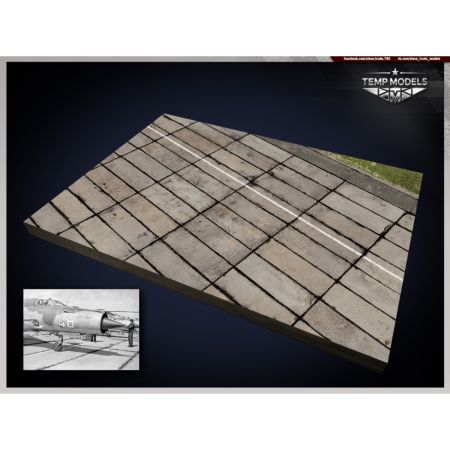
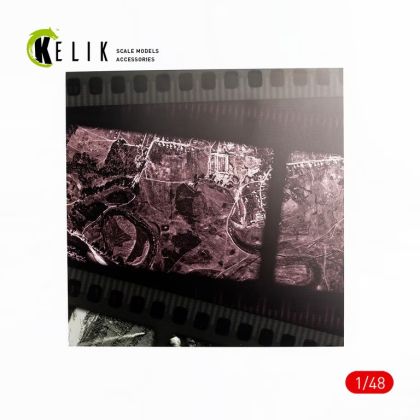
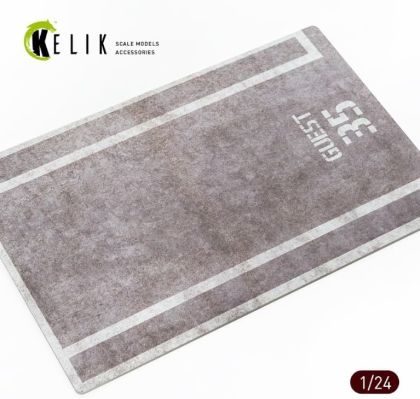
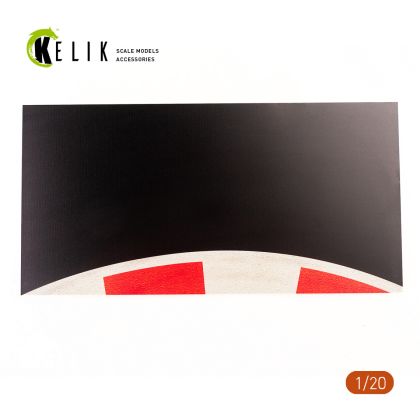
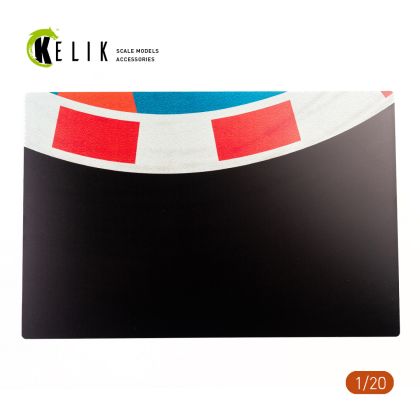
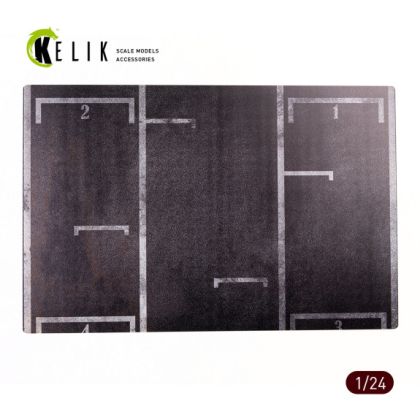
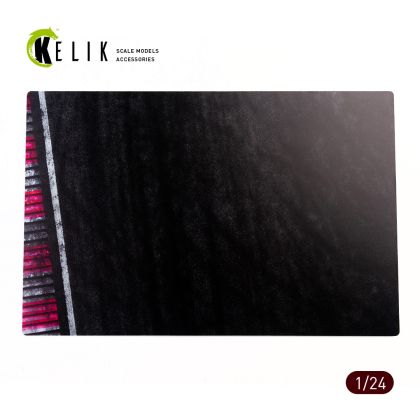
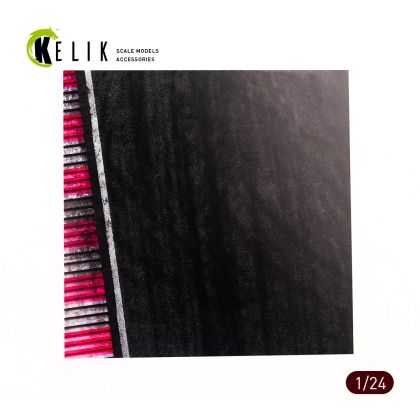
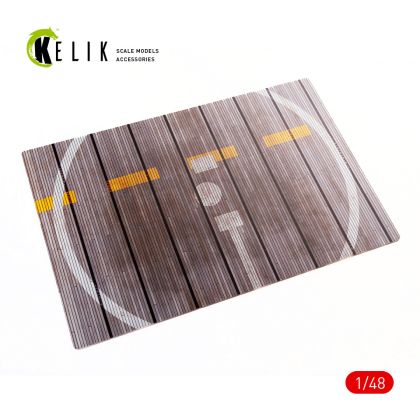
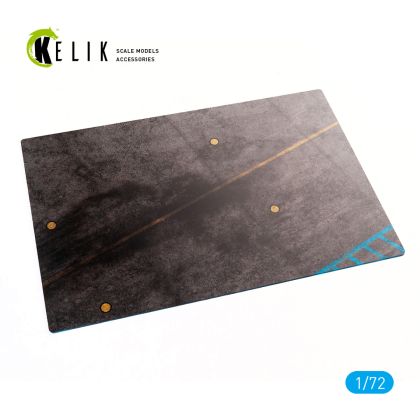
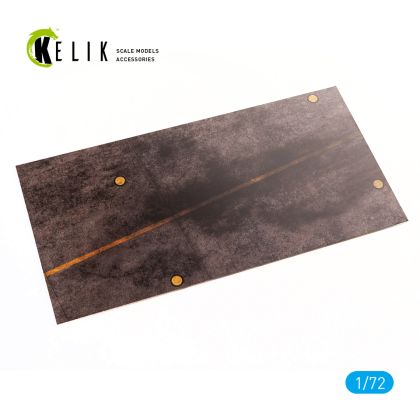
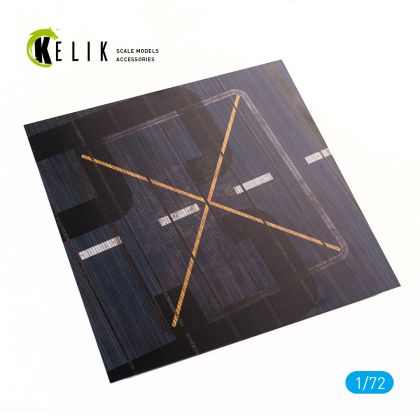
A printed acrylic mat is groundwork without groundwork. The surface shows a specific setting – airfield concrete slabs, the asphalt of a racetrack, the deck of an aircraft carrier, a parking apron – so the model gets an environment without you building a diorama for it.
These are made in defined scales and formats, which means the mat is chosen to fit the model that will stand on it rather than the other way round. Below we go through matching scale and format to the build, and what acrylic will and will not tolerate when it comes to cleaning.
A diorama is many hours of work. A printed acrylic base gives a similar effect in a few minutes: the surface matches the setting the machine served in, and the eye reads model and ground as one object. That makes it useful in a cabinet, in front of a camera and at a competition where carrying terrain is the last thing you want.
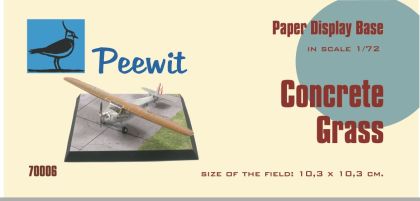
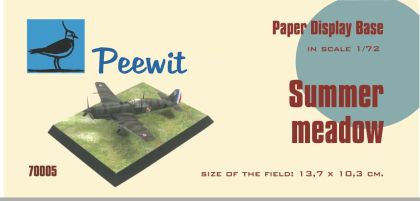
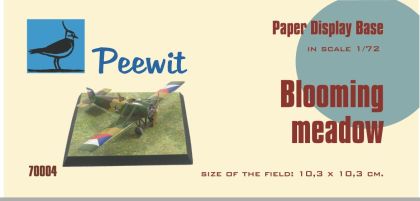
The surface is printed at a particular scale. A concrete slab, a paving pattern or an inspection cover in the wrong scale announces immediately that model and ground do not belong together. Choose by the scale of the build: the rule holds as firmly for aircraft models as it does for car models, and it is the single mistake worth avoiding here.
Formats differ in proportion as well as area. Square bases suit a single model; longer boards take a pair, or a vehicle with a long outline. If several machines are going to stand together, allow room for the gaps between them, or the composition reads as crowded.
Airfield aprons with slabs and taxi lines go with aircraft and helicopters; asphalt and starting grids with racing cars; carrier decks with naval subjects. Choose for the specific machine and period, because the same surface looks quite different under two different models.
Acrylic is light and strong but scratches easily, so clean it with a microfibre cloth and water only. Thinners and cleaners will dull or craze the surface. Avoid gluing the model down permanently as well – a light fixing is enough and lets you change the base later.
Choose the mat alongside the model rather than after the build; matching scale and format is much easier that way. Other kinds of plinth are in display bases.