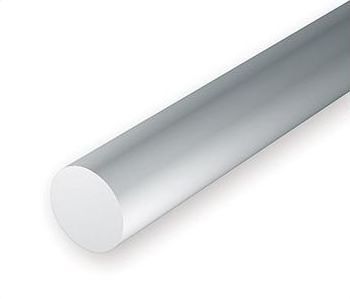
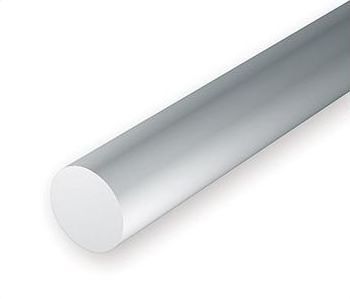
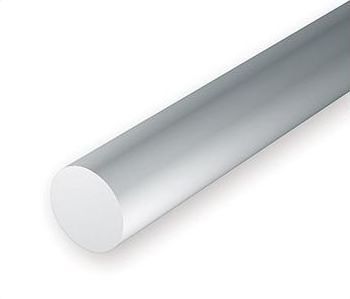
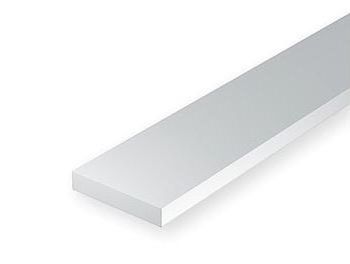
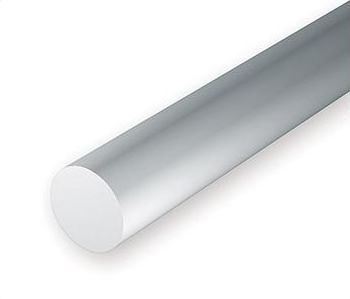
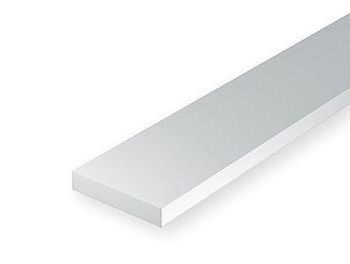
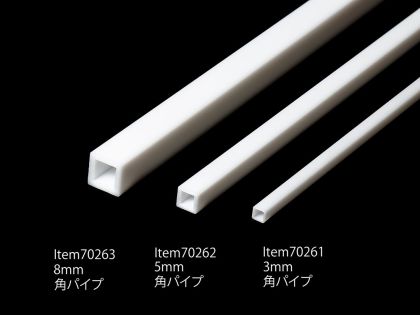
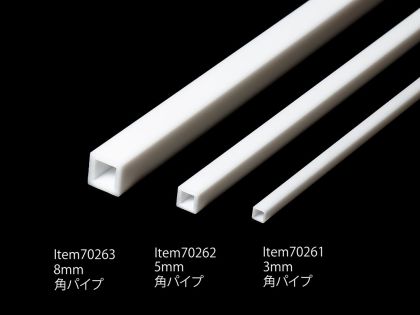
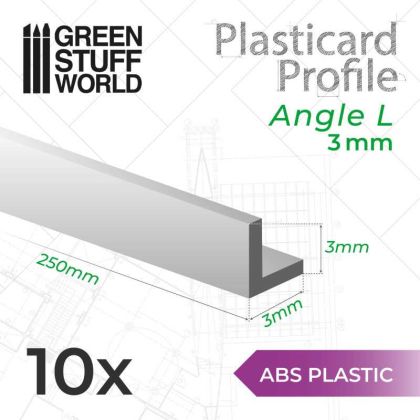
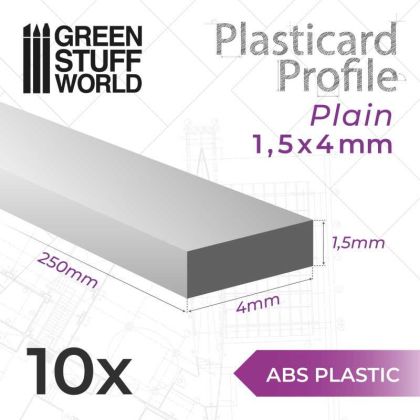
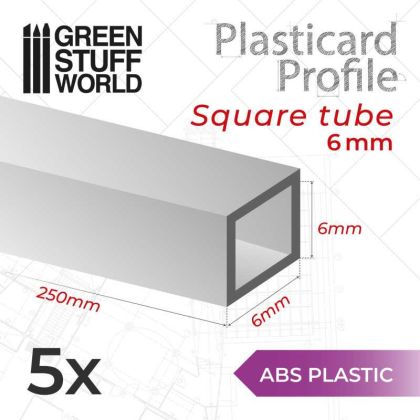
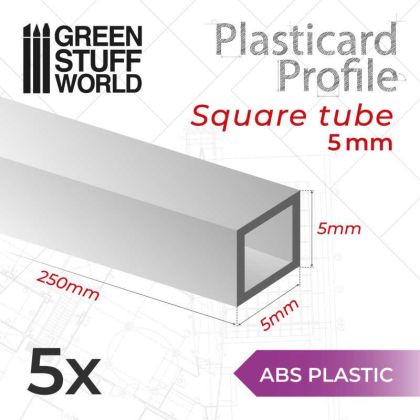
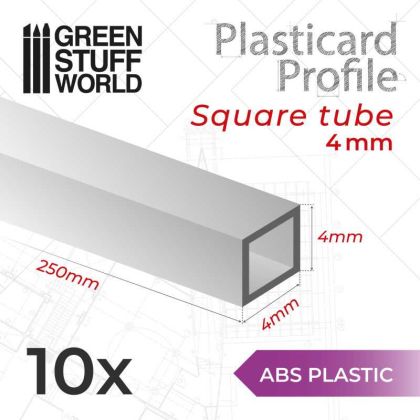
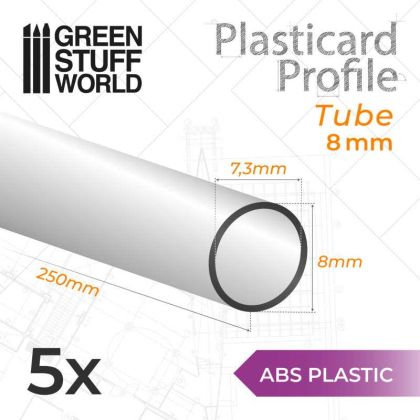
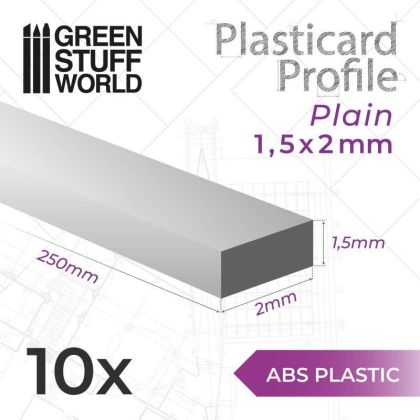
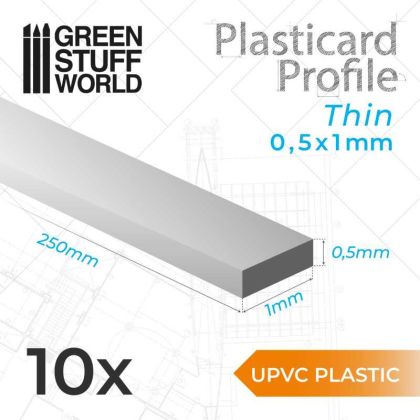
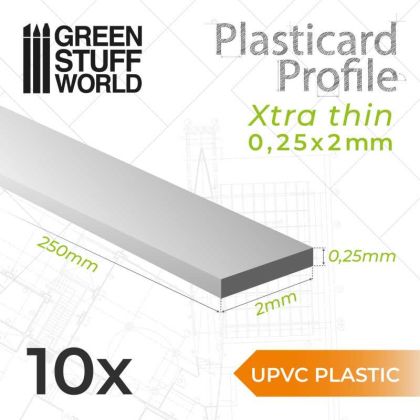
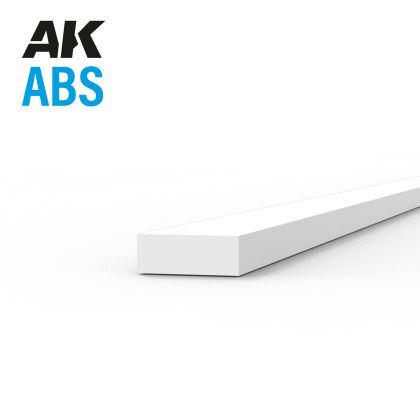
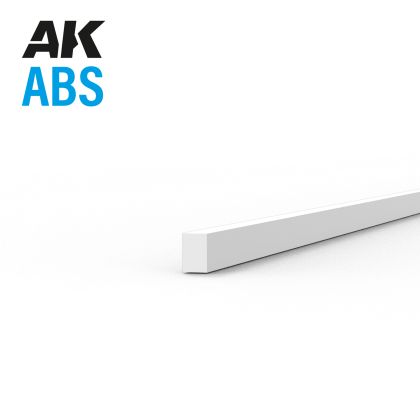
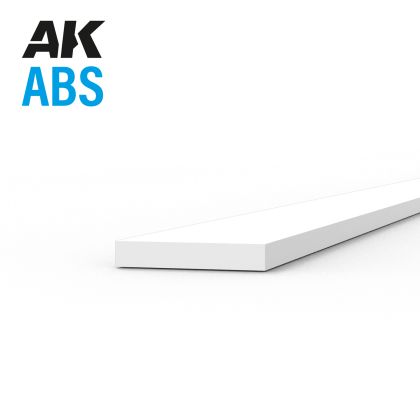
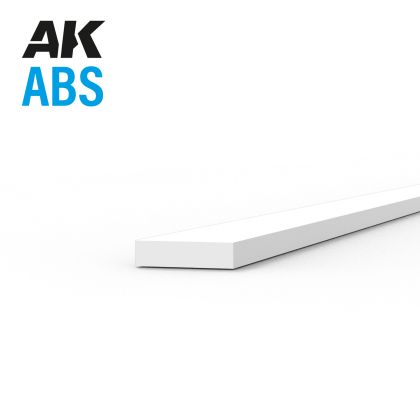
Styrene profiles are the plastic modeller's most-used building stock. They come as solid strip and round rod, hollow tube and box section, and ready-made structural shapes: L angle, H and I beam, U channel, triangle and half-round. The range starts at 0.25 mm thick and runs up to eight-millimetre tube, in lengths of 250, 350, 375 and 600 mm, in styrene, ABS, uPVC or clear plastic.
Everything here is semi-finished stock. The cross-section is given; what you cut from it is not.
A kit gives you the shape of the whole; profiles give you the shape of the details. A strip becomes floor planking or a bench, a tube becomes an exhaust or a barrel, an angle becomes a door frame, a beam becomes a crane or bridge structure. Just as often they rescue a repair: replace a broken strut, add the missing step the moulding never had, or hide a brace inside a seam that will otherwise open up.
Solid shapes are rigid and can be sanded to a point: square rod and strip, round rod and half-round for raised mouldings. Hollow shapes weigh less and nest inside one another: tube, square tube and rectangular tube. The structural sections copy real rolled steel: L angle, H beam, I beam and U channel.
Styrene is the most forgiving: it cuts with a blade and responds well to solvent cement. ABS is harder and copes better with stress and with heat forming. uPVC comes as extremely thin strip for fine trims and edging. Clear profiles suit lenses, covers and light guides, and their cut ends are better sanded and polished than painted over.
Always judge a size in the scale of the model: a 2 mm square section is a seven-centimetre beam in 1:35 and over fourteen in 1:72. The 600 mm lengths earn their keep on frames and fences, where a joint halfway along would show. Triangular and quarter-round sections come into their own in corners, filling the gap and stiffening it at the same time.
Degrease a finished assembly before painting and check the joints once more, because a profile glued out of true shows up twice as badly once the colour goes on.