Sd.Kfz. 173 Jagdpanther, early version, 1:16 (Trumpeter) - a large-scale kit of one of the best tank destroyers of the Second World War, with photo-etch, individual track links and a clear superstructure for a view into the interior.
Responsibility details are not available.
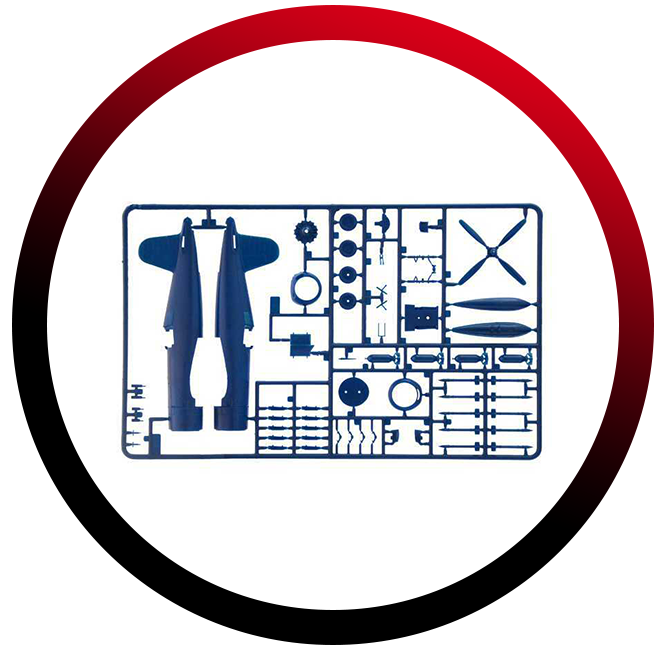
A plastic kit of the German tank destroyer Jagdpanther in the early version, worked in the large 1:16 scale. The kit contains over 2200 parts, photo-etched parts, individual track links, wire for the cables and six marking options. A feature you will not find elsewhere: the side walls of the superstructure are supplied in a clear version as well, so you can build the model in such a way that the inside of the fighting compartment is visible. The finished vehicle measures roughly 611 mm long and 213 mm wide. Unlike compact 1:35 kits, here the scale works for you: a rivet, a weld and the chain on the tools are all large enough for you to weather each one individually. The price of that is space, and time.
The Jagdpanther combined the proven chassis of the Panther tank with the long 88 mm PaK 43 gun in a fixed, well-sloped superstructure. It was exactly this balance that made it one of the best tank destroyers of the war: it had a powerful weapon, decent armor and, unlike the overloaded Jagdtiger, it kept the mobility and reliability of a chassis that did not have to drag dozens of extra tons. It was committed from 1944 on the Eastern as well as the Western Front, but relatively few were built, so it no longer had a decisive influence on the course of the war. The early version differs from the later one in several visible details: two driver's vision ports (periscopes) in the front plate instead of the single later one, a one-piece barrel for the PaK 43/3 gun, a smaller welded gun collar (the later version was given a larger, bolted one) and an engine deck derived from the Panther Ausf. A. Anyone building a particular vehicle from a photograph has to watch these features: a late kit would not fit an early machine.
Finish and paint the running gear and the interior before you close the hull and the superstructure up. Leave the clear parts of the superstructure for final fitting and protect them from glue, fingerprints and sanding; a scratch on clear plastic is hard to save. Assemble the individual track links on a flat surface, so that the track drapes nicely over the top wheels. At a large scale the surface stands out, so clean the seams up properly, use thin cement for plastic and spray primer. The classic three-color late-war camouflage schemes (a yellow base color with brown and green patches) are best done in 1:16 with an airbrush at very low pressure or over plasticine worms. Build the weathering in layers: washes into the welds and recesses, pigments for mud and dust on the running gear, and dusty, scuffed tracks.
The model is supplied unassembled and unpainted. Glue, paints and accessories are not included in the package, unless stated otherwise.
Naši poradci a znalci sortimentu jsou připraveni odpovídat na Vaše dotazy (Po–Pá, 8–18 hod).
Zeptejte se na co potřebujete, odpovíme co nejdříve.
Texts from customers in the advice section reflect solely the opinions and views of the customers. MNF trade s.r.o. does not approve or verify customer texts in advance.
There are no questions here yet. Be the first to ask!