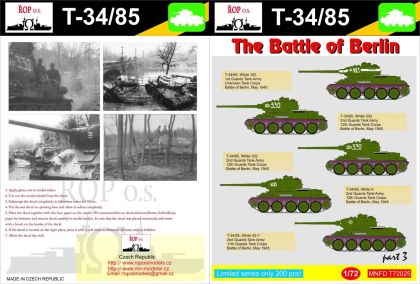
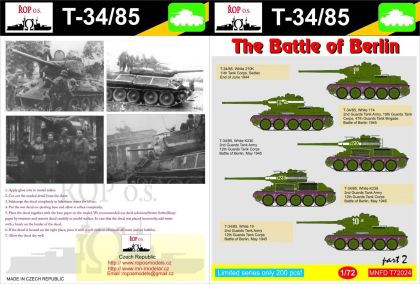
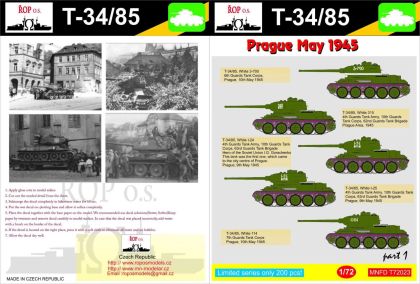
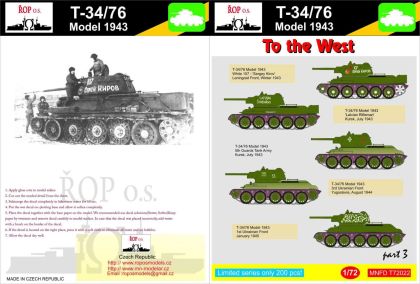
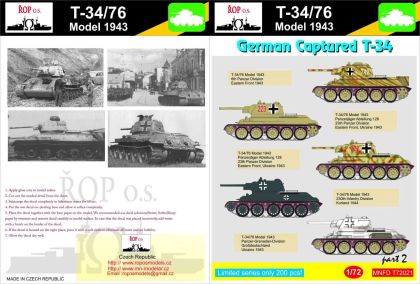
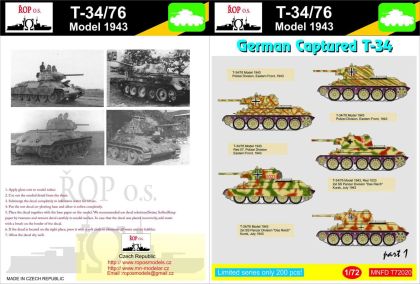
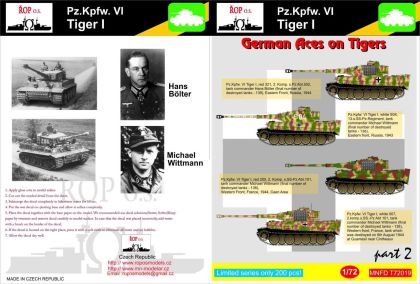
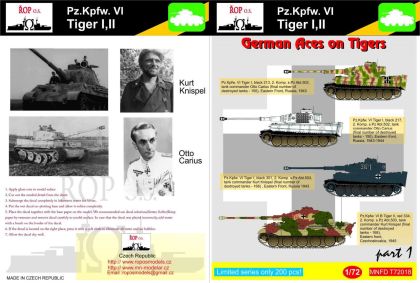
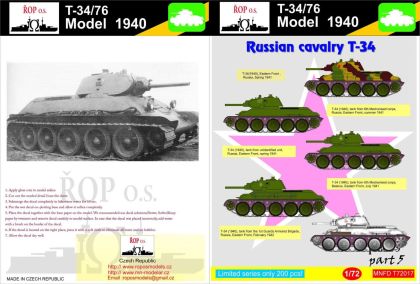
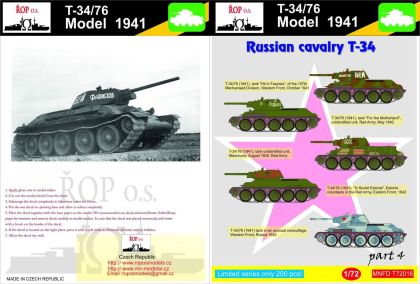
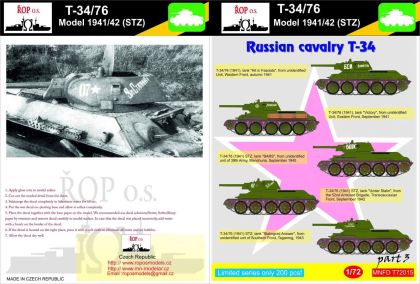
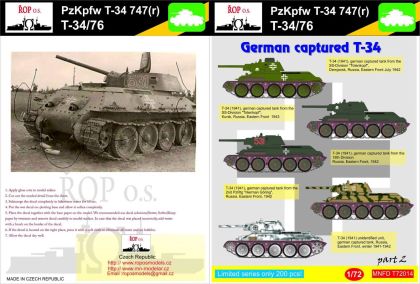
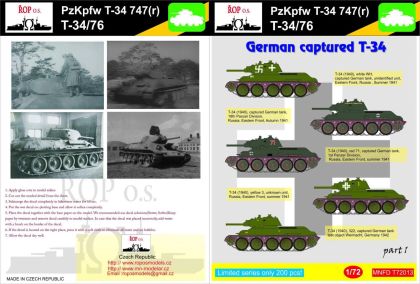
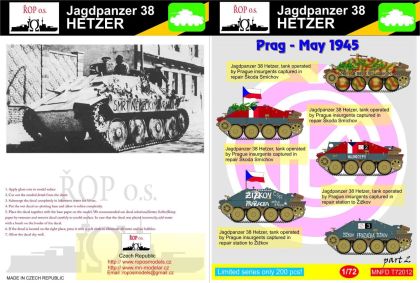
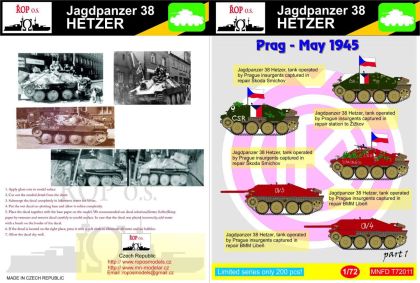
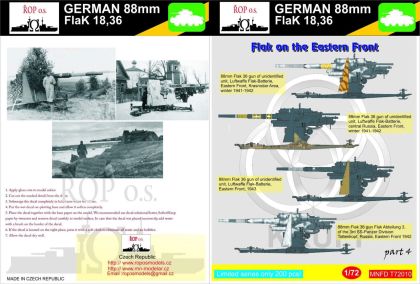
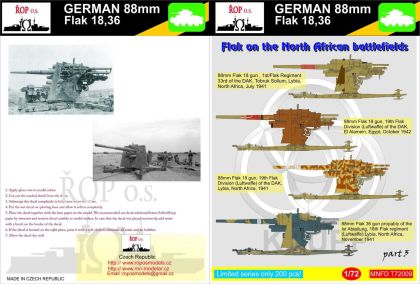
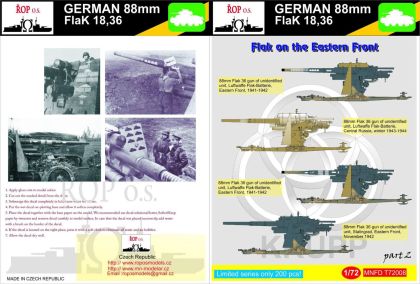
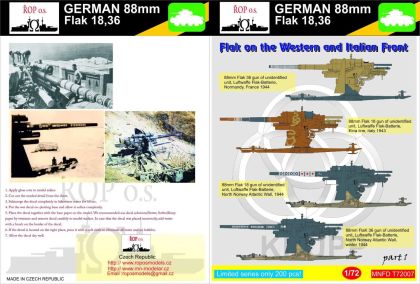
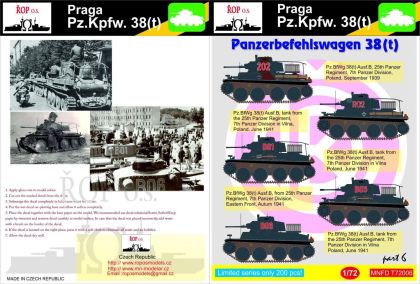
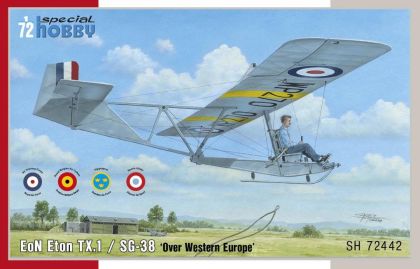
Markings are where a kit box is usually weakest, and that is the gap these sheets fill. They cover tactical numbers and insignia for medium tanks in several production versions, self-propelled guns, command vehicles and anti-aircraft guns, together with captured machines carrying two layers of markings at once. Options are tied to identifiable episodes, among them the fighting for Berlin, Prague in May 1945, and the North African and Italian theatres.
Because of that, a sheet is worth buying even for a model that already came with decals. Both common armour scales are covered, and each contains the printing only, not a kit.
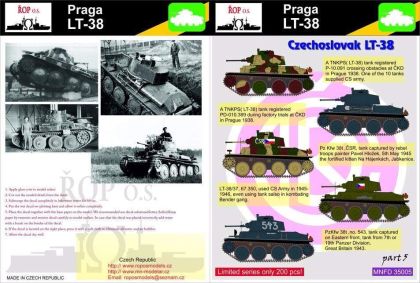 1:35 Praga LT-38 - Czechoslovak LT-38
7.96 €
1:35 Praga LT-38 - Czechoslovak LT-38
7.96 €
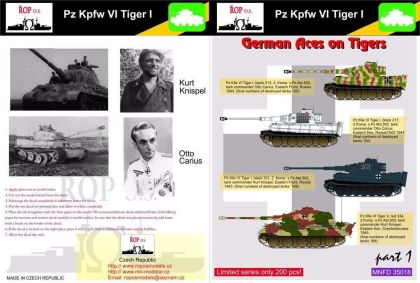 1:35 PzKpfw IV Tiger I,II - German aces on Tigers
7.96 €
1:35 PzKpfw IV Tiger I,II - German aces on Tigers
7.96 €
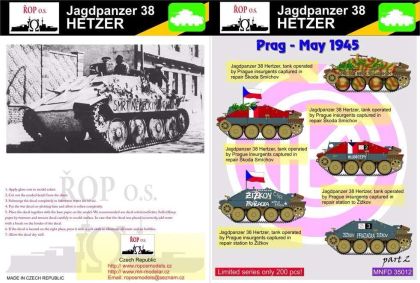 1:35 Jagdpanzer 38 HETZER - Prag May 1945
7.96 €
1:35 Jagdpanzer 38 HETZER - Prag May 1945
7.96 €
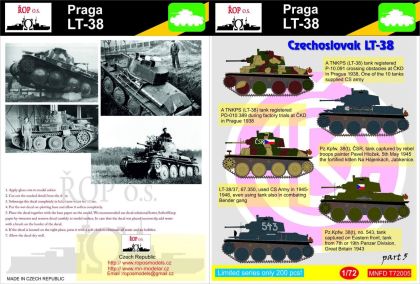 1:72 Praga LT-38 - Czechoslovak LT-38
7.96 €
1:72 Praga LT-38 - Czechoslovak LT-38
7.96 €
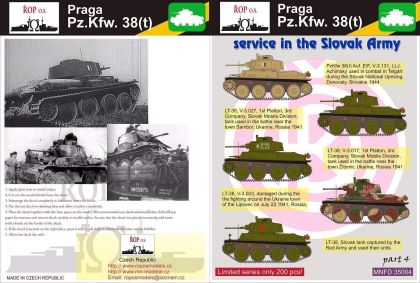 1:35 Praga Pz.Kpfw. 38(t) - Service in the Slovak Army
7.96 €
1:35 Praga Pz.Kpfw. 38(t) - Service in the Slovak Army
7.96 €
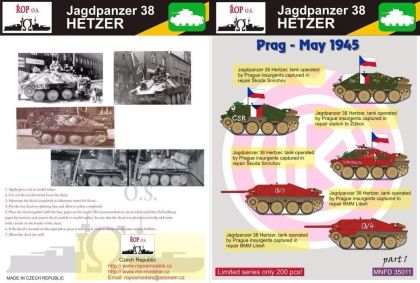 1:35 Jagdpanzer 38 HETZER - Prag May 1945
7.96 €
1:35 Jagdpanzer 38 HETZER - Prag May 1945
7.96 €
Mass-produced tanks were finished with very little consistency, so markings carry most of the identity of a given model. Insignia place a vehicle in time and space as firmly as its camouflage does. A captured machine wearing two sets of national markings is the most striking option of all, since it combines one army's lines with another's crosses and numbers, and it justifies a weathering approach you would not otherwise use. Command vehicles and anti-aircraft mounts bring their own, quite different, marking conventions.
Sheets exist in 1:35 for the mainstream armour scale and in 1:72 for small-scale and diorama work. The subjects overlap, so pick the scale of the kit and the choice narrows itself.
This matters more than the vehicle type. On tanks built over several years the turret shape changed, and with it the flat areas where numbering belonged, so a sheet laid out for a late version will not sit correctly on an early one. The sheet name states the version; read it rather than the type alone.
The dirtier the finish, the larger the markings should be. Small lettering vanishes under a layer of dust almost immediately, so if heavy soiling is the plan, choose bold insignia and place numbers on surfaces where dust does not settle.
Armour is usually finished matt, and matt paint is exactly what makes a decal silver. Lay a gloss coat first, apply the markings, work them down with a setting solution, and only then return the model to a flat finish. Markings that cross louvres or weld beads need a second pass and patience; cutting a long slogan into sections is better than fighting it in one piece.
Aircraft sheets and the universal relief sheets are in the ŘOP decals section.