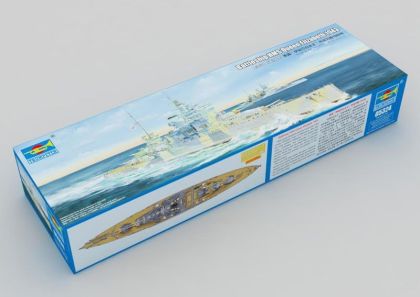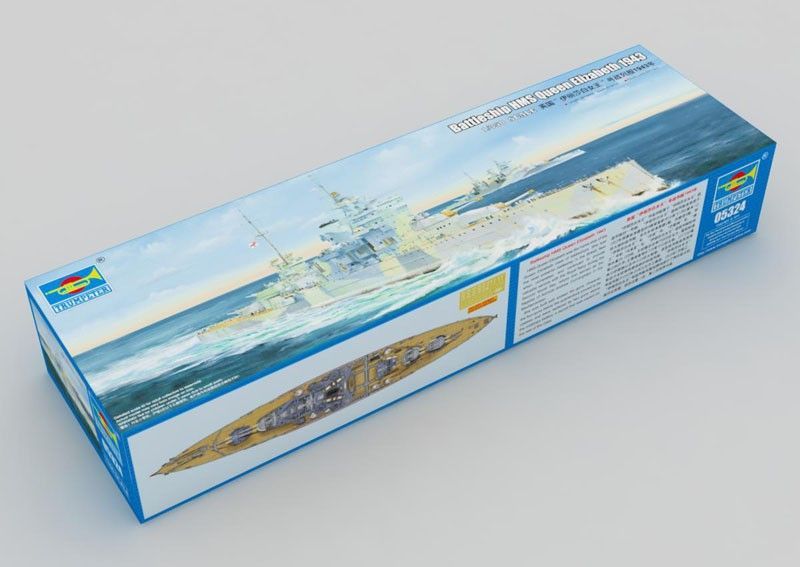
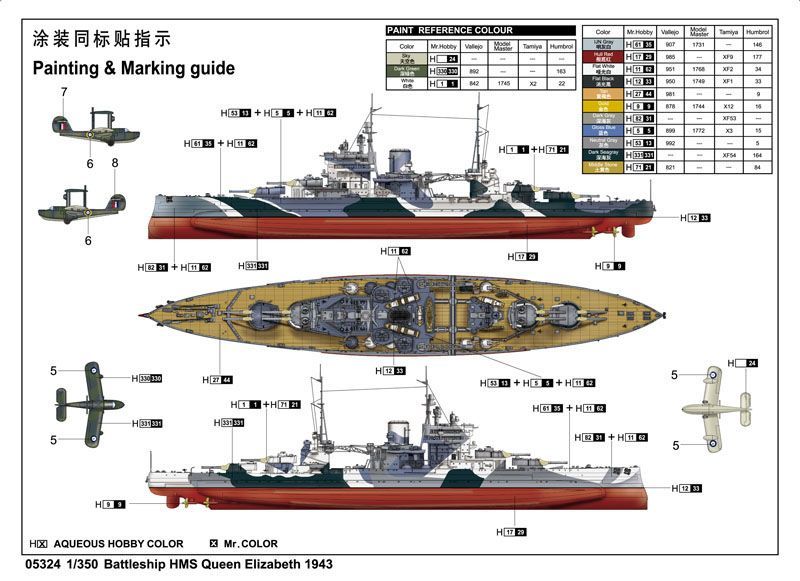
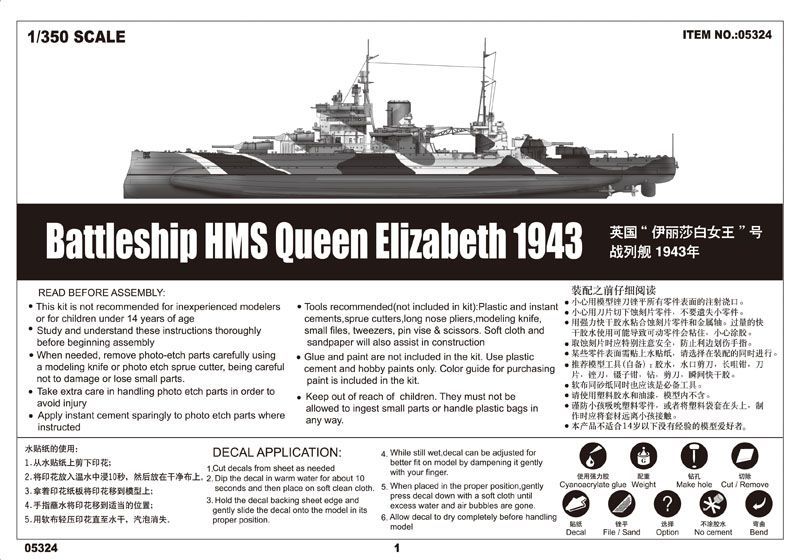
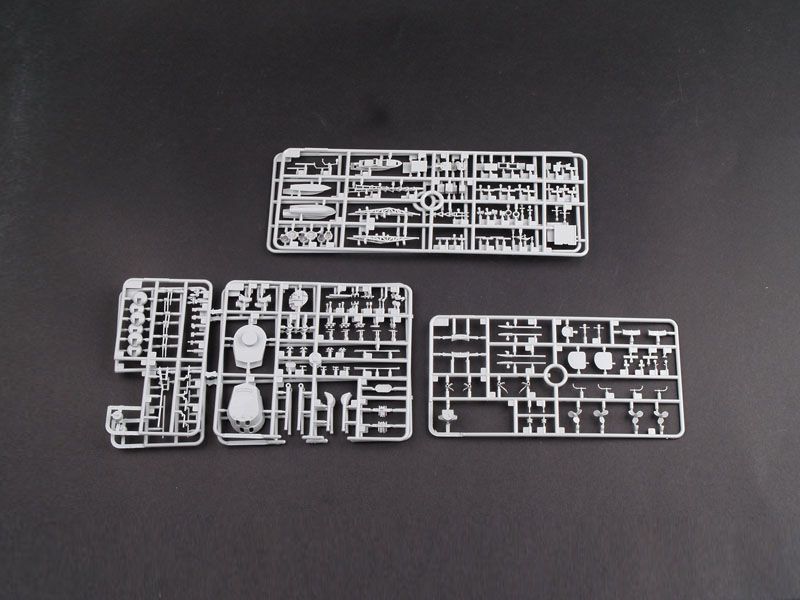
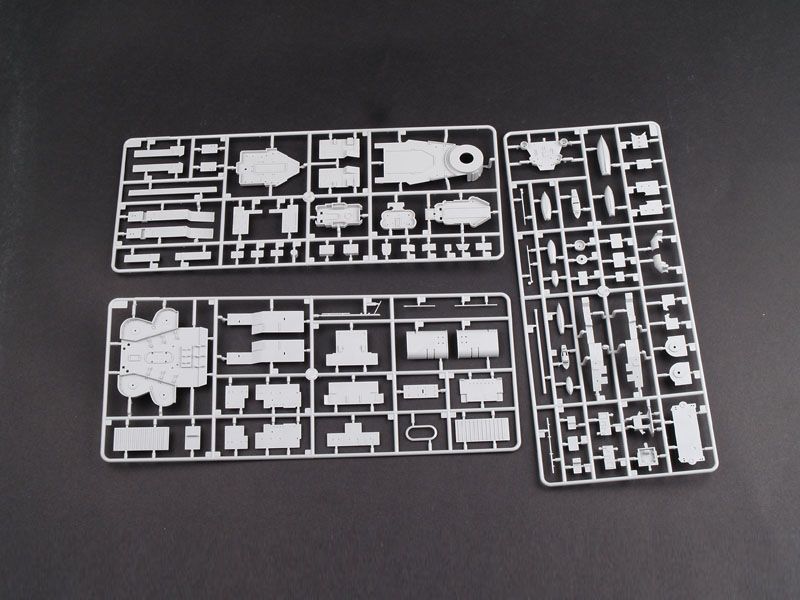
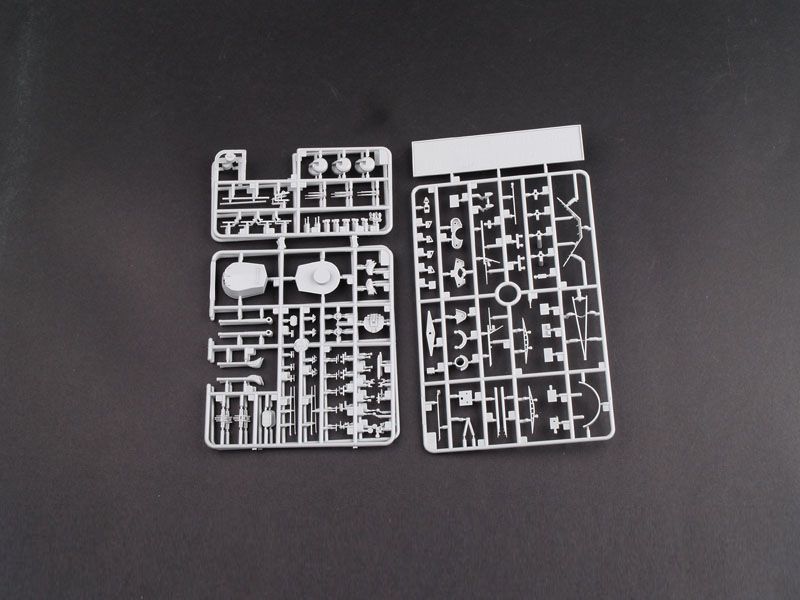
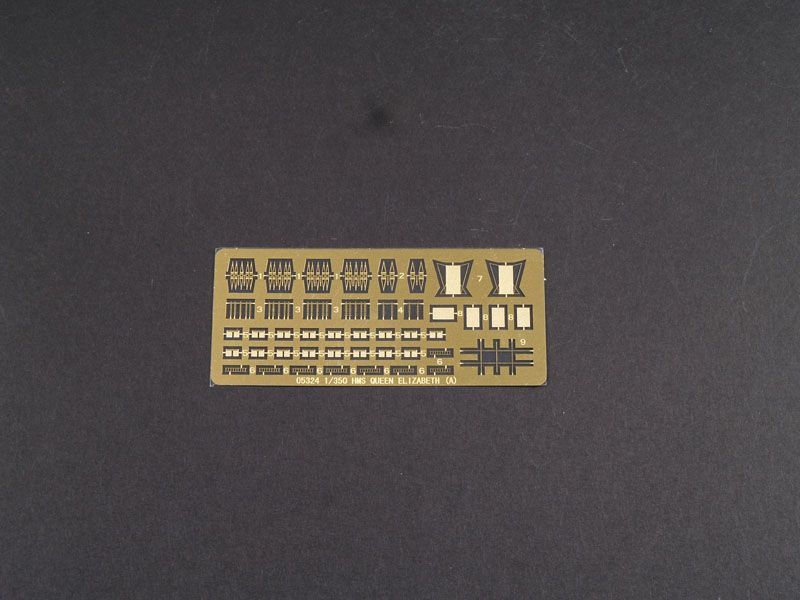
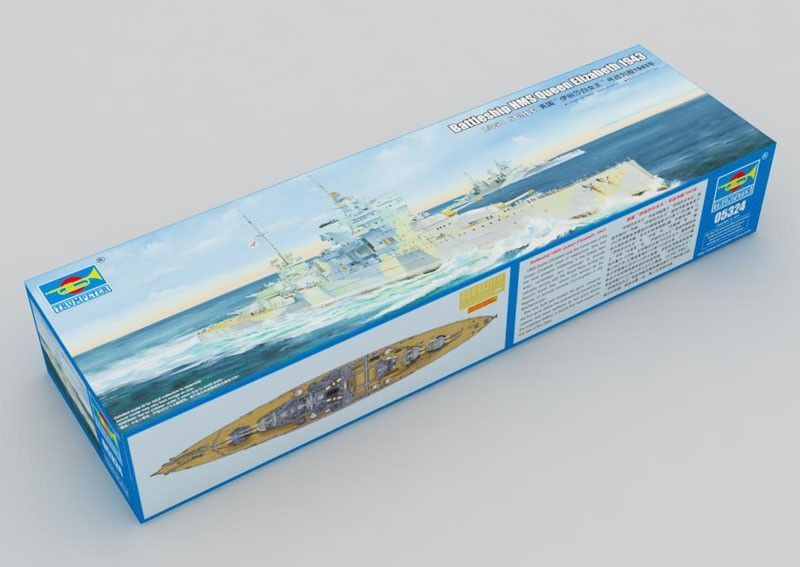
A plastic kit of the British battleship HMS Queen Elizabeth in 1:350 scale from the manufacturer Trumpeter. The model is built with the full hull, and a photo-etched fret and a stand are in the box; the finished ship measures over 56 cm.
Responsibility details are not available.
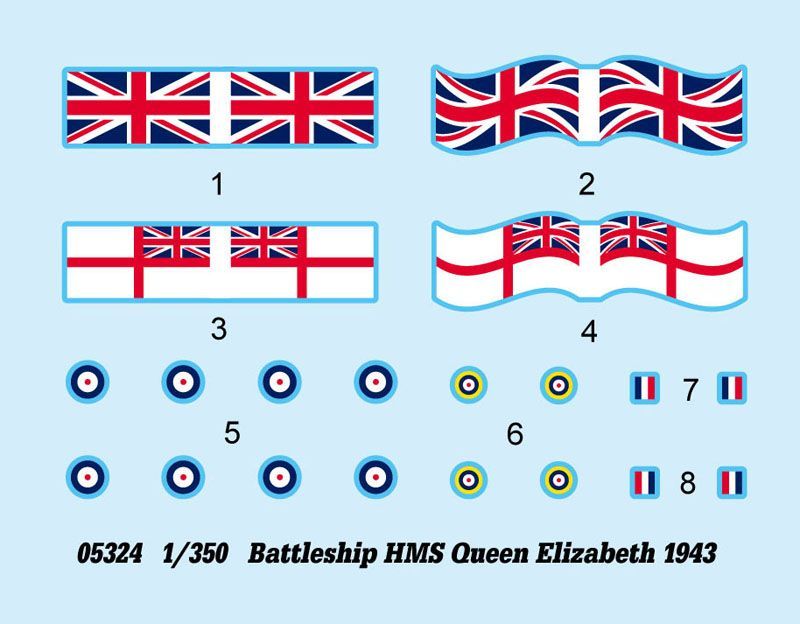
An unassembled plastic kit of the battleship HMS Queen Elizabeth in 1:350 scale from Trumpeter. According to the figures of the manufacturer the set has over 600 parts on eighteen sprues, a split hull with internal stiffeners, decks with scribed plank texture, a photo-etched fret (funnel grilles, turret ladders, details of the anti-aircraft armament), a pair of Walrus reconnaissance biplanes, decals and a stand with a nameplate. The finished model measures roughly 56 cm in length and about 8.8 cm across, so allow for that when choosing a display case. The hull is conceived as full hull, that is complete including the underwater part; the manufacturer does not state a waterline option.
The Queen Elizabeth was the lead ship of the class of fast battleships named after her, with 15 inch guns. Her class is a fundamental technical milestone: they were the first British battleships powered by oil alone instead of coal. Oil-fired boilers gave the ships higher speed, greater range and less need for manpower than coal furnaces, where stokers had to shovel the fuel in. The ship served in both world wars; in the second she went through an extensive rebuild (a tower superstructure, new secondary and anti-aircraft armament) and operated in the Mediterranean. In December 1941 Italian frogmen with manned torpedoes badly damaged her in the harbor of Alexandria; the ship settled on the harbor bottom, was repaired and returned to service in 1943.
A ship model is a different discipline from an aircraft: most of the time goes on the superstructure, the gun turrets, the small armament, the boats and the rigging, not on the hull. Work in subassemblies: the hull and the decks first, then the superstructures, and the armament at the very end. Glue the hull and let it cure thoroughly, sand the seams and spray the surfaces with primer. Paint the decks and the sides while they are still accessible. Join the plastic with thin extra-liquid cement and the photo-etch with super glue. The scribed lines come out with a panel wash and a wooden deck comes to life with a dry brush. Railings and ladders are commonly added in photo-etch on ships in 1:350; a basic fret is in the box, while complete railings are bought separately. Add the rigging of drawn line at the very end.
The model is supplied unassembled and unpainted. Glue, paints and accessories are not included in the package, unless stated otherwise.
Naši poradci a znalci sortimentu jsou připraveni odpovídat na Vaše dotazy (Po–Pá, 8–18 hod).
Zeptejte se na co potřebujete, odpovíme co nejdříve.
Texts from customers in the advice section reflect solely the opinions and views of the customers. MNF trade s.r.o. does not approve or verify customer texts in advance.
There are no questions here yet. Be the first to ask!