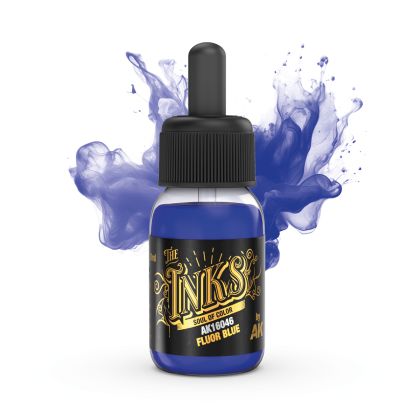
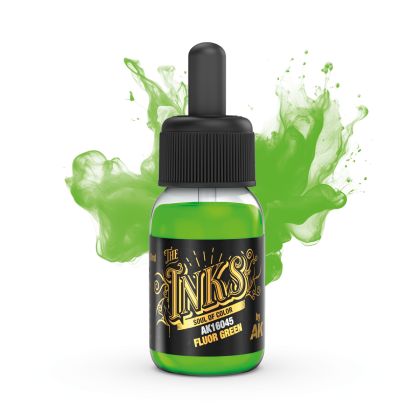
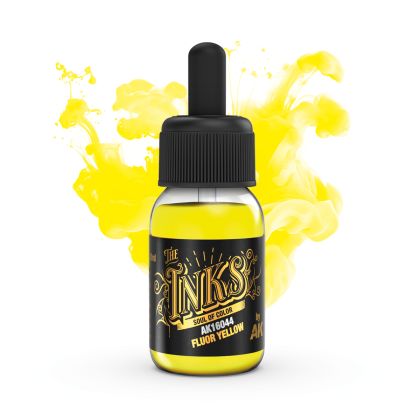
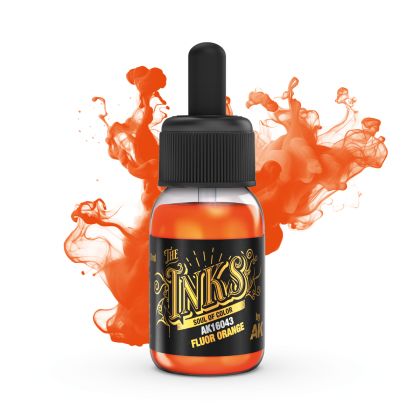
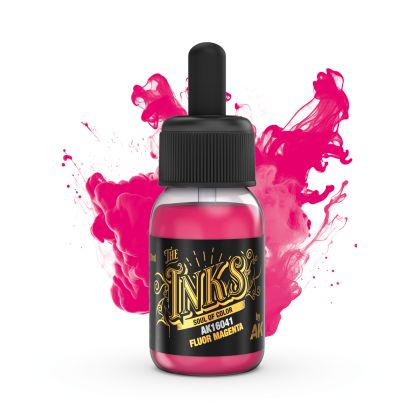
INK is a range of modelling inks in which saturated colour shades stand alongside a full set of five fluorescents: blue, green, yellow, orange and magenta. The luminous inks behave on a model like a transparent colour layer with unusually high light response, which is why they end up on energy weapons, plasma effects, displays and anywhere a surface should look as if it is lit from within.
The conventional half of the range works like any ink — as a filter over finished paintwork. Getting the fluorescents to actually glow, rather than simply look odd, takes a specific sequence, and that sequence is below.
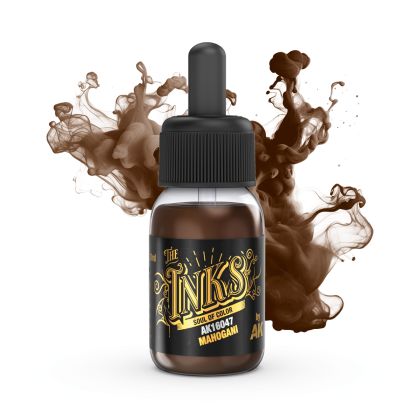
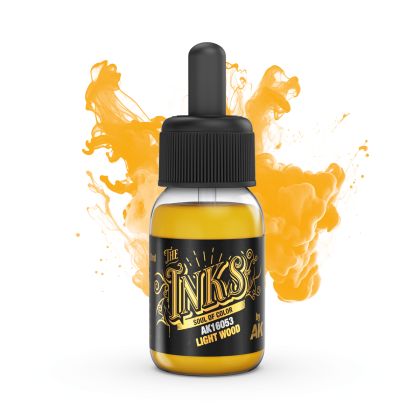
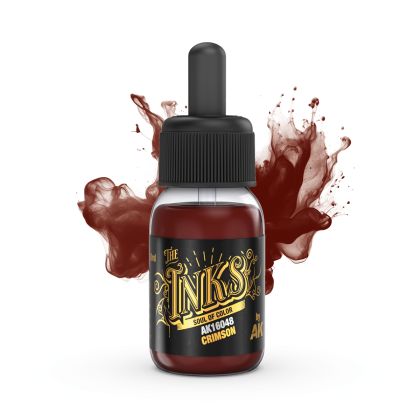
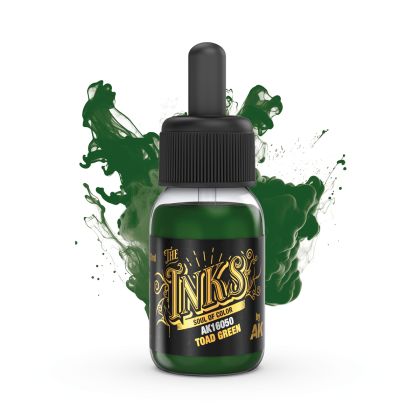
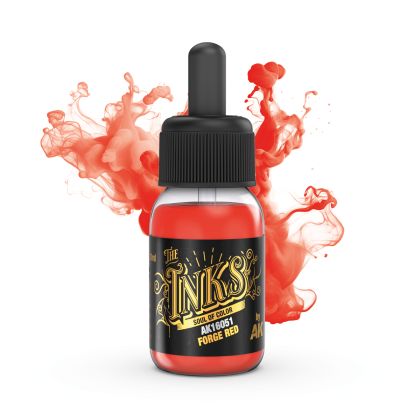
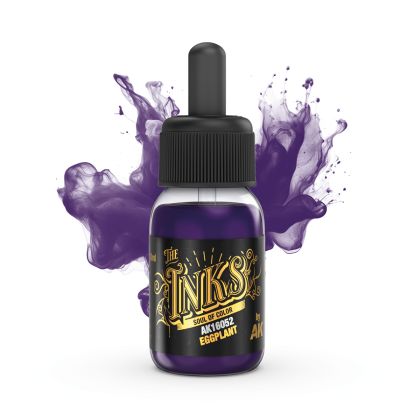
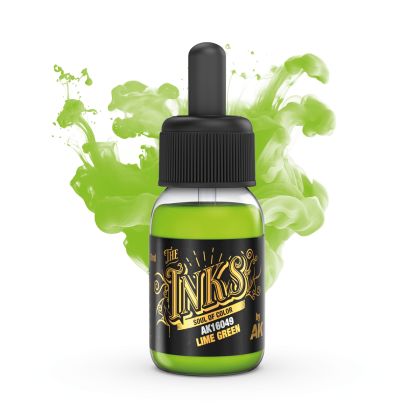
Part of the selection is conventional saturated inks: light wood, mahogany, crimson, aubergine, a forge red and two greens running from lime to frog. They are used as any ink is, as a colour filter over a finished coat. The other part is fluorescent inks, whose pigment has a far higher light response. Under daylight they read unnaturally saturated; under an ultraviolet source they light up.
Luminous tones have no place on historical subjects, but on sci-fi machines, gaming models and backlit dioramas they deliver an effect that otherwise requires clear plastic and an LED. Both groups go on with the same technique; only the base underneath changes.
Luminous pigment is transparent, so it dies over a dark base. Cover any area that has to glow with white first; suitable bases are in surfacers and primers.
The convincing result is a combination: the brightest point in pure white, fluorescent ink around it in two or three coats, and a transition into the surrounding colour at the edge. Without that gradation a glowing area looks like a sticker.
The non-fluorescent shades go on heavily diluted and in layers. Crimson and aubergine serve shadows in cloth; the wood tones suit stocks, crates and beams. More on tinting technique is in The Inks.
The maker's whole catalogue, from opaque acrylics to metal finishes, is under AK Interactive model paints.