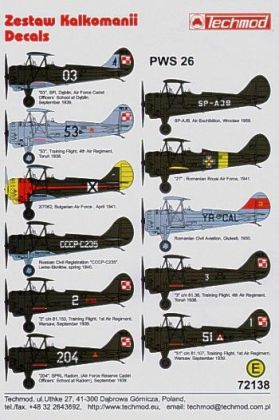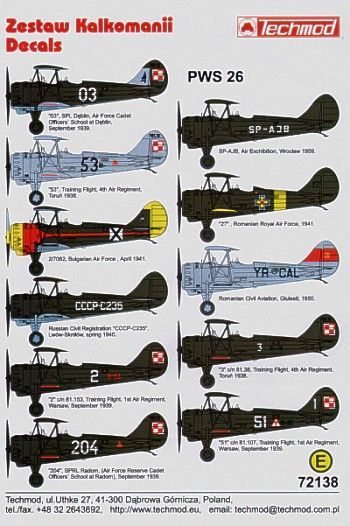
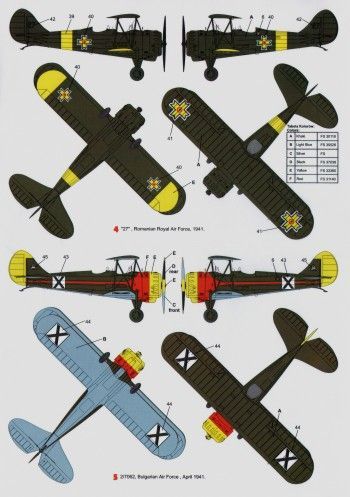
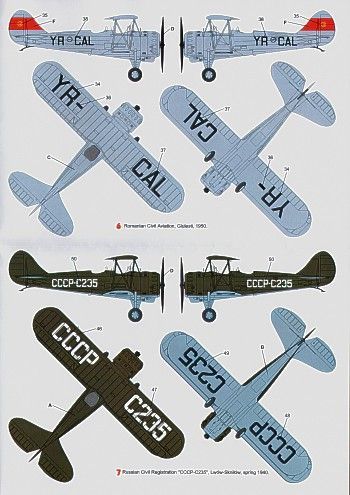
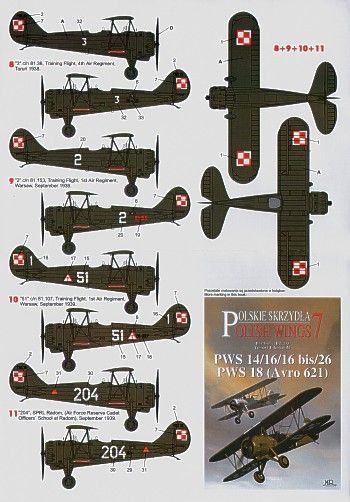
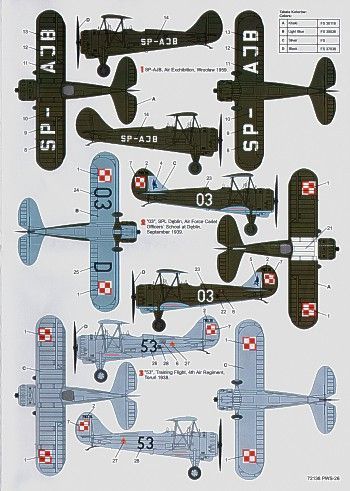
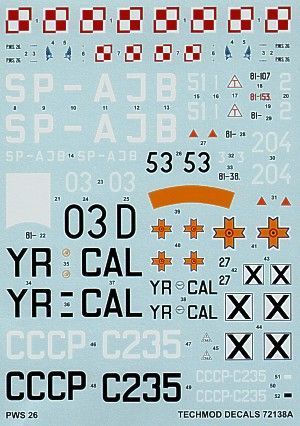
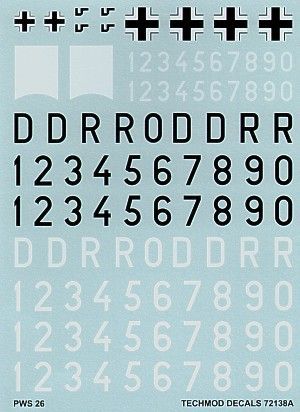
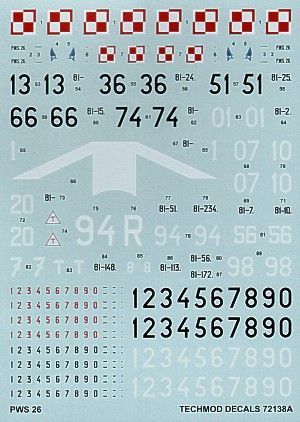
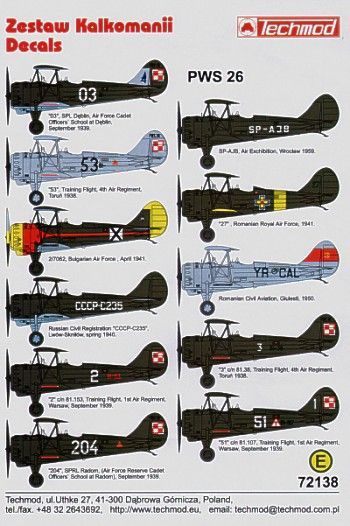
Markings for the Polish advanced training biplane PWS-26 in 1:72. Besides prewar Polish machines it also offers schemes of aircraft that passed to further users after 1939.
Responsibility details are not available.
The PWS-26 type came about in the middle of the 1930s as the last stage of training before moving on to a combat machine. A sturdy truss fuselage, fixed landing gear and a radial engine stood rough handling by students, and some of the aircraft were given light armament as well for practicing gunnery and dropping practice bombs. Around two hundred and fifty were built by the outbreak of the war and they served mainly with flying schools.
The September campaign scattered the machines across the whole of Central Europe. Several dozen of them flew across the southern border and were taken over there into military service, others fell into Soviet hands, and further ones served the victor as liaison and towing aircraft. It is precisely this variety that makes the type a rewarding subject: one airframe can be built in several entirely different coats.
A model benefits from a surface evened in advance and a smooth layer of clear coat, because the markings of this type tend to be large-area and unevenness shows under them. The checkerboards on the wings call for patient settling across the leading edge; gradually pressing the water out with a cotton swab from the center outward helps. With a biplane it also pays to stick the markings on the lower wing before the struts and the rigging are fitted, otherwise the fingers cannot reach them.
Naši poradci a znalci sortimentu jsou připraveni odpovídat na Vaše dotazy (Po–Pá, 8–18 hod).
Zeptejte se na co potřebujete, odpovíme co nejdříve.
Texts from customers in the advice section reflect solely the opinions and views of the customers. MNF trade s.r.o. does not approve or verify customer texts in advance.
There are no questions here yet. Be the first to ask!