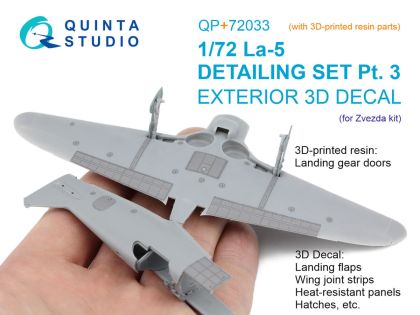
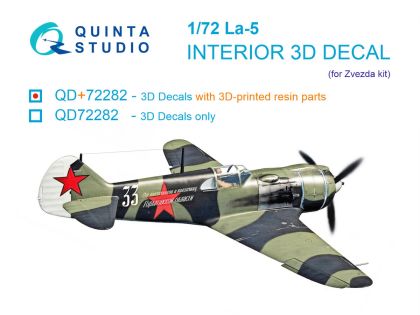
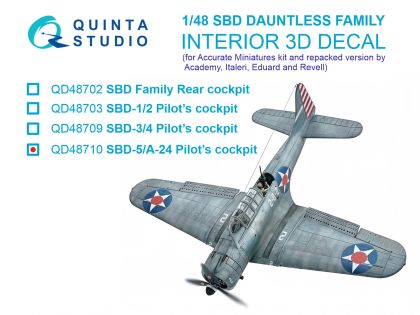
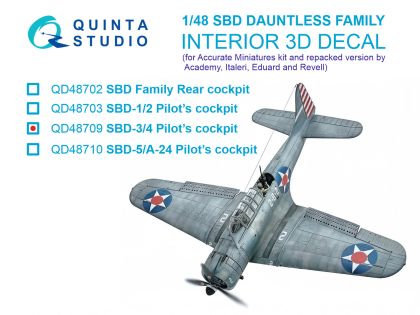
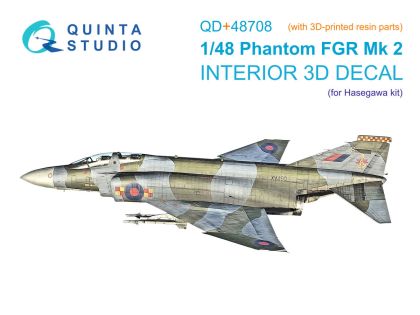
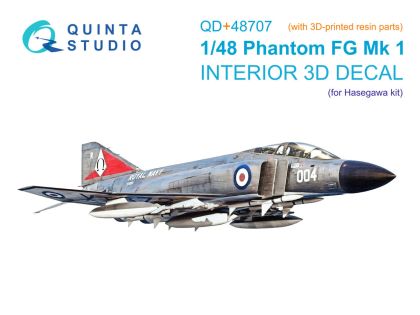
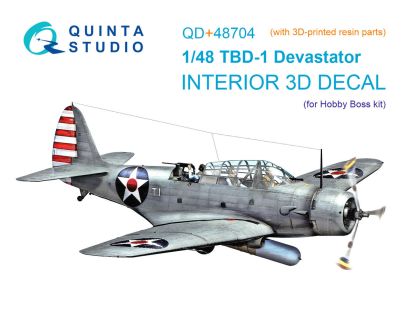
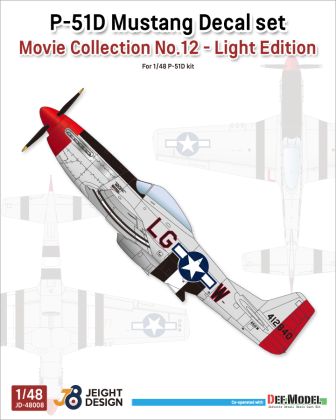
Decals for aircraft models deal with the most conspicuous thing on a finished machine: national insignia, fuselage codes, service stencils and complete markings for individual aircraft. Beside classic waterslide sheets with their thin carrier film there are relief three-dimensional decals for instrument panels and seatbelts. Below we explain how to pick a sheet for a specific kit and how to lay decals down so that no carrier film shows once the clear coat is on.
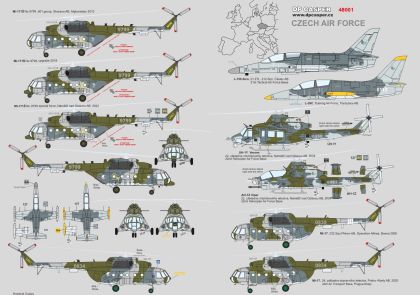 1:48 Czech Air Force
13.16 €
1:48 Czech Air Force
13.16 €
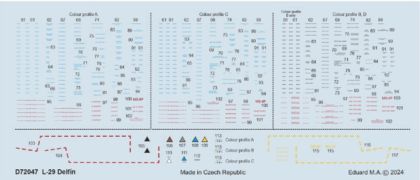 1:72 Aero L-29 Delfin stencils
6.80 €
1:72 Aero L-29 Delfin stencils
6.80 €
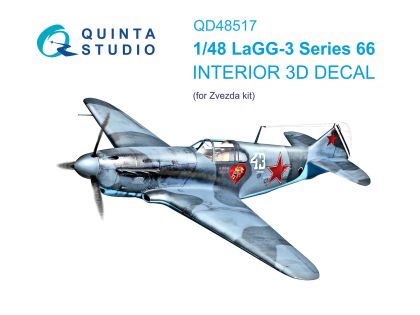 1:48 LaGG-3 Series 66 3D-Printed & coloured Interior on decal paper (Zvezda)
11.56 €
1:48 LaGG-3 Series 66 3D-Printed & coloured Interior on decal paper (Zvezda)
11.56 €
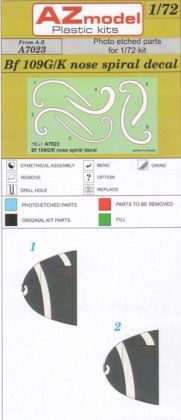 1:72 Bf 109G/K nose spiral decal
4.76 €
1:72 Bf 109G/K nose spiral decal
4.76 €
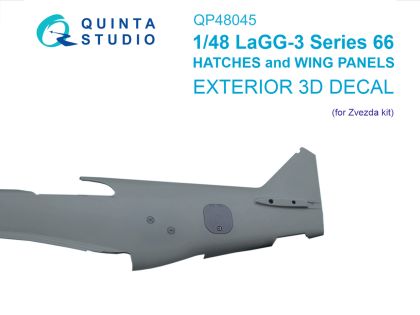 1:48 LaGG-3 Series 66 Hatches and Wing Covers (Zvezda)
7.96 €
1:48 LaGG-3 Series 66 Hatches and Wing Covers (Zvezda)
7.96 €
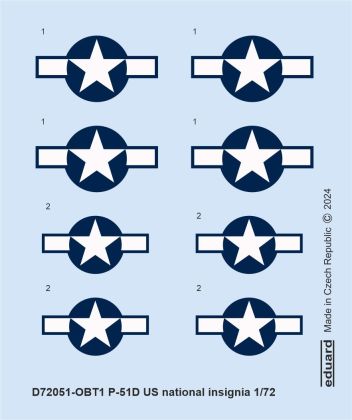 1:72 P-51D Mustang US national insignia
4.40 €
1:72 P-51D Mustang US national insignia
4.40 €
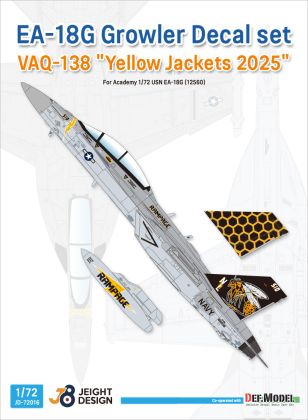
A decal is a thin printed film on a backing paper that releases when wet and clings to the surface of the model. It carries national insignia, fuselage numbers and service stencils, which is to say everything that turns an anonymous camouflage scheme into one specific machine with a history. Alongside marking sheets this category holds stencil sets, the small technical lettering, and relief three-dimensional decals that take the place of painstaking instrument panel work or glued-on etched belts.
Most sheets are drawn for one kit, and the type is usually stated in the sheet title. Part dimensions differ between manufacturers, so a decal drawn for another kit may not line up with the panel lines. Where a sheet names no target, it carries generic insignia or letters whose placement is up to you.
The scale of the sheet has to match the scale of the model or the lettering will be the wrong size. The range is divided into 1:72 aircraft decals, 1:48 aircraft decals, 1:32 aircraft decals, 1:24 and 1:28 decals, 1:144 decals and 1:35 decals for kits that share their scale with military vehicles.
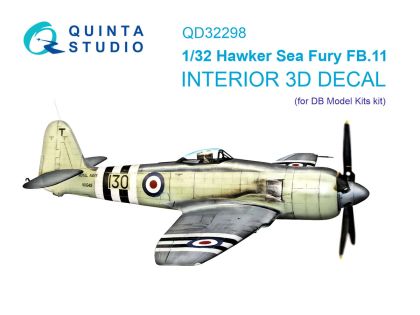
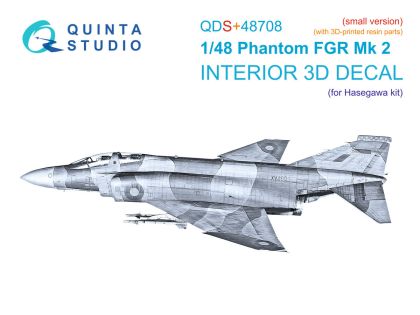
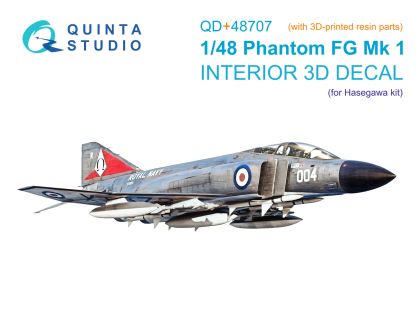
A classic sheet is the fastest route to an authentic scheme. Relief three-dimensional decals go further: panels and seatbelts have a raised surface, so the cockpit comes alive without a single etched part. They pay off especially on machines with a closed canopy, where you look in through glass.
A setting solution will help a decal sink into panel lines and rivet rows. Once the sheet is chosen, only one thing remains: find it a matching machine in the aircraft model kits.