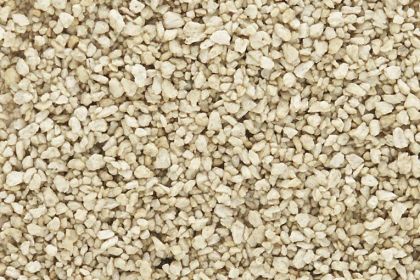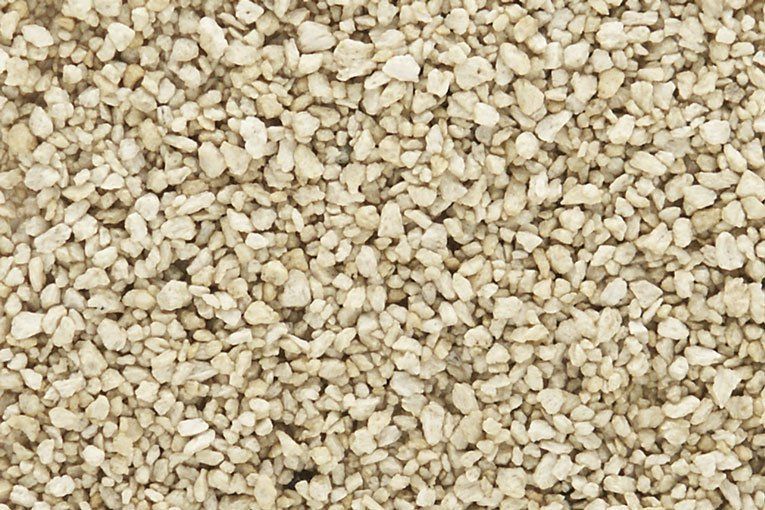
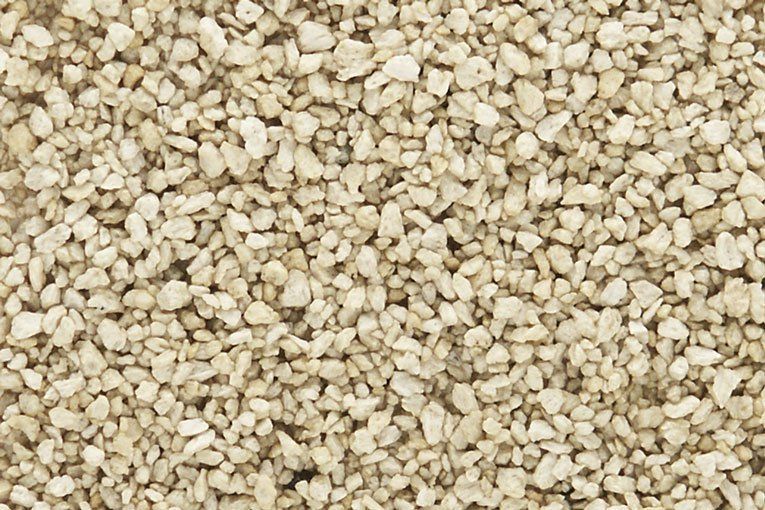
Fine stone talus in a buff shade for scree below rock faces and for slope debris.
Responsibility details are not available.
Talus gathers wherever frost and water gradually take a cracked stone apart. The fragments fall down the face and at its foot form the characteristic cone, narrow at the top and widening below into a slope with an even pitch. Without this small touch a model rock looks as though it had grown straight out of the grass, which practically never happens in nature. The buff shade matches sandstones, light limestones and weathered loess faces.
The brand offers the same shade in four grades and this is the smallest of them. It comes into its own in the smaller scales, where a larger fragment would read as a boulder, and anywhere the debris has to pass into the surrounding soil. A proven method is to lay coarser material below the face and replace it gradually with this fine grade further out, because real talus sorts itself by size as it goes down the slope.
Work on a sloping surface calls for a different method than level ground. The base is first coated with glue and the talus is laid on it from the top down, so that it catches in the still-damp layer. Then comes soaking with thinned glue and a wetting agent, drop by drop, so that the debris does not slide. Only after drying does toning with pigment follow.
One small piece of advice at the end: a few fragments scattered a little way from the main run suggest that the stone rolled on from there, and the scene at once looks livelier than a carefully bounded heap. The rest of the package can be closed and stored; the material is dry and does not spoil.
Naši poradci a znalci sortimentu jsou připraveni odpovídat na Vaše dotazy (Po–Pá, 8–18 hod).
Zeptejte se na co potřebujete, odpovíme co nejdříve.
Texts from customers in the advice section reflect solely the opinions and views of the customers. MNF trade s.r.o. does not approve or verify customer texts in advance.
There are no questions here yet. Be the first to ask!