Precision Singe-Edged Hobby Side Cutter

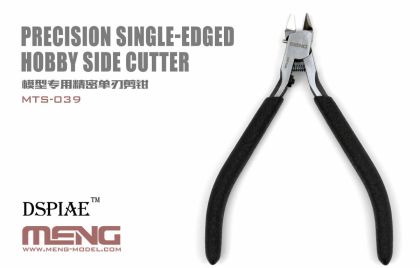
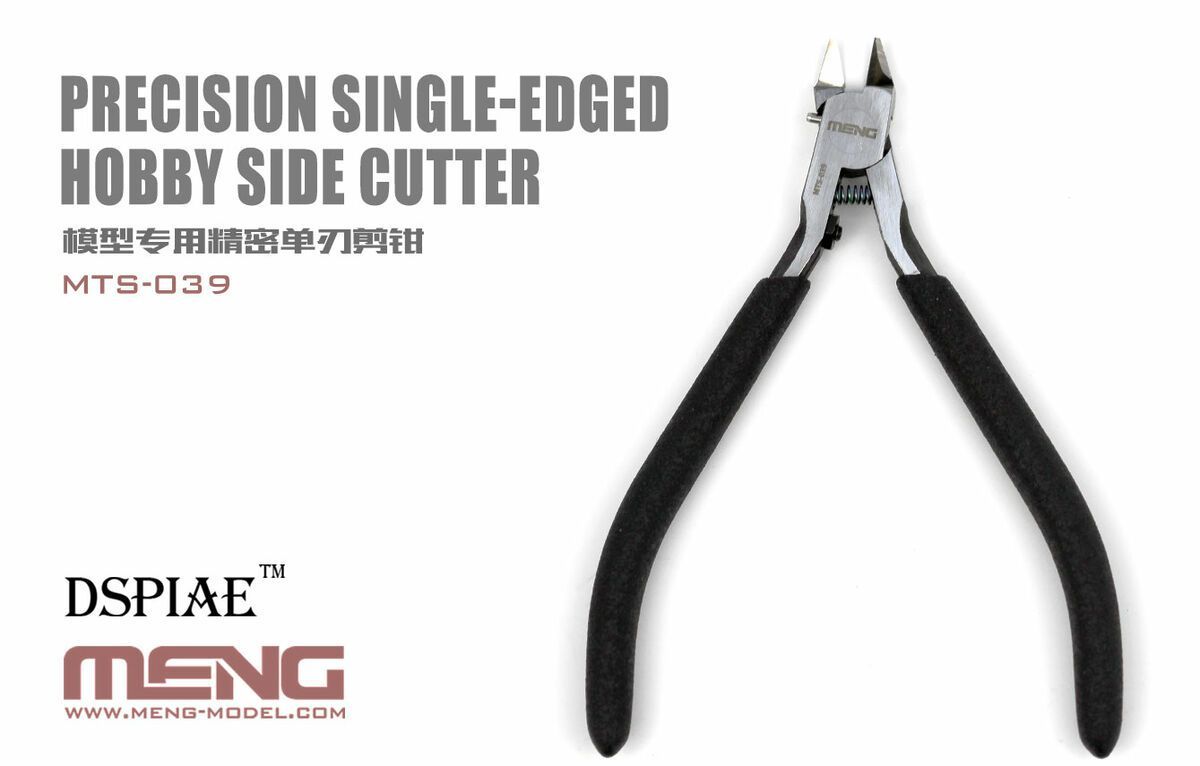
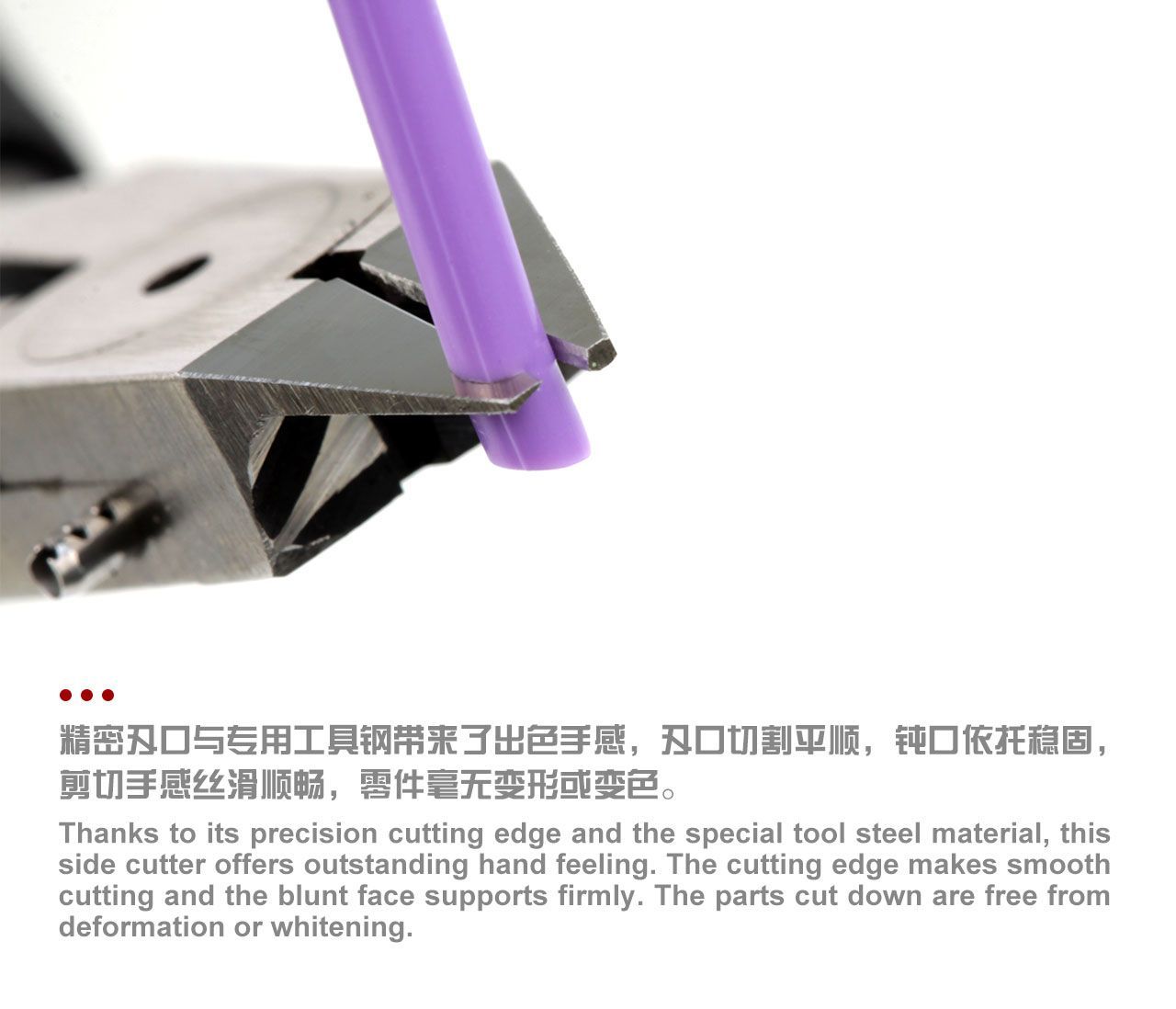
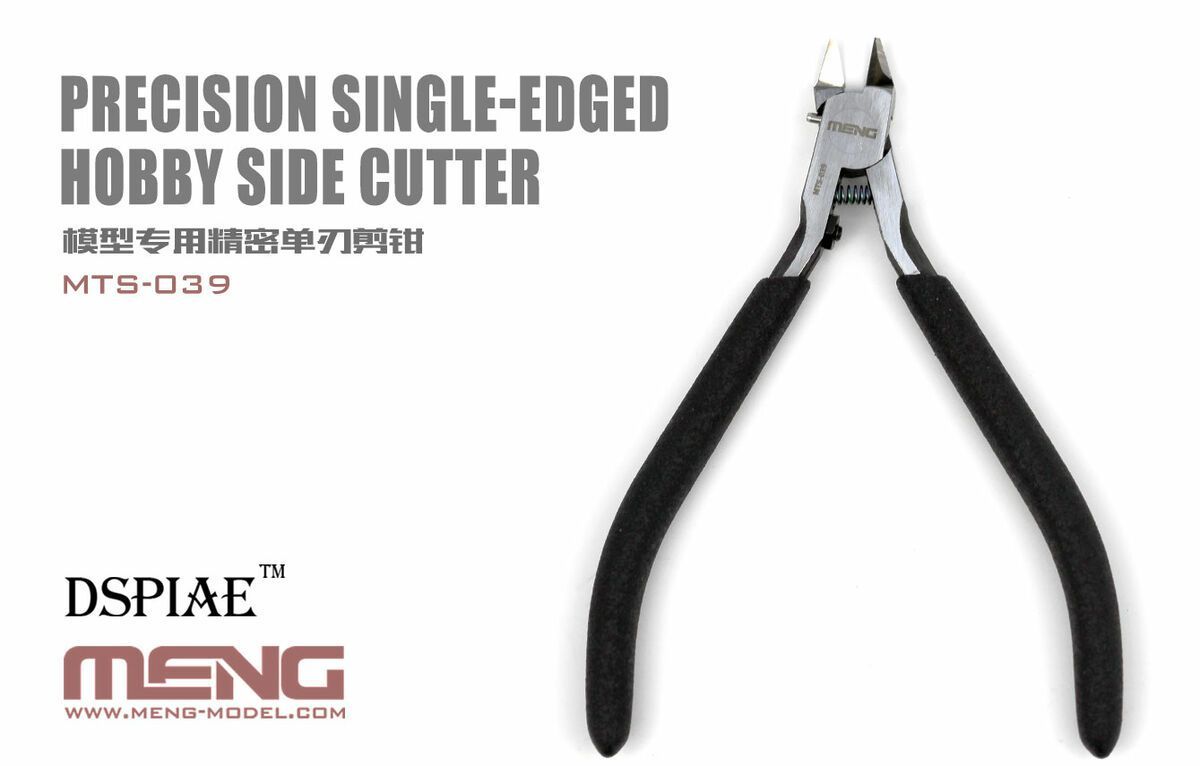
The Precision Single-Edged Hobby Side Cutter from the manufacturer Meng is a modeling tool for separating plastic parts from the sprue. It cuts with one sharp edge against a flat supporting jaw, so it leaves no whitened, crushed stub behind. It is a tool, not a kit or a paint.

Manufacturer Meng
Product EAN8591111000000

Responsibility details are not available.

86.36 €
71.37 € without VAT
In stock
Free shipping on orders over 1,000 czk in czech republic Personal pickup in Prostějov 14-day returns

About product

The Meng precision single-edged side cutter

A single-edged side cutter is a modeling tool for snipping plastic parts off the sprue (the gates). It is not a kit or a paint; it is a tool that a modeler buys once and uses on every kit. The manufacturer is Meng, which has its own line of single-edged cutters, and this model is the most precise variant in it.

What single-edged means and why it matters

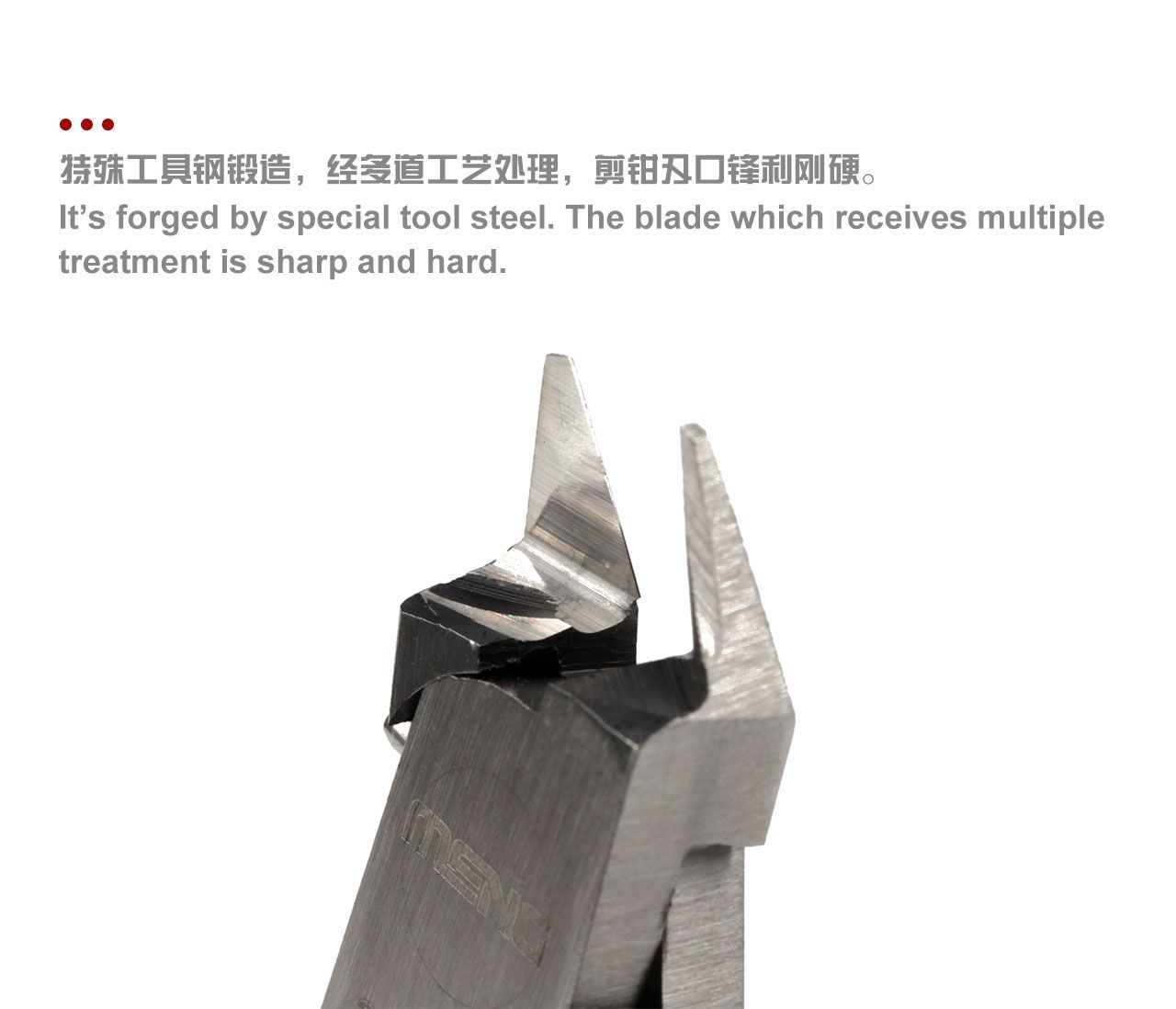
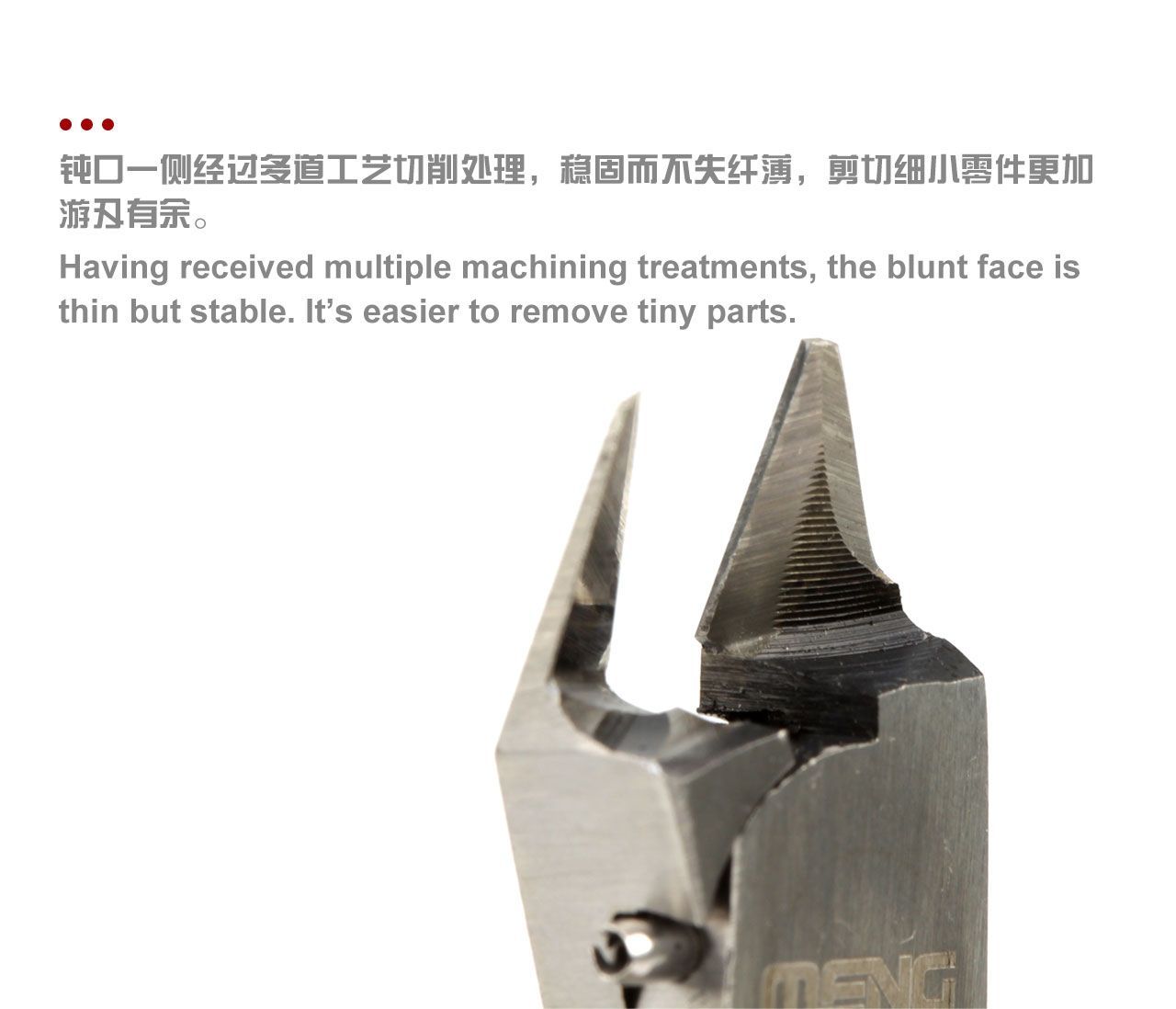
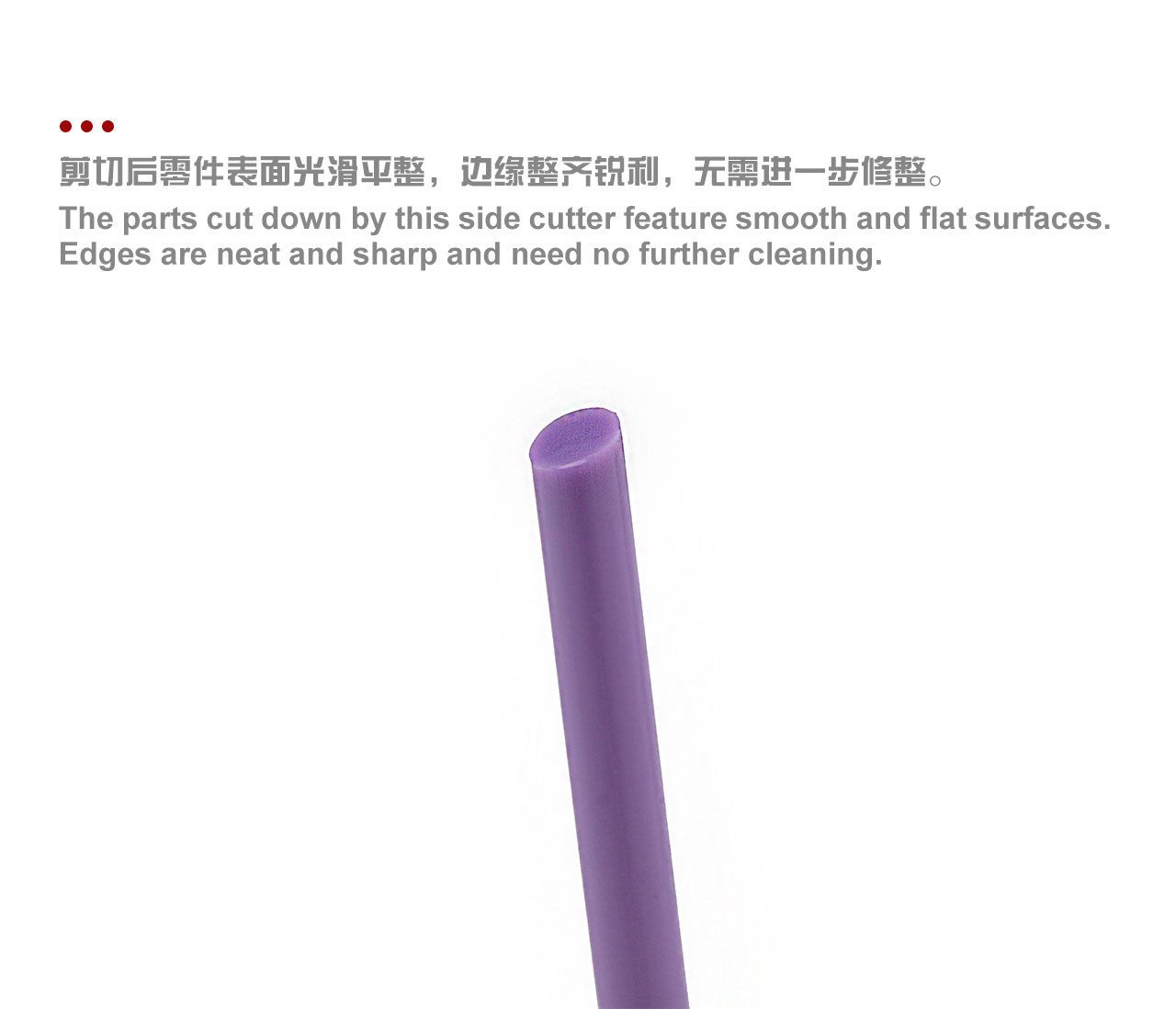
Ordinary cutters have two wedge-shaped edges that meet in the middle of the material. They do not cut the plastic, they crush it and push it inwards. That is why they leave a white, deformed stub (whitening from internal stress), which has to be sanded away, and sometimes a piece of the part breaks off as well. Single-edged cutters have a single sharp edge against a flat supporting jaw, so they work like a knife against a board, not like a wedge. They cut, they do not crush. The result is a smooth, clean cut right at the part and a minimum of sanding afterwards. The manufacturer itself states that the single-edged design markedly reduces deformation and whitening of the plastic at the gate.

Use

  • The recommended two-stage procedure: first snip the part off the sprue with ordinary cutters leaving a margin, and only then trim the rest of the gate right at the part with the single-edged cutter.
  • Hold the cutter with the flat jaw toward the part and the edge toward the waste, and do not press or twist; the edge is meant to do the work itself.
  • Suitable for ordinary injection-molded plastic; with clear parts, which are more brittle, go especially carefully.
  • After the cut a light polish with a fine sanding stick is usually enough, and coarse sanding falls away.
  • Protect the edge; store the cutter so that the blade does not knock against other tools.

Who it is for

For modelers who are bothered by whitened and sanded-down marks left by gates, that is for builders of aircraft, cars, figures and robots, where the clean surface of a part is visible. It is a specialized tool: anyone who builds one kit a year will manage with ordinary cutters, while anyone who builds regularly will save a great deal of time on sanding.

An important warning: single-edged cutters have a thin, fine edge. Never cut photo-etch, wire, metal, hard resin or thick, stiff gates with them; the edge will chip and the cutter is ruined beyond repair. That is the most common way a buyer destroys the tool on the very first day. For metal, wire and rough work always use ordinary cutters.

Reviews

No reviews yet Have you built this one? Tell other modellers how it went and help them choose.

Forum

Naši poradci a znalci sortimentu jsou připraveni odpovídat na Vaše dotazy (Po–Pá, 8–18 hod).
Zeptejte se na co potřebujete, odpovíme co nejdříve.

Texts from customers in the advice section reflect solely the opinions and views of the customers. MNF trade s.r.o. does not approve or verify customer texts in advance.

There are no questions here yet. Be the first to ask!

FAQ

Ordinary cutters have two wedge-shaped edges that meet in the middle; they crush the plastic and a white, deformed stub is left. A single-edged cutter has one sharp edge against a flat supporting jaw, so it works like a knife against a board: it cuts the plastic, it does not crush it. The result is a smooth cut right at the part.

No, on no account. The thin single edge will chip on hard material and you will ruin the cutter beyond repair. Cut photo-etch, wire, metal and hard resin with ordinary cutters or with photo-etch shears.

As a rule a light polish with a fine sanding stick is enough. The coarse sanding away of whitened stubs that is needed after ordinary cutters falls away. The best results come from two stages: snip roughly with ordinary cutters leaving a margin, then trim with the single-edged cutter right at the part.

Do not give them thick, stiff gates, as those would strain the edge. Snip those off first with ordinary cutters and leave the single-edged cutter for the final clean cut at the part itself.

Last seen

MengMTS-039

Precision Singe-Edged Hobby Side Cutter

The Precision Single-Edged Hobby Side Cutter from the manufacturer Meng is a modeling tool for separating plastic parts from the sprue. It cuts with one sharp edge against a flat supporting jaw, so it leaves no whitened, crushed stub behind. It is a tool, not a kit or a paint.
In stock
86.36 €
Loading, please wait...

Setting consent to personalization

With your consent, we may use the information below for the following purposes or share it with selected partners. You can adjust your settings for individual purposes (types of processing) and confirm your choice with the "Save settings" button:

Always active

Necessary cookies

These are technical files that are necessary for the correct behavior of our website and all its functions. They are used, among other things, to store products in the shopping cart, display products on request, control filters, personal settings and also set consent to the use of cookies. Your consent is not required for these cookies and it is not possible to remove it.

Analytical cookies

They count website traffic and, by collecting anonymous statistics, enable the operator to better understand their visitors and thus constantly improve the site.

Marketing cookies

They collect information to better tailor advertising to your interests, both on and off this website.

Setting consent to personalization

To make it easier for you to browse the site, to offer you customized content or advertising, and to analyze traffic anonymously, we use cookies that we share with our partners for social media, advertising, and analytics. You can adjust their settings with the "Edit settings" link and you can change it at any time in the footer of the website. You can find more detailed information in our Policy on the protection of personal data and the use of cookies.