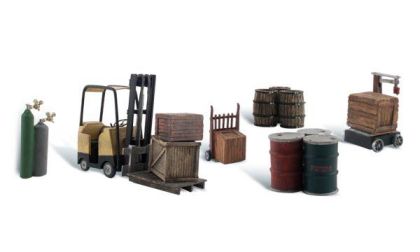
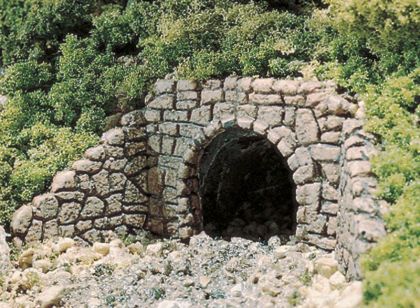
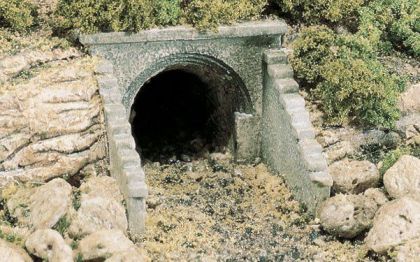
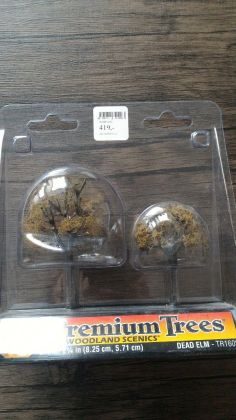
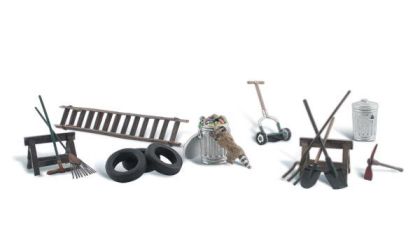
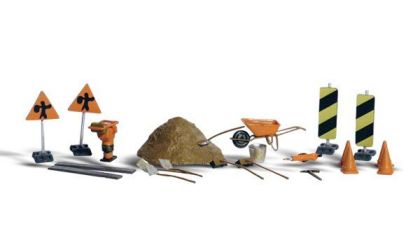
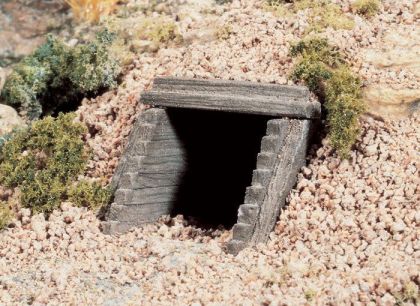
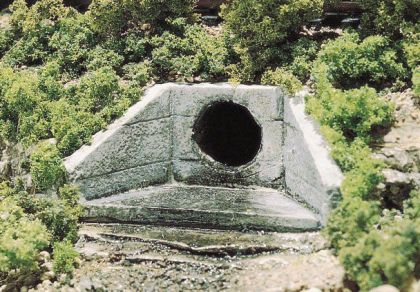
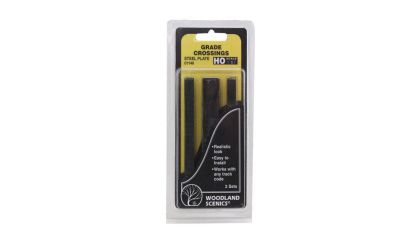
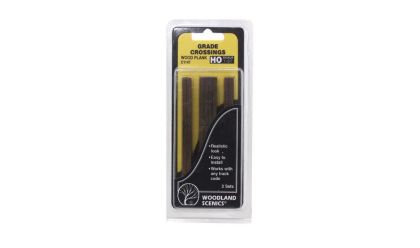
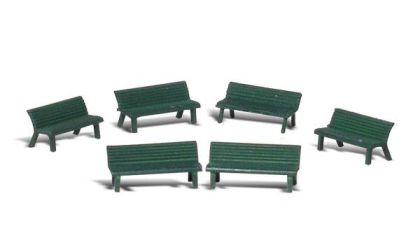
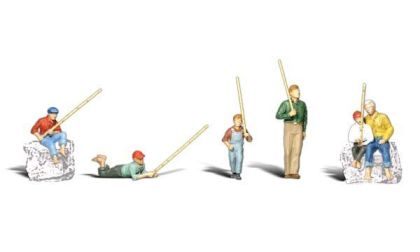
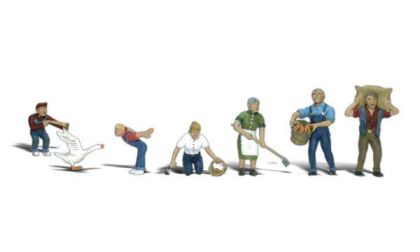
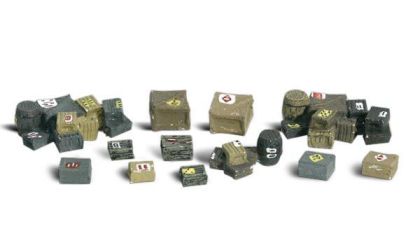
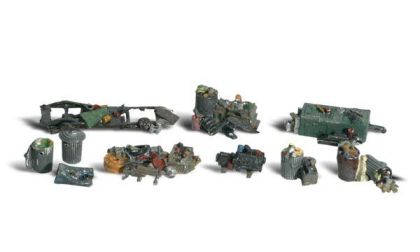
Structures and accessories are the part of a model railway where a scene takes shape. Here you will find the elements that hold a line in its landscape — culverts in timber, stone, brick and concrete finishes, and level crossings with a timber or steel surface — and alongside them the small inventory without which a layout looks implausibly tidy: crates, loads on a loading dock, road gang tools, garage clutter, benches, trees and gravestones. All of it in H0.
The notes below explain how to match a structure to the kind of line you are modelling, and why three well-placed props beat twenty scattered ones.
A real station or a real road is not an empty surface. Crates stacked badly by a dock, a heap of scrap behind a shed, a couple of benches and a tree at the edge: these are the things the eye looks for without being aware of it. As soon as they are missing, the scene reads as an architectural model rather than as a place. Which is why small details are worth buying before the next building; they change the result more.
A timber culvert belongs to a rural line and light traffic, stone and brick to an older main line, concrete to a more recent one. The same logic applies to crossings: a timber surface suits a farm track, steel a made-up road. That choice says more about your layout than the fineness of the moulding does.
New parts arrive in one flat tone that stands out in a scene. A thin coat of pigment, that is fine coloured powder, or a weak wash gives stone and concrete depth in the joints. On timber it is enough to suggest the grey of weathering.
A load belongs where somebody would have set it down, rubbish round the back, a bench where people wait. Props spread evenly across the whole board look worse than three pieces in the right place.
Terrain, water and greenery for the lineside are in diorama accessories; the whole layout section is model railways.