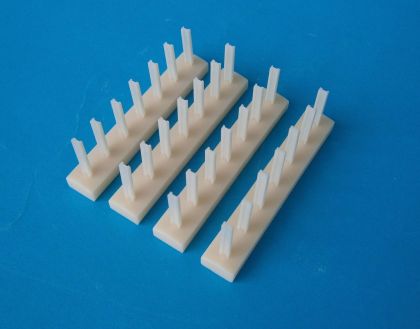
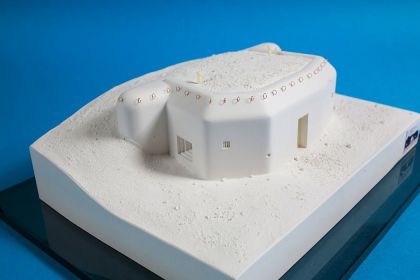
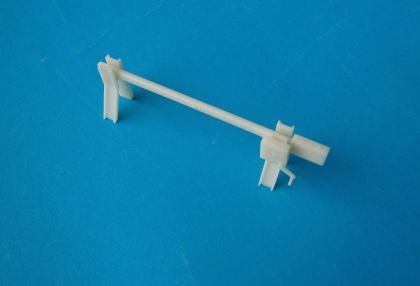
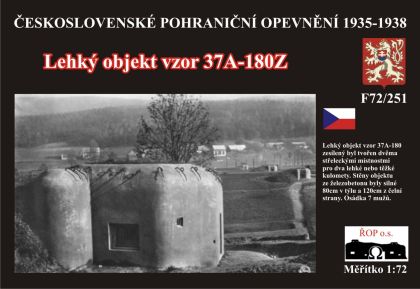
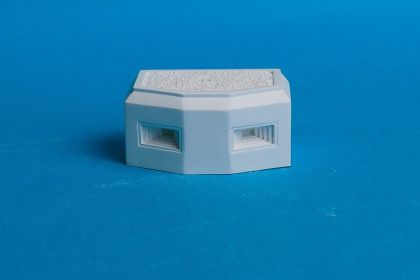
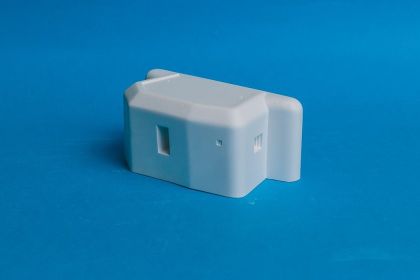
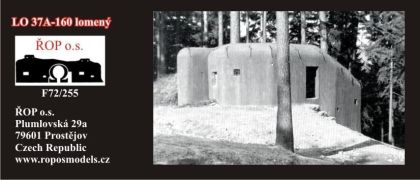
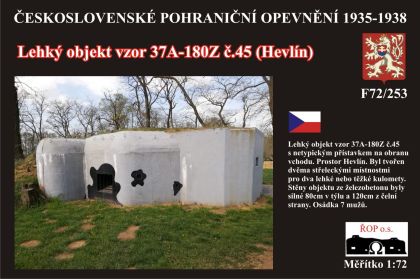
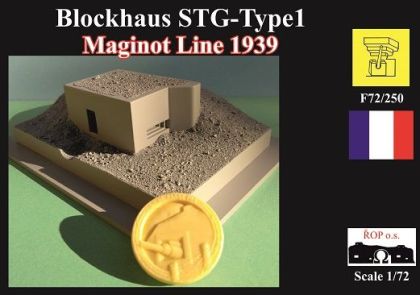
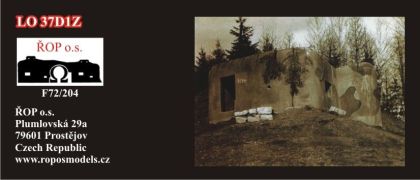
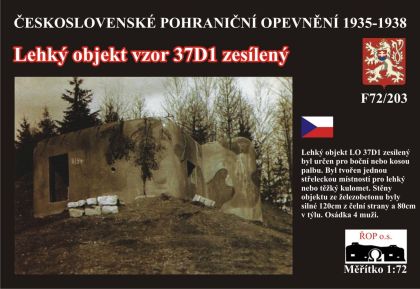
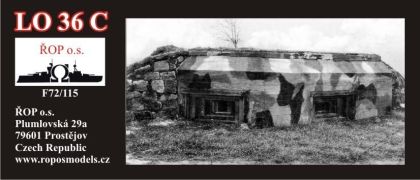
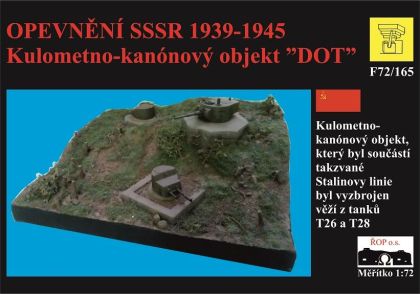
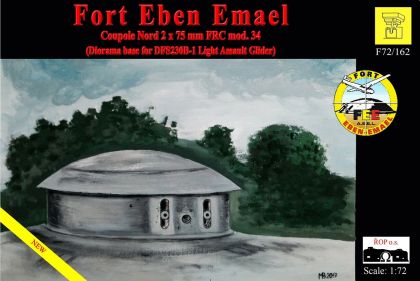
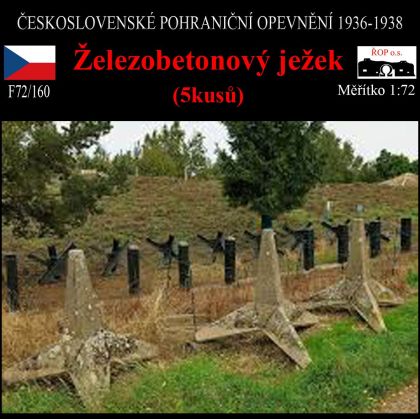
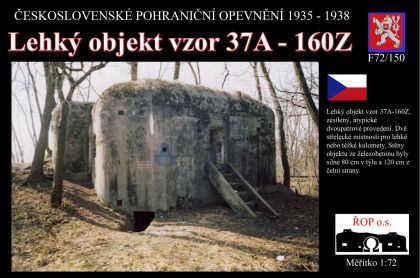
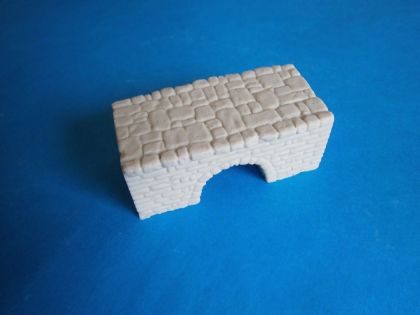
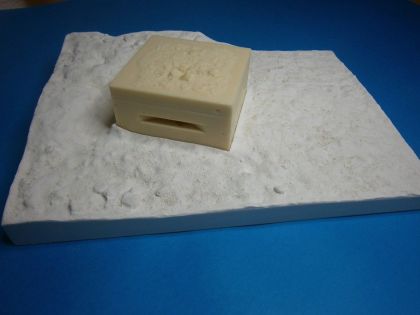
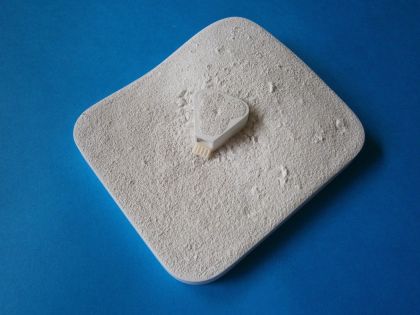
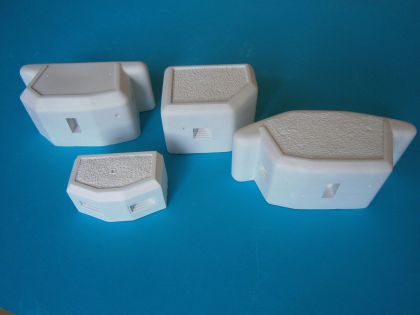
Of all the scales in this range, 1:72 carries by far the widest typology. Light objects of both the vz. 36 and vz. 37 patterns appear in several types and resistance grades, alongside machine-gun and cannon objects, post-war firing positions, foreign fortresses and bunkers from the Pacific theatre. With them come the things a scene cannot do without: rail obstacles, concrete hedgehogs, a barrier and a stone bridge.
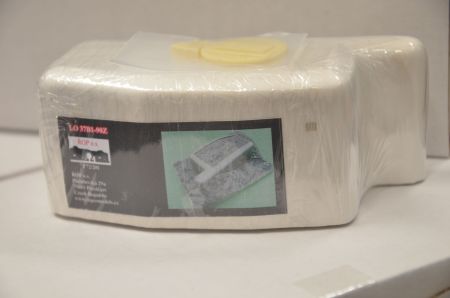
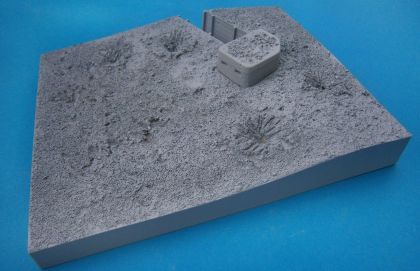
Most objects are offered two ways, as a bare structure or cast into a piece of ground. That choice decides whether you end up with a finished display piece or a component for your own diorama, so it is worth making before you buy.
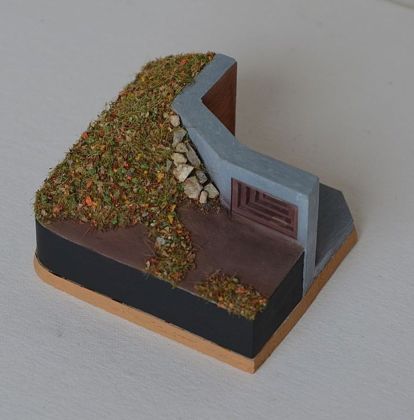
A casting that includes its own patch of ground is a complete display object: the concrete meets the earth correctly, the embankment that hides the rear wall is already there, and you can finish it in an evening. A bare structure gives you a free hand instead, which matters if the object has to sit in a hedgerow, a railway cutting or a street on a larger base. Neither is harder to paint; they simply end in different places.
The vz. 37 series is described by letter and number: the letter gives the layout and the number the angle between the firing directions, so two objects of the same type may be turned to cover quite different ground. Resistance grades vary the wall thickness. If you are modelling a particular place, the designation is how you identify the right casting, and the vz. 36 pattern that preceded it is simpler in plan and easy to tell apart.
Post-war firing positions, foreign fortresses and Pacific bunkers widen the section well past 1938. They are worth knowing about if you build in 1:72 generally, since a bunker is a useful backdrop for almost any ground subject, whatever the year.
Rail obstacles, hedgehogs, a barrier and a stone bridge are what turn a casting into a place. A lone pillbox on a bare base looks like a model; the same object with a blocked road in front of it looks like a position.
Keep the concrete flat and slightly warm, then do the work with contrast rather than colour: a dark wash in the loophole recesses, pale dust along horizontal edges, and earth tones creeping up from the ground line. Weathering products are useful here, but thinned heavily; at 1:72 a heavy streak looks like a scratch. Finish the vegetation last so you can judge it against the finished concrete.
Every object the association casts is listed in the fortification models section.