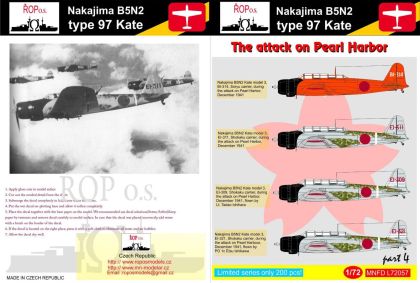
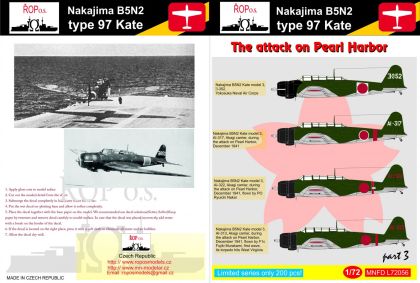
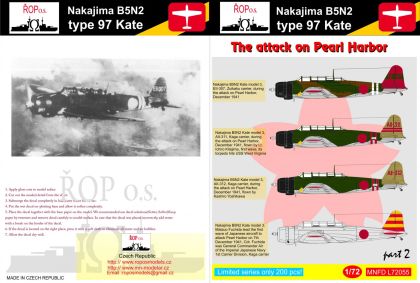
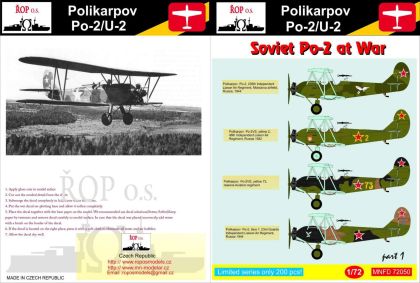
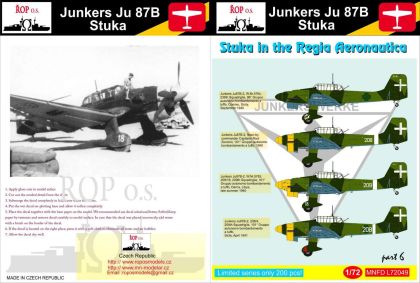
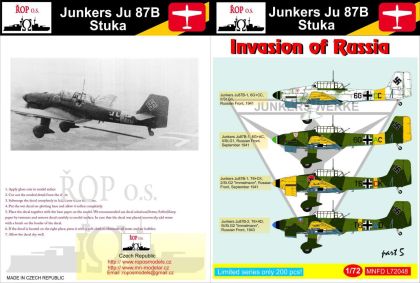
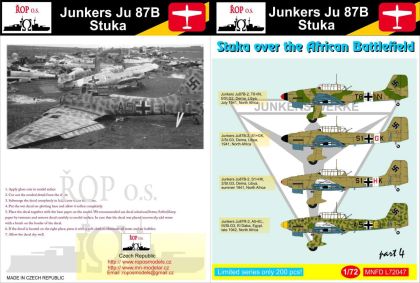
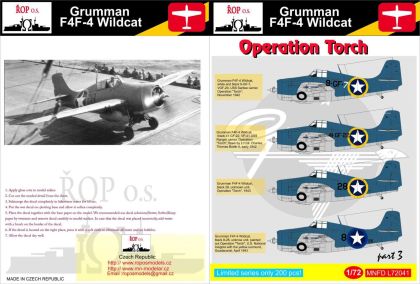
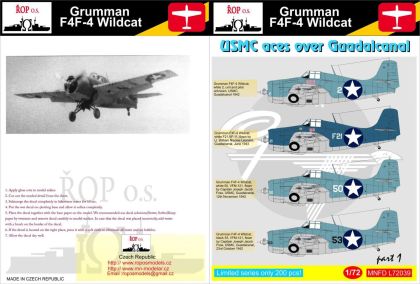
Aircraft worth building that the kit box does not offer: that is the brief these sheets work to. They cover carrier torpedo bombers from the attack on Pearl Harbour, dive bombers across several theatres from France through Britain to North Africa, Soviet biplanes both in their own service and in captured markings, American carrier fighters and their British counterparts, and twin-engine machines in less usual roles.
Sheets come in the two most common aircraft scales, so the choice follows whatever model is on the bench. These are standalone waterslide decals: no kit, no paints and no varnish in the packet. Below you will find how to pick a sheet and how to make the film disappear into the paint.
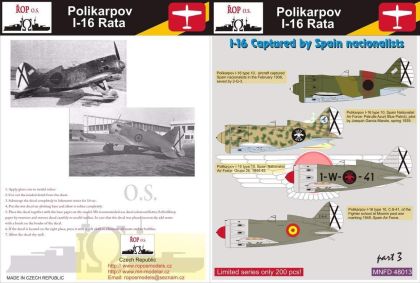 1:48 Polikarpov I-16 Rata - I-16 captured by Spanish Nationalists
7.96 €
1:48 Polikarpov I-16 Rata - I-16 captured by Spanish Nationalists
7.96 €
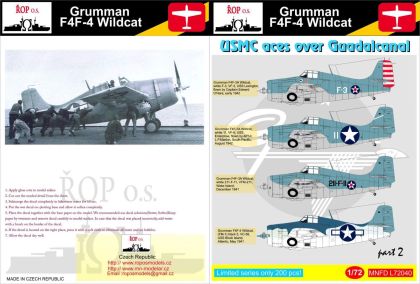 1:72 Grumman F4F-4 Wildcat - USMC aces over Guadalcanal
7.96 €
1:72 Grumman F4F-4 Wildcat - USMC aces over Guadalcanal
7.96 €
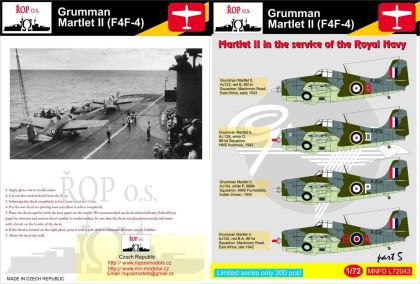
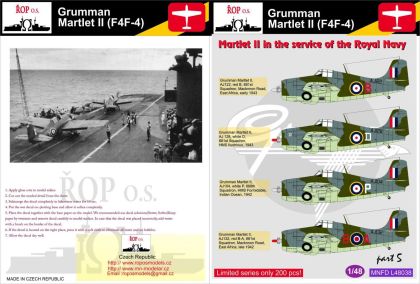 1:48 Grumman Martlet II (F4F-4) - Martlet II in the service of the Royal Navy
7.96 €
1:48 Grumman Martlet II (F4F-4) - Martlet II in the service of the Royal Navy
7.96 €
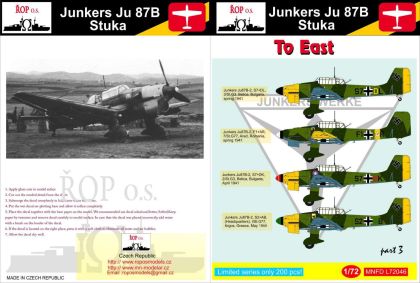
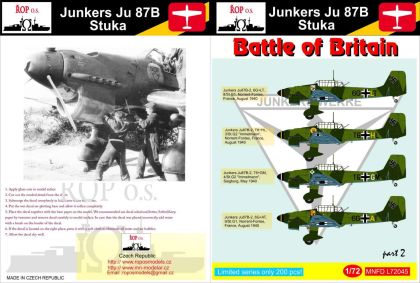
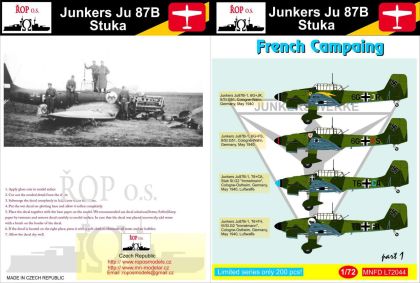
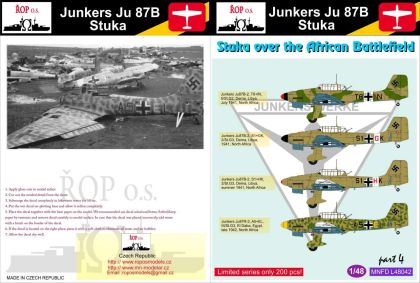 1:48 Junkers Ju 87B Stuka - Stukas over the African Battlefield
7.96 €
1:48 Junkers Ju 87B Stuka - Stukas over the African Battlefield
7.96 €
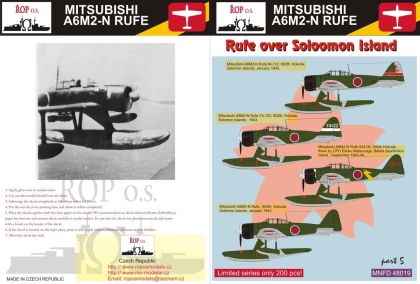 1:48 Mitsubishi A6M2-N Rufe - Rufe over Solomon Islands
7.96 €
1:48 Mitsubishi A6M2-N Rufe - Rufe over Solomon Islands
7.96 €
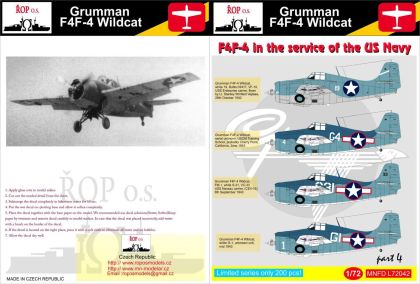 1:72 Grumman F4F-4 Wildcat - F4F-4 in the service of the US Navy
7.96 €
1:72 Grumman F4F-4 Wildcat - F4F-4 in the service of the US Navy
7.96 €
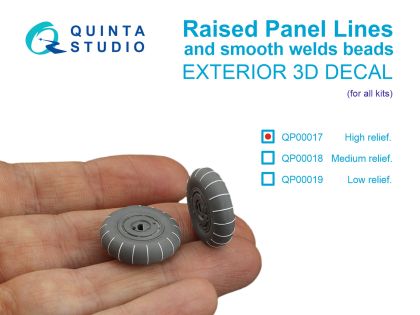
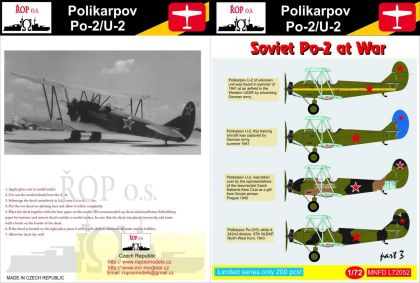
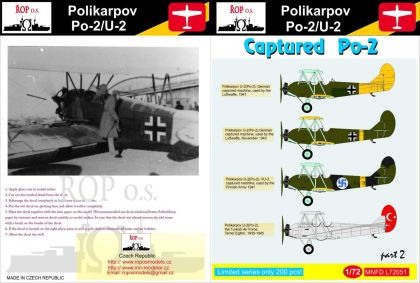
The strength of the range is variety within a type. One carrier airframe can appear in markings from quite different operations, so a shelf of the same aircraft need never repeat itself, and tail codes identify the ship. Dive bombers spread across theatres that each imposed their own finish. Soviet biplanes appear twice over, once in their own insignia and once in captured service, which is the kind of option that justifies an aftermarket sheet on its own. Separate from all of this are the universal sheets of raised panel lines and smooth weld seams in high relief, applied to bare plastic before painting.
Sheets come in 1:48 and 1:72. Both are well supported by kits, so the decision usually follows whatever scale your shelf already holds.
Read the sheet for the version, not just the type: between variants the cowling shape and the position of the markings changed, so printing laid out for a later machine may not fit an earlier one. National insignia also changed through the war, so pick the period before you mix any camouflage colour, because both have to agree on the same date.
Gloss first, always: a flat finish traps air under the carrier film and the marking silvers. Work from the centre of the decal outwards, use a setting solution on fabric-covered control surfaces and around fillets, and seal with a clear coat from the varnishes section so the edges vanish. If you are fitting a resin cockpit or fine metal parts, do the decals after those are sealed, so handling does not damage the printing.
Armour sheets and the rest of the printed range are in ŘOP decals.