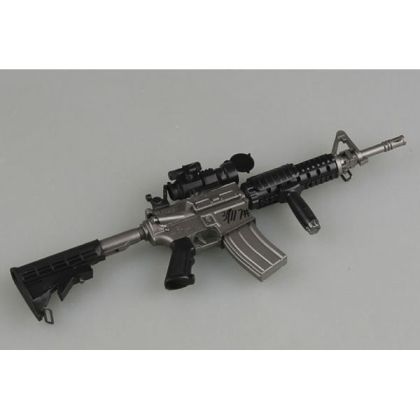
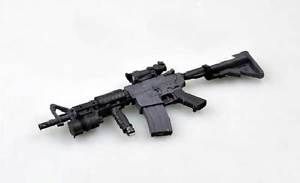
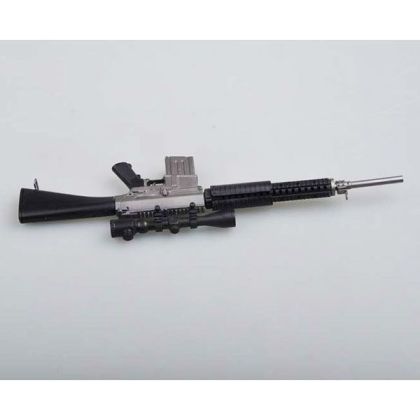
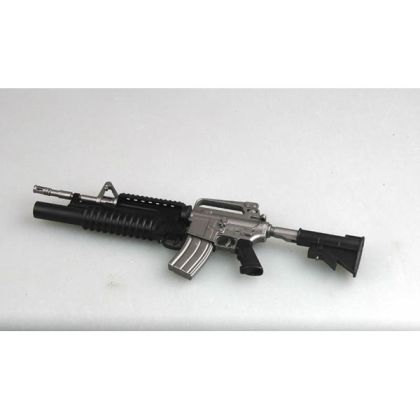
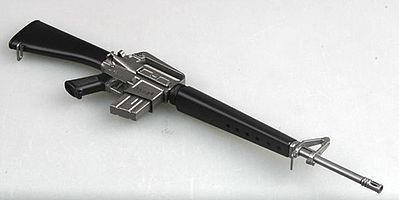
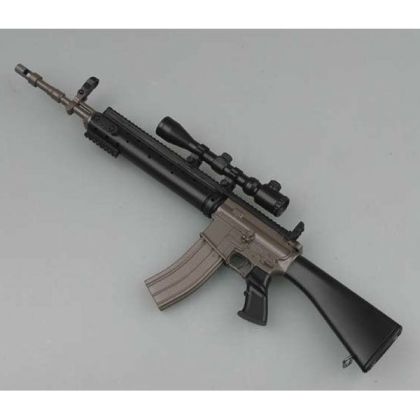
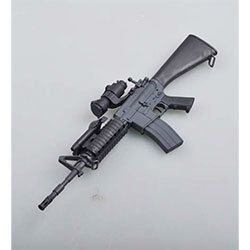
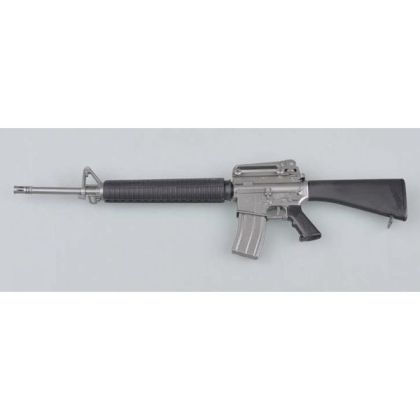
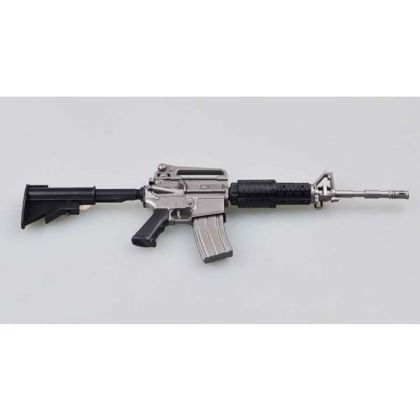
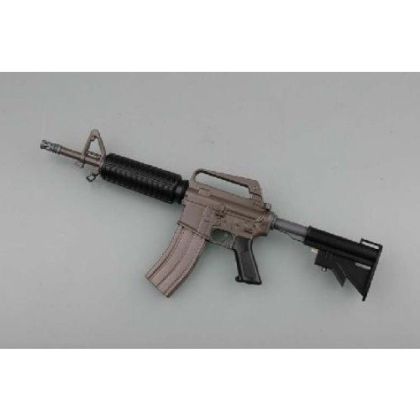
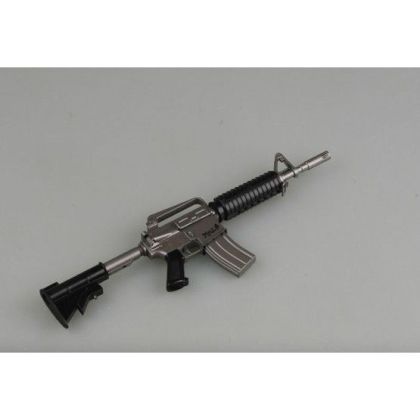
These weapon models are non-firing miniatures of small arms in 1:3, roughly one third of full size. Each one is assembled and surface-finished, which makes it a display piece rather than a kit. The selection concentrates on modern assault rifles and carbines in various configurations of barrel, stock and optic, including versions with an underslung grenade launcher.
For anyone collecting military subjects, a replica of this sort holds attention on its own and gives the rest of the case context. The notes below cover what the scale actually means and how to choose between near-identical variants.
At one third of full size a rifle miniature runs to roughly 250 to 350 mm, which is 10 to 14 in, so features such as sights, grips and magazines are genuinely legible. The model does not function, cannot be loaded and is intended purely for display and for studying the shape of the weapon. Unlike a kit it needs neither glue nor paint, only somewhere it will not be knocked.
What looks like the same type is usually available in several variants: long or shortened barrel, fixed or telescoping stock, rails for an optic, or an underslung launcher. For a collector those differences tend to be more interesting than the number of pieces in the case, because they show how one design family developed over two decades.
Weapon replicas work well as a companion to a collection of armour or figures, where they supply context and explain how a crew was equipped. If you collect one period or one army, pick the types that genuinely belong to it.
A long replica needs a horizontal space or a wall mount, otherwise it leans and the supported parts bow over time. A plinth solves the problem and lifts the piece above the exhibits around it.
In a case, weapon replicas sit comfortably beside ready-built armour and kit-built personnel in the form of model figures, where you paint the uniform and webbing yourself. Historical background is in reference books, and the full ready-built range in collectors models.