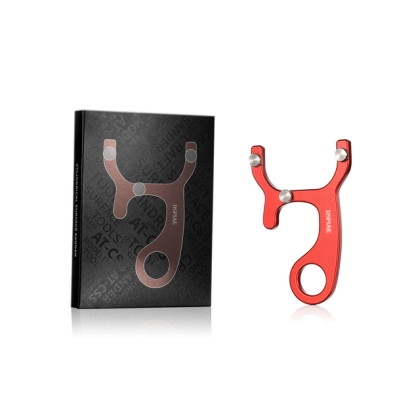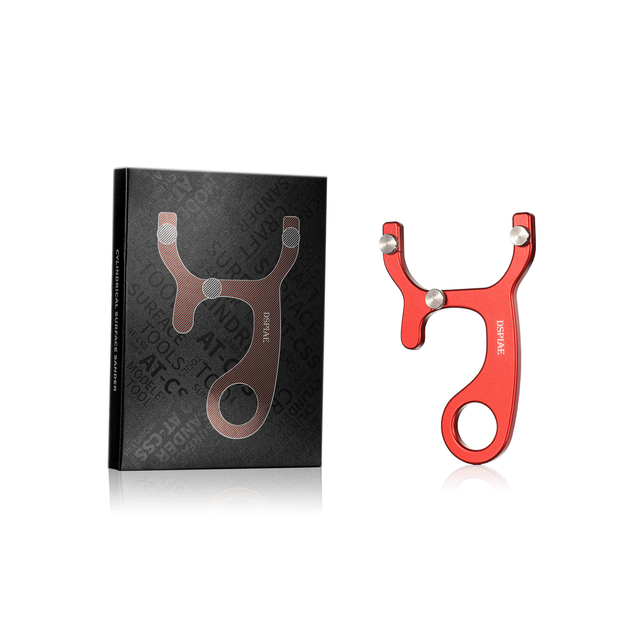
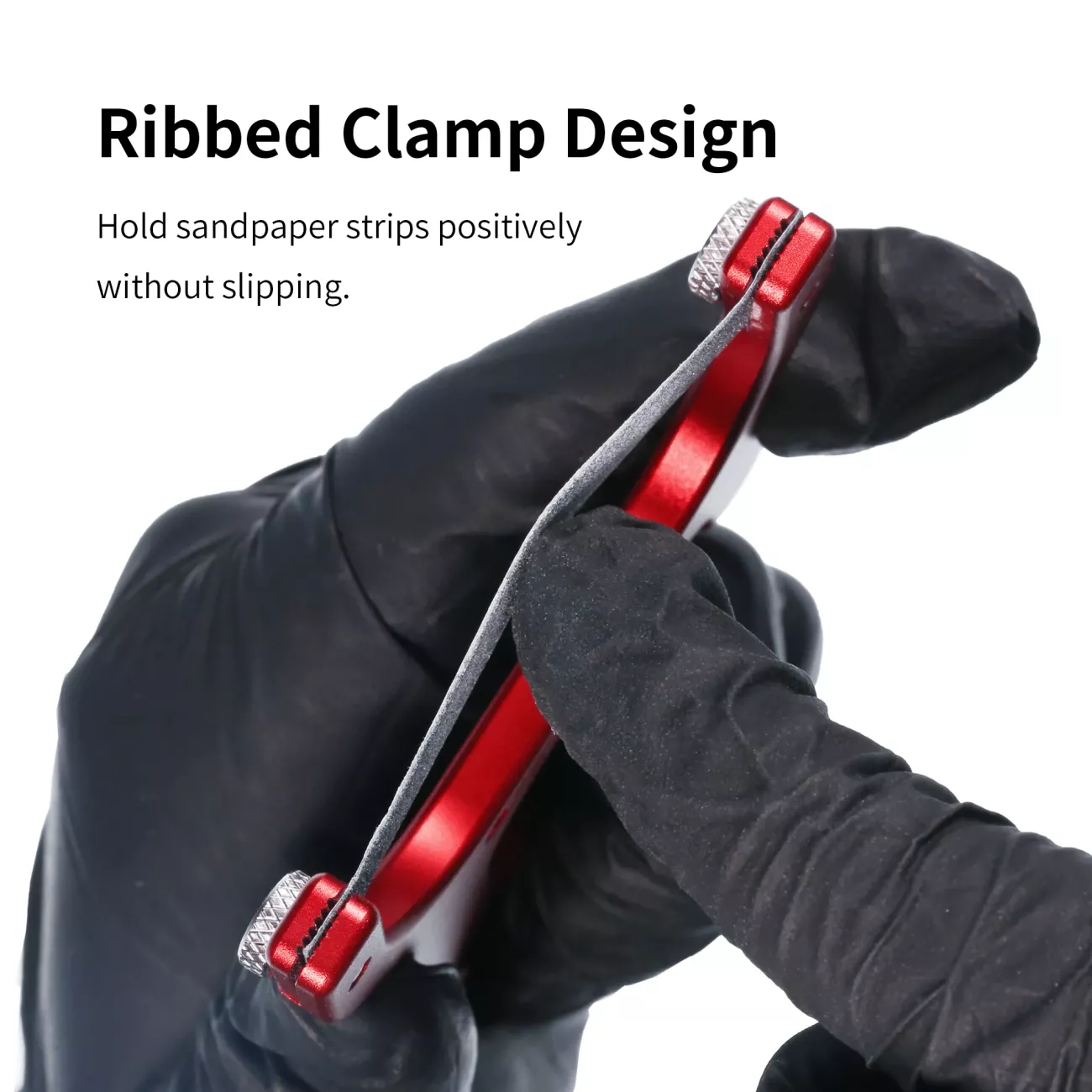
A sanding pad for cylindrical and curved surfaces, from DSPIAE. The shaped body holds the abrasive in a curve, so the surface does not pick up edges.
Responsibility details are not available.
A sanding pad whose working face is not flat but curved. On a cylindrical surface, that is on a fuselage, a tank or a gun barrel, a flat pad inevitably creates a flat facet, which then shows up under the paint as an edge where there should be a smooth curve. The shaped body holds the abrasive in a curve, so sanding does not shave the cylinder but levels it.
Guide the pad along the axis of the cylinder, not across it; crosswise strokes gradually flatten the curve. Do not add pressure, the abrasive should do the work. Keep checking the shape against the light, because a facet is spotted by reflection rather than by touch. Wet, the abrasive clogs less and the sanded surface can be judged straight away.
Do not breathe in the sanding dust from plastic and resin; work in a ventilated room and wipe the surface with a damp cloth afterward.
The model and abrasive papers are not included in the package, unless the name of the item explicitly says so.
The pad goes well together with a flat one. The flat one serves for flat parts, the shaped one for curved ones, and using one in place of the other means either a facet on a curve or a rippled surface. The difference shows up only under a gloss coat, when it is hardest to put right.
Naši poradci a znalci sortimentu jsou připraveni odpovídat na Vaše dotazy (Po–Pá, 8–18 hod).
Zeptejte se na co potřebujete, odpovíme co nejdříve.
Texts from customers in the advice section reflect solely the opinions and views of the customers. MNF trade s.r.o. does not approve or verify customer texts in advance.
There are no questions here yet. Be the first to ask!