Mr. Color - hull red - spray

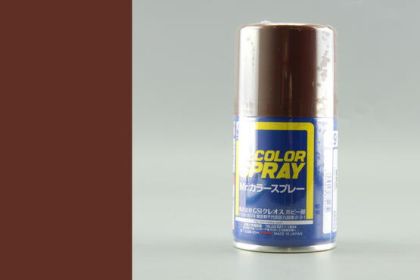
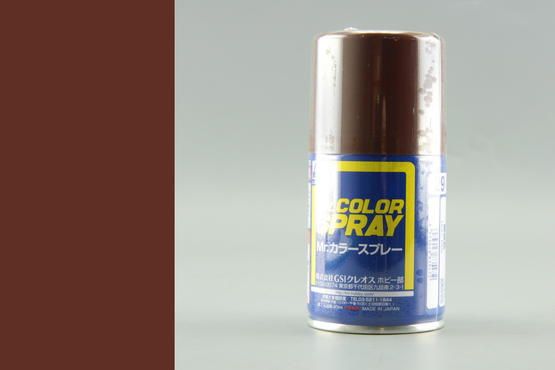
Mr. Color hull red, 40 ml spray, Gunze. The red-brown ship shade of the underwater hull from the lacquer (cellulose) range Mr. Color, in a semi-matte finish.

Manufacturer Gunze
Product EAN8591111000045

Responsibility details are not available.

9.16 €
7.57 € without VAT
In stock
Free shipping on orders over 1,000 czk in czech republic Personal pickup in Prostějov 14-day returns

About product

Mr. Color hull red, 40 ml spray (Gunze)

The aerosol version of a modeling paint from the Mr. Color range by the Japanese maker Gunze. Watch the chemistry: Mr. Color is NOT an acrylic; it is a solvent-based lacquer (cellulose) paint that forms a hard, thin and very durable film, dries quickly and holds excellently on plastic. The manufacturer lists this shade in a semi-matte finish and directly as a ship color.

What hull red is and why a ship modeler needs it

Hull red is the red-brown color of the underwater part of a ship's hull, that is, of everything below the waterline. It is not an aesthetic whim: below the waterline an antifouling finish is applied to the hull against mussels, algae and other growth settling on it, which would otherwise slow the ship down. Classic antifouling finishes were based on copper and iron compounds, and it is precisely the copper and iron pigments that give them their characteristic brick red-brown color. The red bottom of a ship thus became the norm and holds to this day.

For the modeler only one thing follows from that: every ship built as a full hull, that is, with the whole hull including the underwater part, needs a red-brown bottom, and hull red is exactly that shade. It is a color a ship modeler should simply have.

A second, less obvious use: hull red is an excellent base under rust. Rust effects are often built on a red-brown base, over which orange, brown and ocher shades and pigments are layered, so it also suits weathered wagons, equipment and industrial dioramas.

Use and safety - read before you press the valve

  • Shake thoroughly before use: the pigment settles at the bottom.
  • Spray in thin coats from a distance; saturating the surface all at once means runs and orange peel.
  • A lacquer paint is aggressive to plastic: a heavy coat from close up can attack thin parts.
  • Never spray over uncured acrylic or enamel: the solvent will dissolve them.
  • Strong fumes: spray outdoors or in a well-ventilated area and wear a respirator, not just a cloth mask.
  • Flammable: do not spray near open flame and do not store the can in the sun.

Spray or airbrush?

For the large smooth area of an underwater hull a spray is ideal: it is quick and you do not have to thin anything. With a spray, though, you cannot thin the paint or control the pressure, so for soft transitions, misting and graded weathering along the waterline you need an airbrush.

A solvent-based lacquer (cellulose) paint. Flammable. Spray outdoors or in a well-ventilated area, use a respirator and protect your eyes. Keep out of the reach of children.

Reviews

No reviews yet Have you built this one? Tell other modellers how it went and help them choose.

Forum

Naši poradci a znalci sortimentu jsou připraveni odpovídat na Vaše dotazy (Po–Pá, 8–18 hod).
Zeptejte se na co potřebujete, odpovíme co nejdříve.

Texts from customers in the advice section reflect solely the opinions and views of the customers. MNF trade s.r.o. does not approve or verify customer texts in advance.

There are no questions here yet. Be the first to ask!

FAQ

It is the red-brown color of the underwater part of a ship's hull, that is, of everything below the waterline. Real ships carry an antifouling finish there against mussels and algae settling on them; its traditional copper and iron based pigments gave the finish its characteristic brick red-brown color, which is still used today.

Above all ships built as full hull, that is, with the whole hull including the underwater part, which need a red-brown bottom in practically every case. Besides that, hull red suits as a base under rust effects on equipment, wagons and industrial dioramas.

It is not. It is a solvent-based lacquer (cellulose) paint, even though shops tend to list it under acrylics. It is not thinned with water, must not go over uncured acrylic or enamel, and calls for ventilation and a respirator when sprayed. The reward is a hard, thin and very durable film.

For the base coat of the underwater hull, yes: it is a large smooth area and the spray handles it quickly. For soft transitions, misting and graded weathering around the waterline you need an airbrush, though, because a spray allows no control of pressure or thinning.

Last seen

GunzeS029

Mr. Color - hull red - spray

Mr. Color hull red, 40 ml spray, Gunze. The red-brown ship shade of the underwater hull from the lacquer (cellulose) range Mr. Color, in a semi-matte finish.
In stock
9.16 €
Loading, please wait...

Setting consent to personalization

With your consent, we may use the information below for the following purposes or share it with selected partners. You can adjust your settings for individual purposes (types of processing) and confirm your choice with the "Save settings" button:

Always active

Necessary cookies

These are technical files that are necessary for the correct behavior of our website and all its functions. They are used, among other things, to store products in the shopping cart, display products on request, control filters, personal settings and also set consent to the use of cookies. Your consent is not required for these cookies and it is not possible to remove it.

Analytical cookies

They count website traffic and, by collecting anonymous statistics, enable the operator to better understand their visitors and thus constantly improve the site.

Marketing cookies

They collect information to better tailor advertising to your interests, both on and off this website.

Setting consent to personalization

To make it easier for you to browse the site, to offer you customized content or advertising, and to analyze traffic anonymously, we use cookies that we share with our partners for social media, advertising, and analytics. You can adjust their settings with the "Edit settings" link and you can change it at any time in the footer of the website. You can find more detailed information in our Policy on the protection of personal data and the use of cookies.