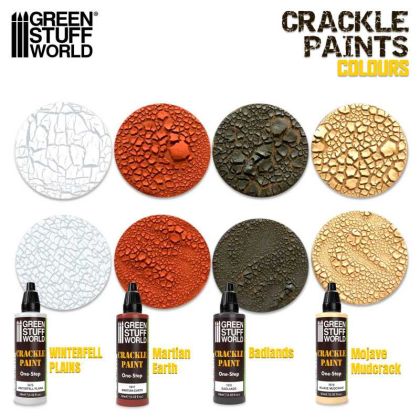
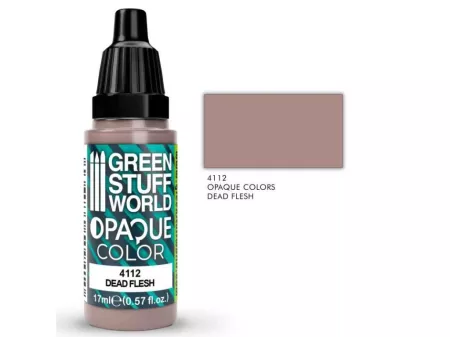
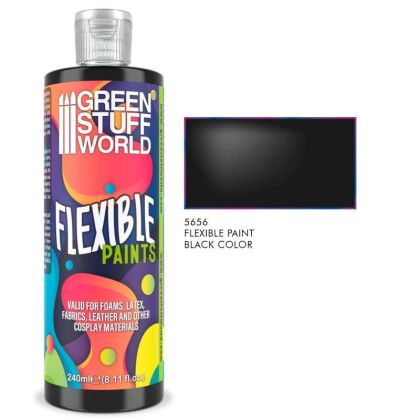
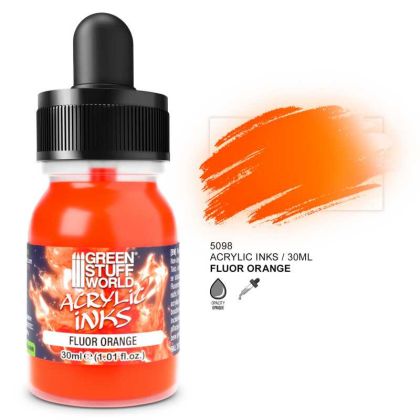
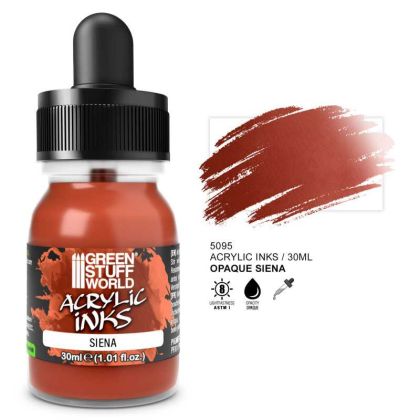
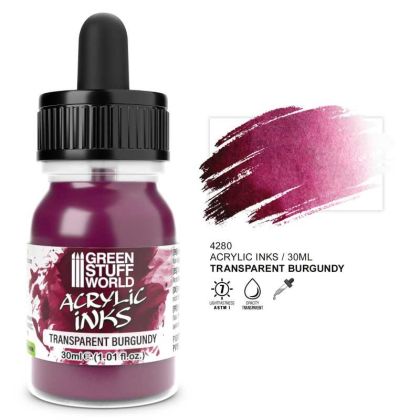
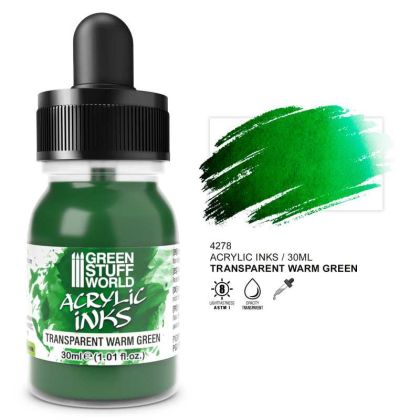
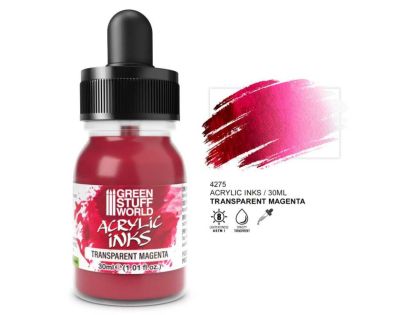
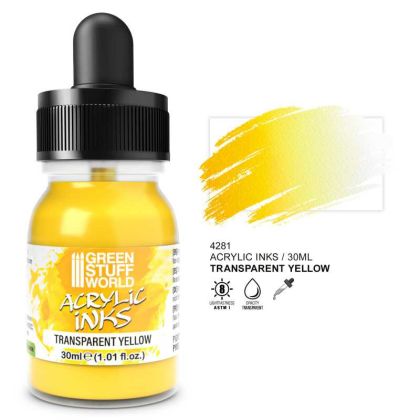
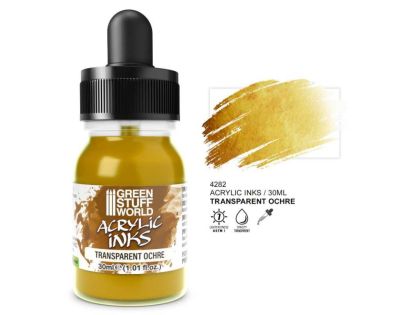
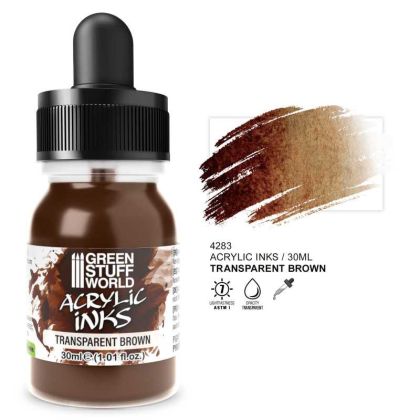
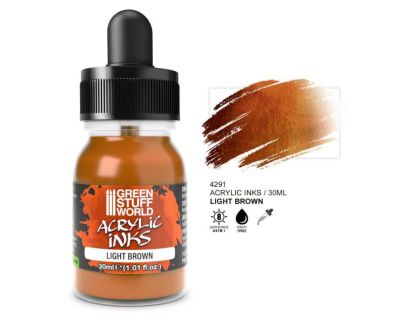
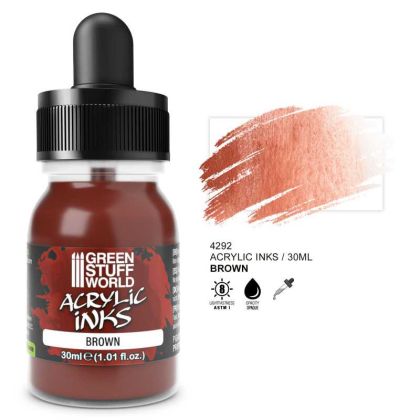
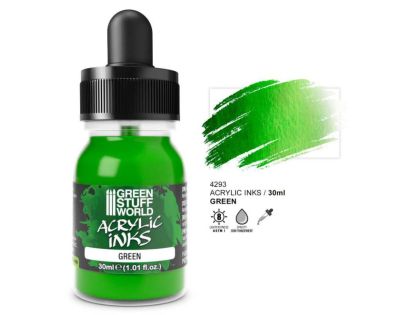
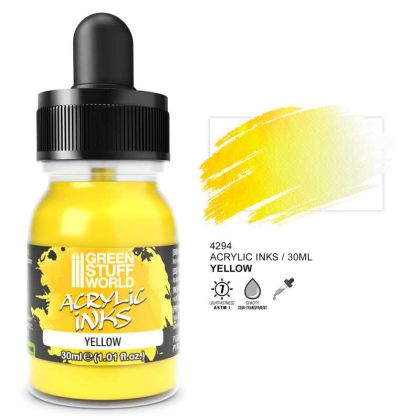
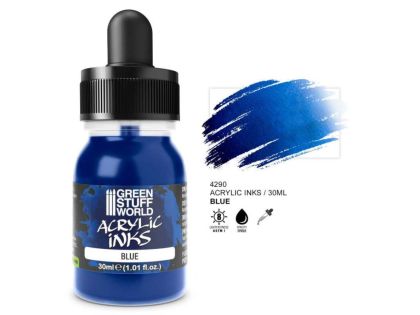
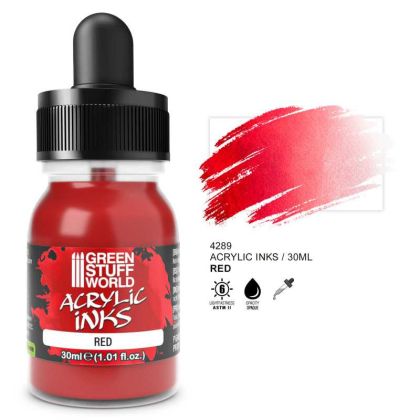
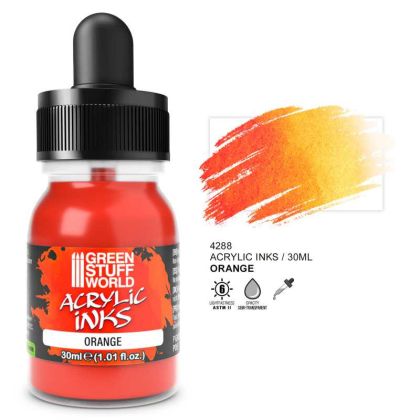
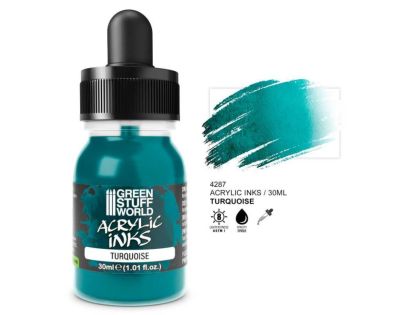
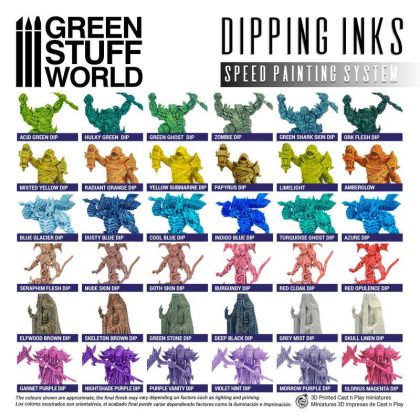
The Green Stuff World acrylics cover unusually wide ground. Conventional opaque shades for figures sit next to transparent and opaque inks, dipping shades that do the shading for you in one step, paints that crack into dried mud as they dry, and flexible coatings for soft materials. Bottle sizes run from 17 ml droppers up to 240 ml containers.
Because the lines do different jobs rather than offering different colour charts, choosing is easier if you start from what the paint should do on the model. The sections below sort them by effect, by tool and by the stage of the build they belong in.
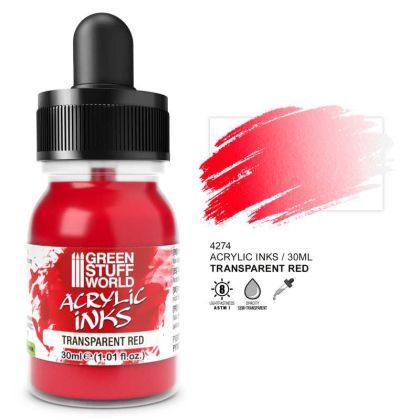
Look at it through what the paint does. Opaque shades serve as an ordinary palette for figures and small fittings. Inks are heavily pigmented and come in transparent, opaque and luminous versions, covering glazes, tinting and airbrush work. Dipping shades are thinned so a model can be dunked or flooded and the shadow forms by itself. Effect paints do what ordinary paint cannot: crack into a net of fissures like dried clay, or stay flexible after drying so they survive on rubber and latex.
Opaque colours belong at the start, inks and dipping shades in the second phase where depth is created, and effect paints almost always at the very end. A cracked surface cannot be painted over smoothly, because the relief of the fissures shows through everything laid on top.
Inks have a very fine pigment and pass through a narrow nozzle, so they suit airbrush work well. Dipping shades and effect paints want a brush or an outright flood, because they are applied in bulk.
Transparent shades need a pale base, opaque ones manage over anything, and flexible coatings belong on material that bends. Suitable bases are in surfacers and primers.
To see where this catalogue sits among the other acrylic systems on the shelf, open acrylic model paints.