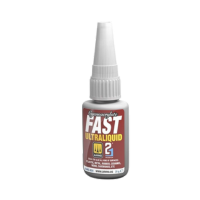
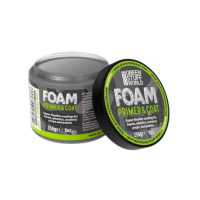
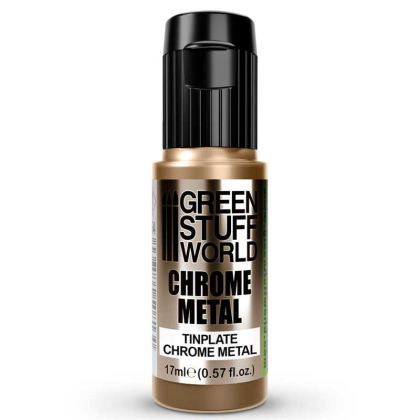
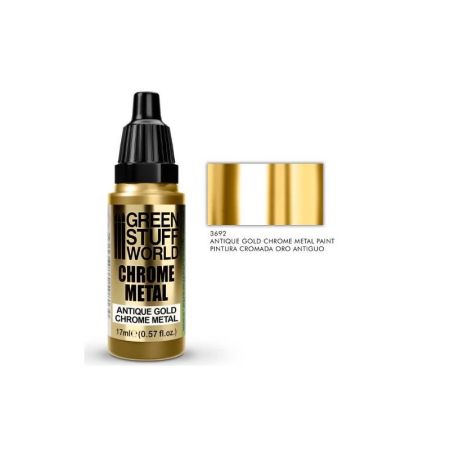
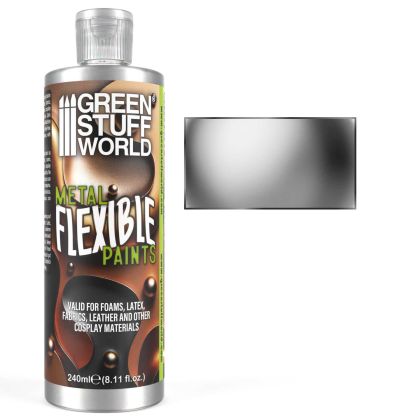
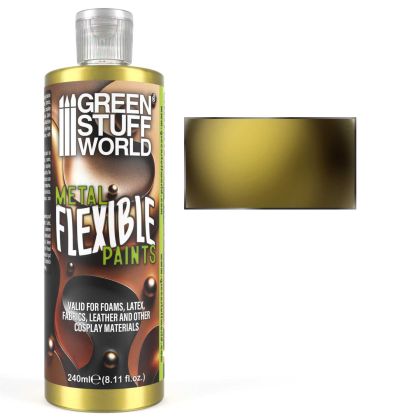
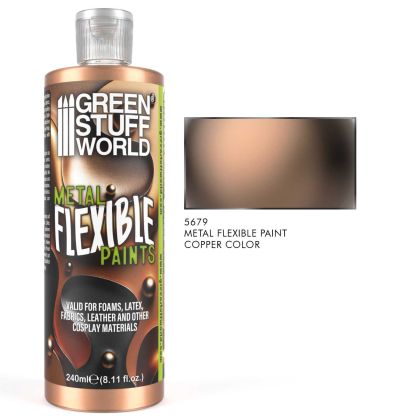
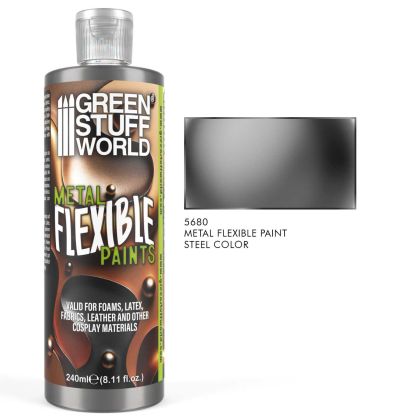
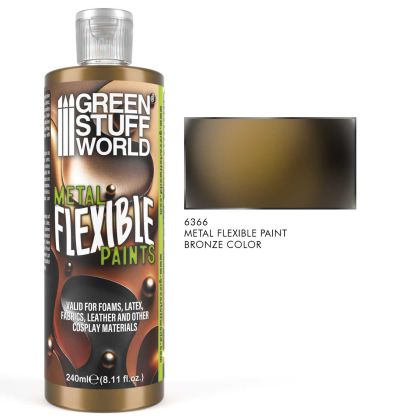
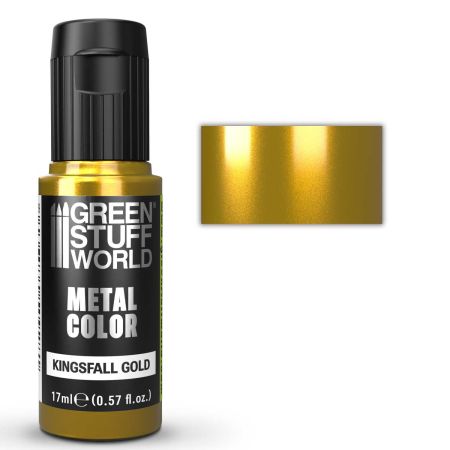
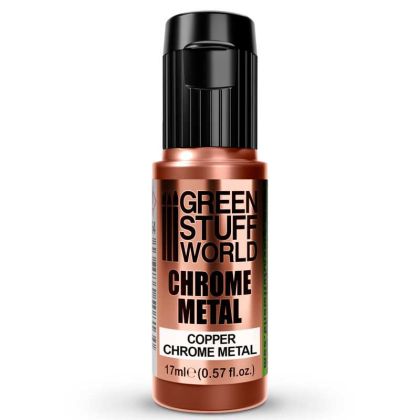
The metallic shelf from Green Stuff World stretches from chrome shades in small dropper bottles to flexible metal coatings in 240 ml containers. In between sit chromed copper, bronze, old gold and white metal, colour metallics in purple and turquoise, gold and green pearl tones, and flexible silver, gold, bronze, copper and steel for surfaces that bend. Three quite different approaches share one shelf, so it pays to know which is which before a bottle is opened.
Chrome paints have the finest pigment and, applied correctly, give a mirror surface; they are also the most demanding about what lies underneath. Colour and pearl metallics combine metal lustre with a tone of their own and suit armour, fantasy elements and decorative detail. Flexible metal coatings in large volumes are not chasing a mirror at all but durability: they stay pliable once dry, so they do not crack on rubber, latex or a moving part. What succeeds on a mirror-bright bonnet will fail on a rubber track, and the other way round.
A mirror effect only appears over a gloss, genuinely smooth base. Every abrasive scratch and every brush mark is magnified in the reflection. Polish the area first and close it with a gloss black base from surfacers and primers.
Metal pigment lies on the surface and levels mechanically. Go back into a half-dry pass and you rake the pigment into a matt smear. Work at low pressure in several light passes with a fine nozzle from airbrush guns, because chrome cannot be brushed.
Every clear coat takes something off the lustre. Leave an area bare if it will not be handled; where protection is needed, choose a thin gloss layer from model varnishes.
Colour metallics and pearls are used most on model figures and fantasy subjects. Other metal types, lacquer and paste alike, are in the parent category metallic model paints.