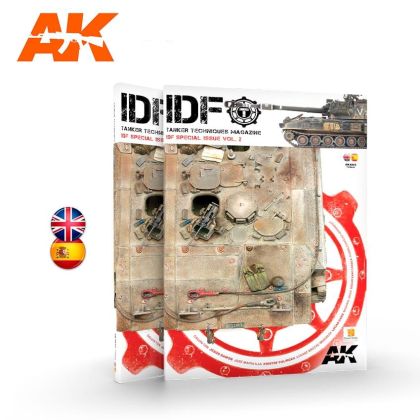
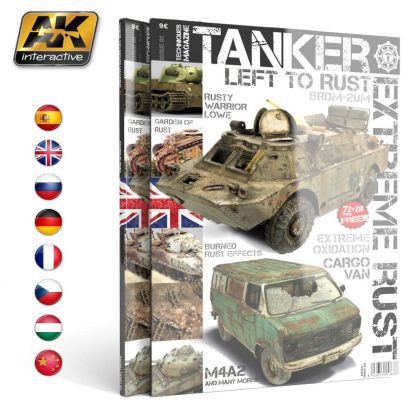
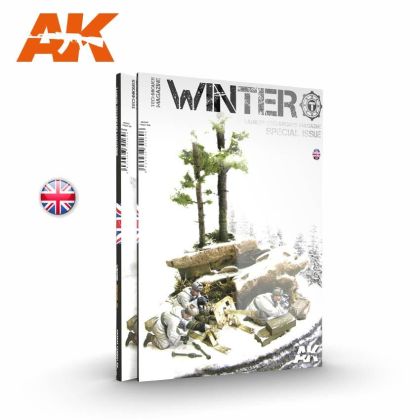
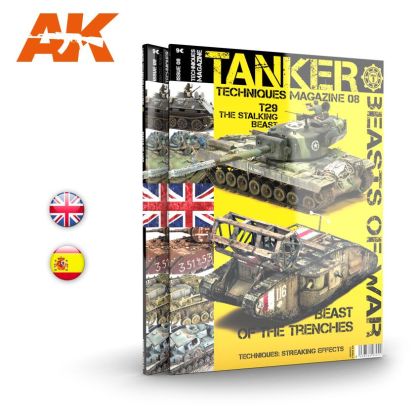
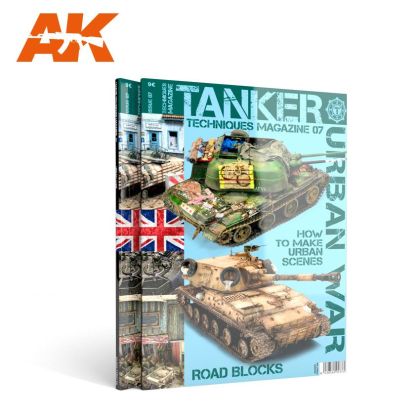
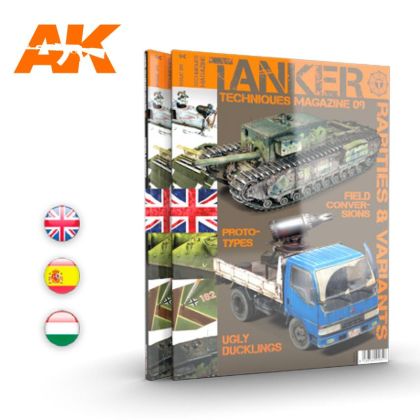
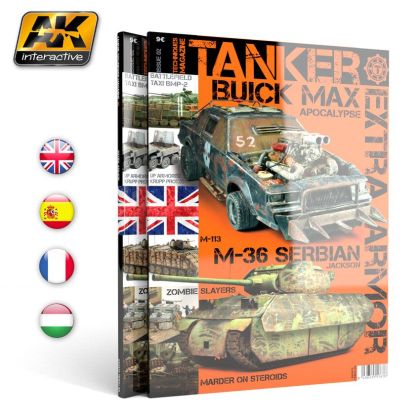
Armour modelling with the emphasis on current vehicles is what Tanker Magazine does, and each issue is built around a single theme: unusual variants, fighting in built-up areas, winter conditions, or the equipment of one particular army. What matters for a builder is that the articles are written as processes - they show how the author reached the result rather than simply presenting the finished model. How to work with an issue is set out below.
Vehicles of the last few decades differ from wartime subjects more than first glances suggest. They carry appliqué armour, slat cages, aerials, stowed equipment and tarpaulins, their surfaces are covered in anti-radar or anti-slip coatings, and the camouflage is frequently a single colour. That changes the work: far less time on broken camouflage patterns, far more on surface texture and on what is loaded where.
The setting dictates the whole finish. A vehicle from urban fighting is soiled differently from one out of sand or off a muddy winter road: different dust colour, different depth of deposit, different places where paint has worn. If you already know the scene, choose the issue to match.
Some articles build straight from the box and concentrate on painting; others tackle converting a specific variant. The second group is harder but often the more valuable, because it tells you what to add for a particular upgrade standard.
Most articles work in the larger scale, where surface texture and stowage can be handled in detail. The methods scale down if you keep the distribution of dirt and the contrasts and drop the finest effects.
For book-length photo reference on contemporary vehicles see Desert Eagle books, and for finishing methods in depth, The Weathering Magazine.