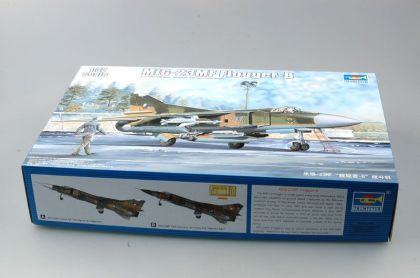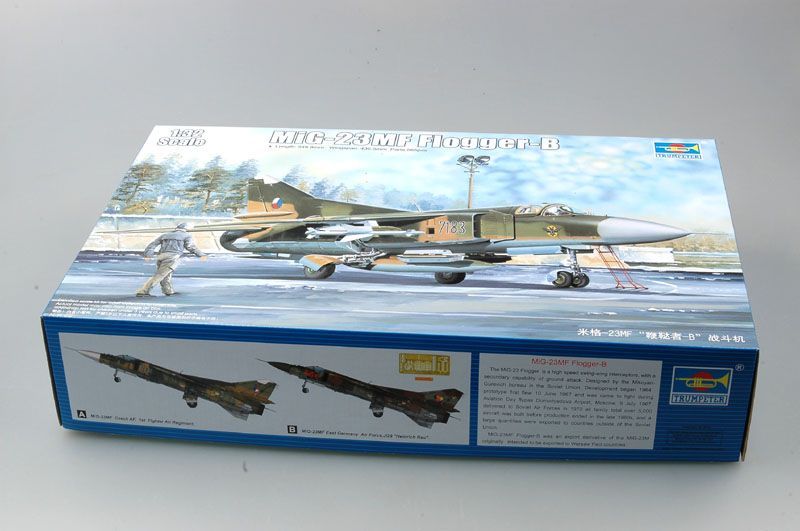
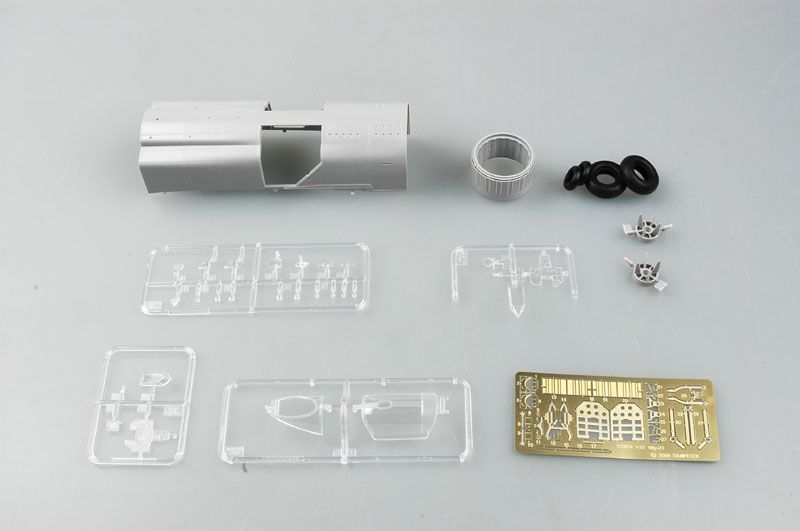
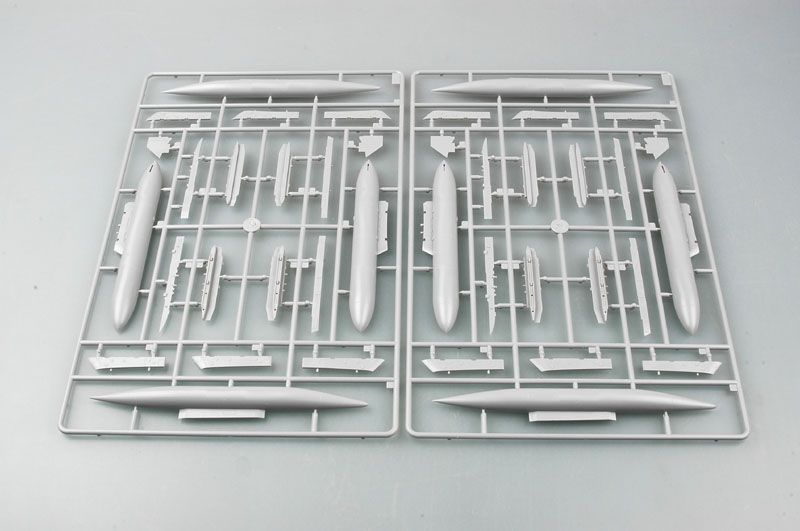
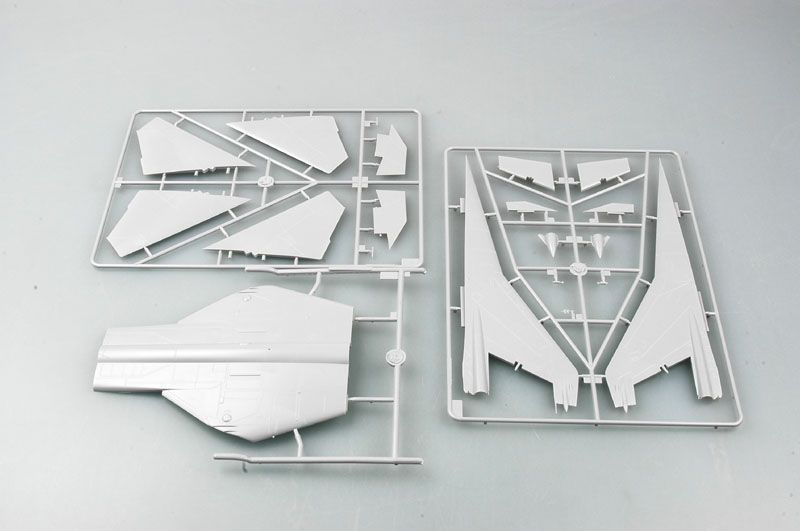
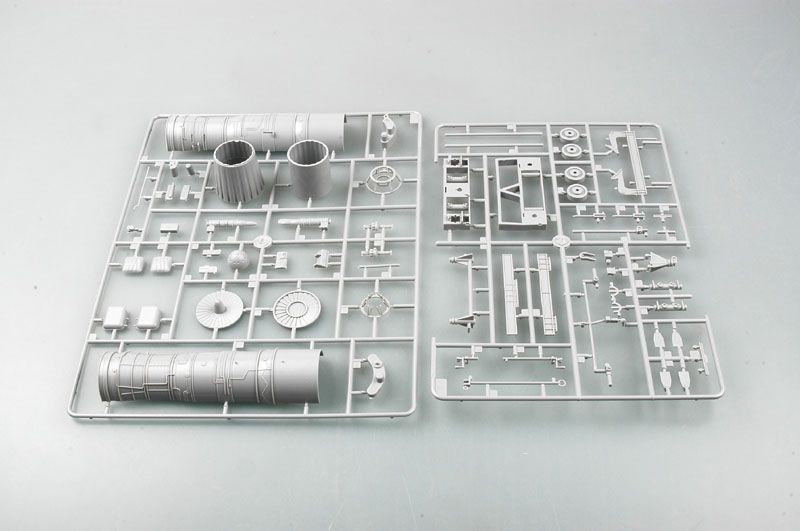
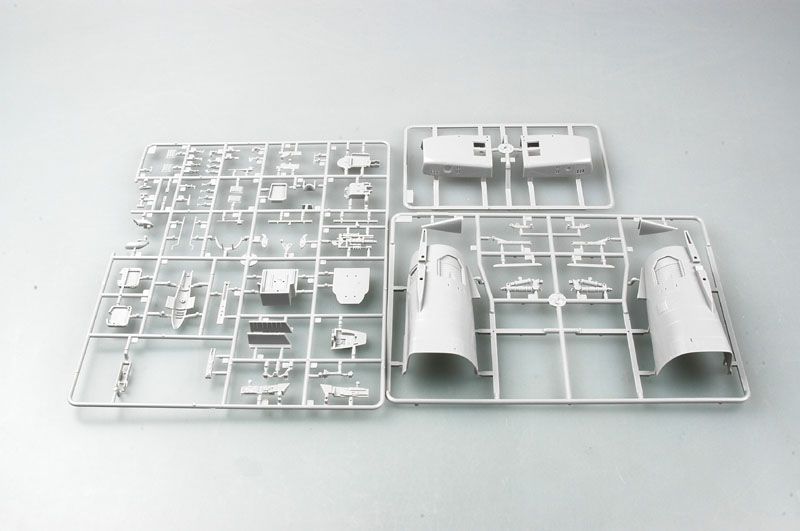
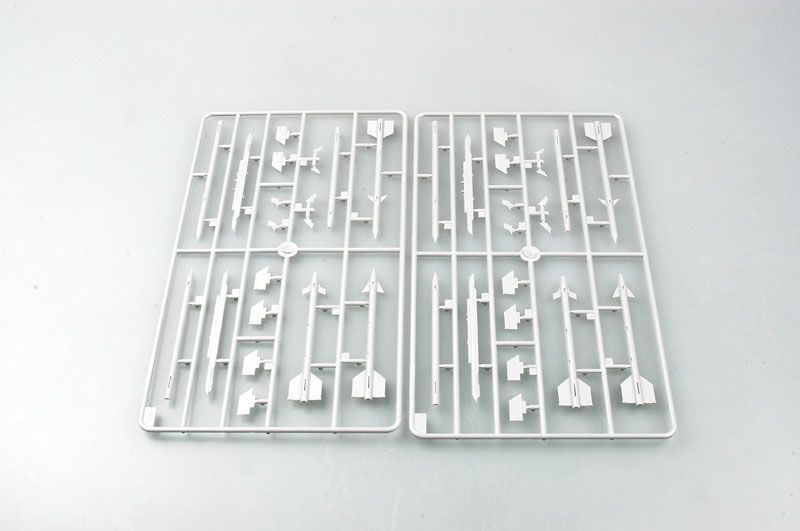
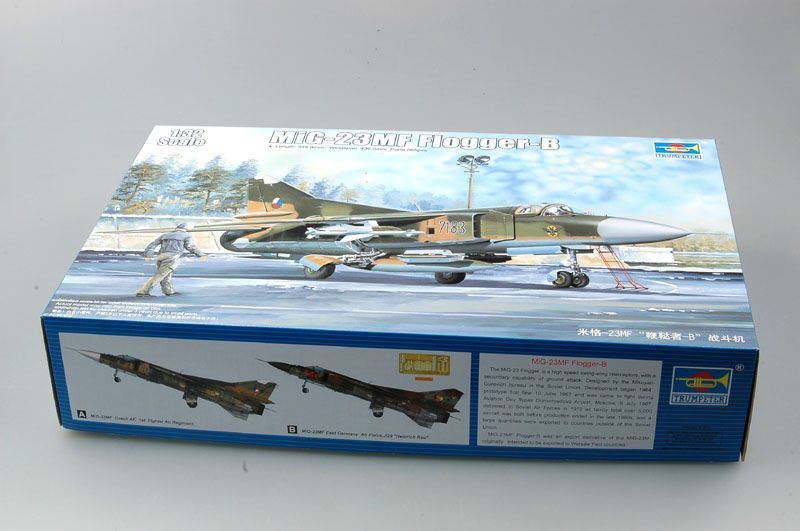
The MiG-23MF Flogger-B is an extensive plastic kit of the Soviet fighter with a variable-geometry wing in 1:32 scale from Trumpeter. The wings sweep in unison, and the package holds photo-etch, metal landing gear and decals including a Czechoslovak Air Force machine.
Responsibility details are not available.
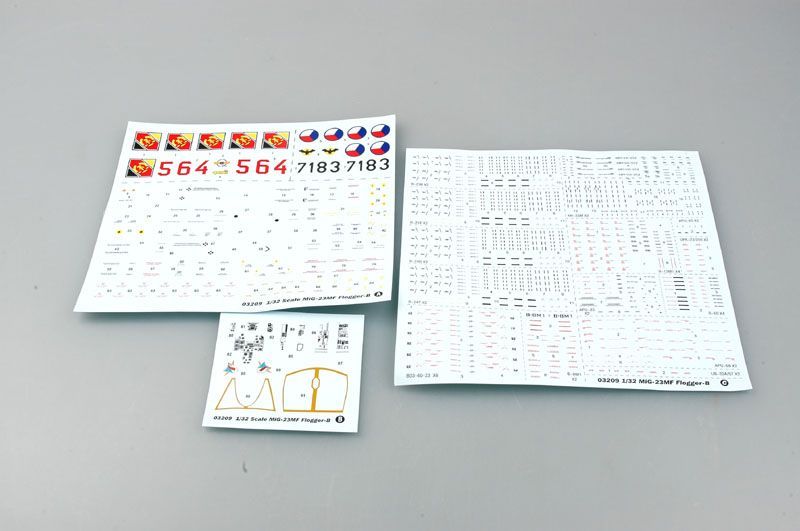
An injection-molded plastic kit of the MiG-23MF fighter in 1:32 scale from Trumpeter. It is a very extensive kit: 565 parts on 33 gray sprues, of which 14 sprues are taken up by the armament alone, plus four sprues of clear parts, a photo-etched fret, nine metal landing gear castings and four rubber tires. The main draw is the working mechanism: both wing halves are linked and sweep in unison, so you set the sweep according to how you want to display the aircraft. The leading and trailing edge flaps, the spoilers, the airbrakes, the ventral fin, the stabilizers and the rudder can all be positioned as well. There is also a detailed R-29 engine with a ground trolley, a GSh-23 gun pod and a choice of an open or a closed nozzle. The decals cover two machines: the East German Air Force and the Czechoslovak Air Force (the 1st Fighter Air Regiment).
The MiG-23 was the answer to a requirement for a fighter that could handle a short runway as well as a speed of over Mach 2. The solution was a variable-geometry wing: the sweep changes in flight, with the wing spread giving lift for takeoff and landing and swept reducing drag in supersonic flight. The MF version was the first widely exported variant with the R-29 engine and is outwardly close to the Soviet M version. Do not confuse it with the later ML version, which is a separate kit; the ML is a newer, lightened variant with different avionics. MiG-23MFs also flew in Czechoslovakia: the first machines arrived in August 1978 and were taken on by the 1st Fighter Air Regiment at Ceske Budejovice, and they later served with the 11th Regiment at Zatec as well. That is precisely why the Czechoslovak scheme in the box is a strong argument for collectors of that air force.
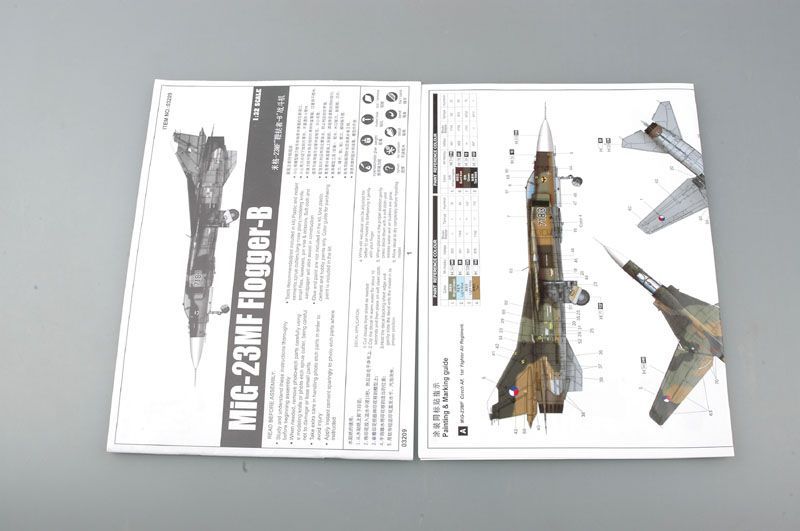
Assemble the wing mechanism exactly according to the instructions and try it dry while the fuselage is still open; once it is glued you can no longer reach it. Make sure no glue gets into the pivots. Degrease the metal landing gear legs and bond them with super glue, and do the same with the bent photo-etch. Finish the cockpit, the bays and the engine before you close the fuselage. At a large scale the surface gives away every scratch, so fill, sand, polish and only then spray a primer. Seat the decals on a gloss coat and settle them with a softener; paint the armament separately and hang it on last.
The model is supplied unassembled and unpainted. Glue, paints and accessories are not included in the package, unless stated otherwise.
Naši poradci a znalci sortimentu jsou připraveni odpovídat na Vaše dotazy (Po–Pá, 8–18 hod).
Zeptejte se na co potřebujete, odpovíme co nejdříve.
Texts from customers in the advice section reflect solely the opinions and views of the customers. MNF trade s.r.o. does not approve or verify customer texts in advance.
There are no questions here yet. Be the first to ask!