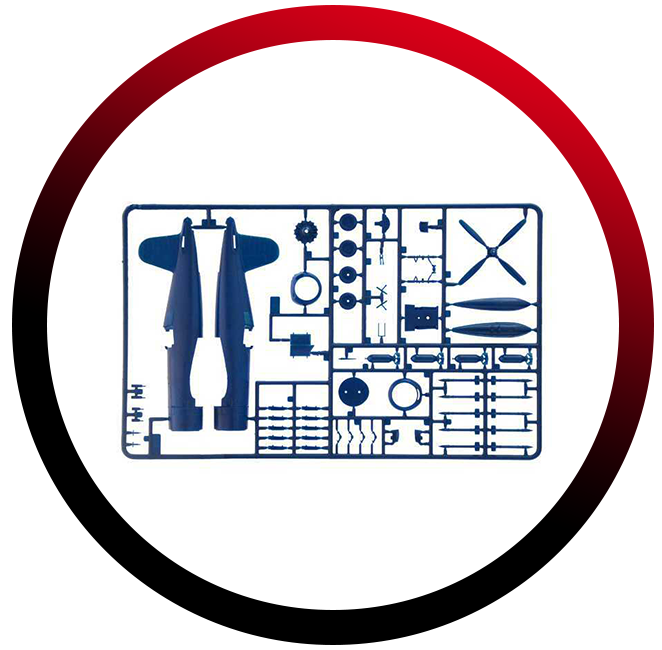
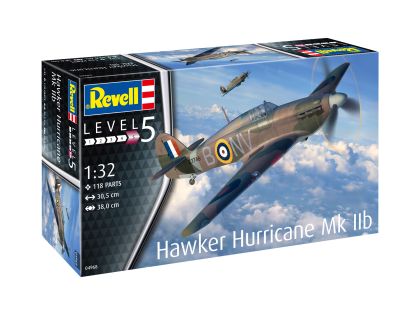
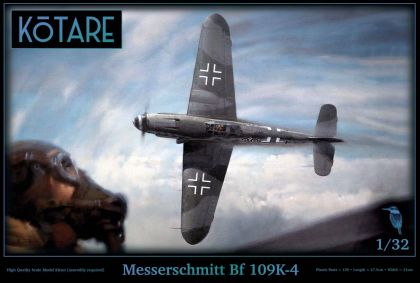
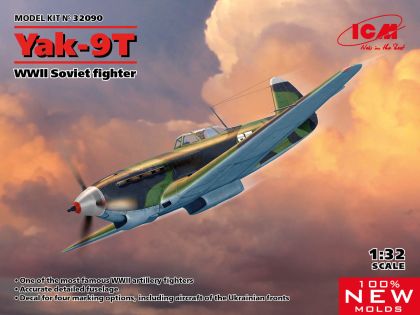
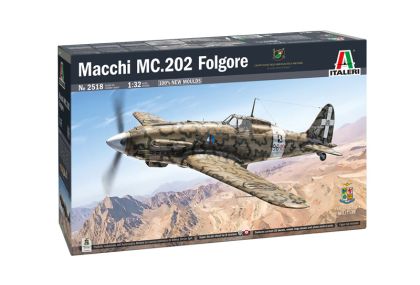
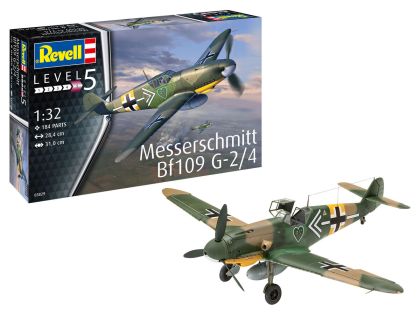
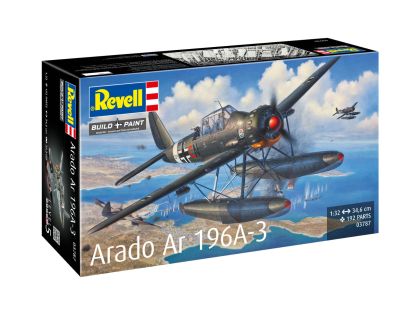
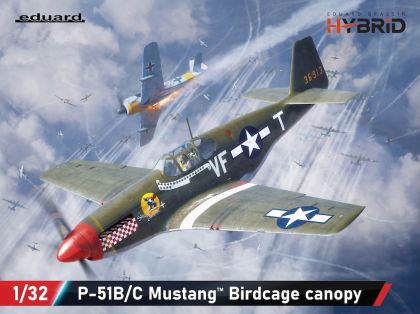
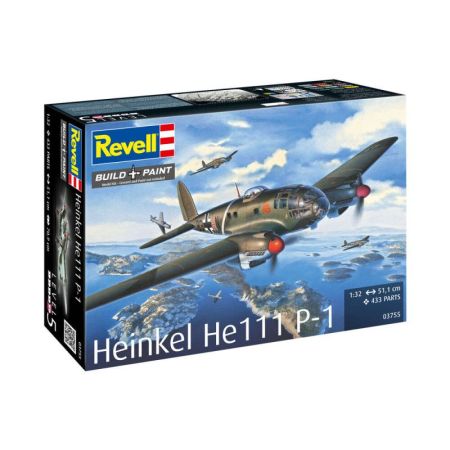
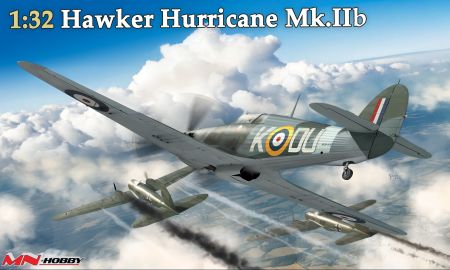
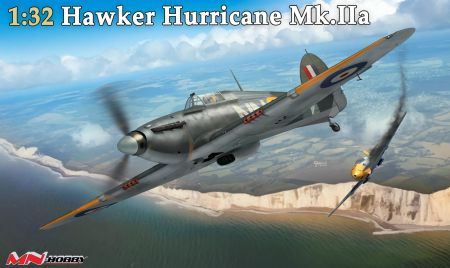
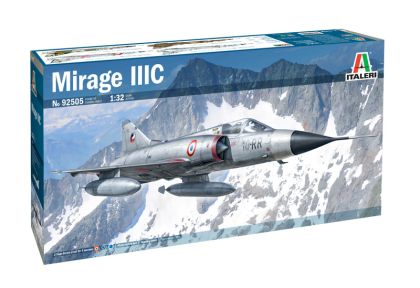
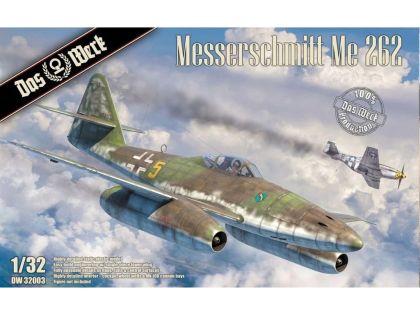
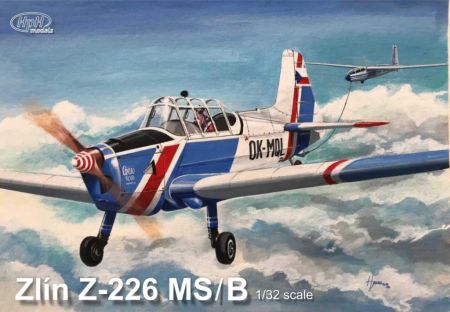
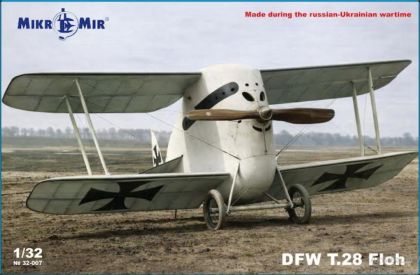
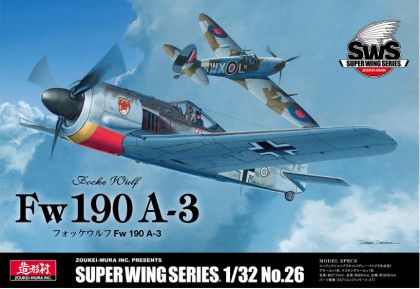
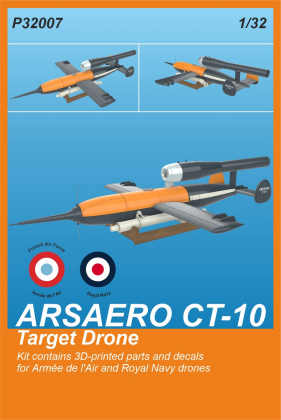
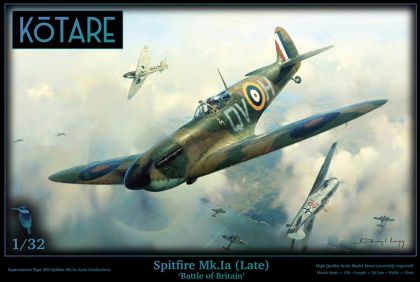
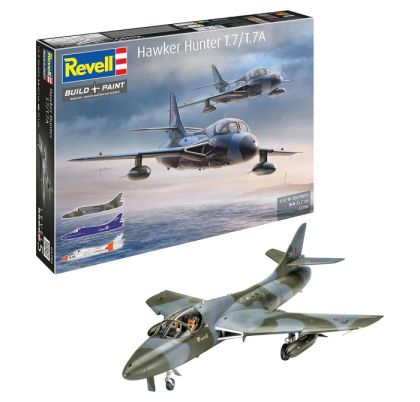
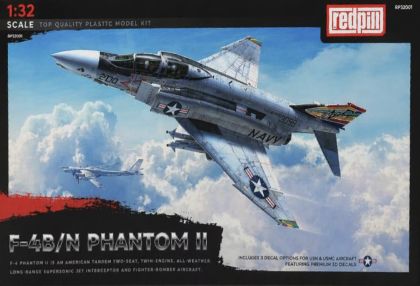
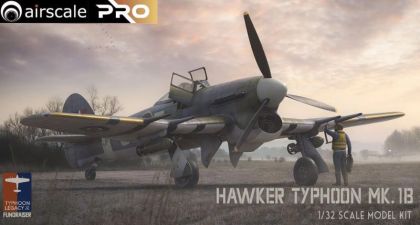
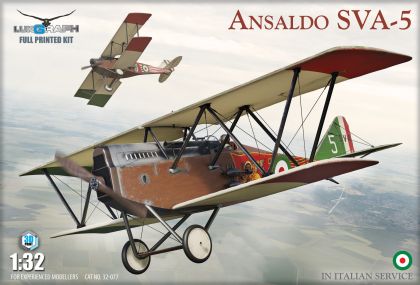
A 1:32 aircraft model is about as large as a build gets while still belonging on a desk. A Spitfire at this ratio spans more than 34 centimetres, and every instrument, seat strap and wheel well is visible without leaning in. Kits in the scale, injection-moulded and resin alike, are long-term projects measured in tens of hours rather than evenings.
Below we look at who gets the most out of large-scale aircraft, what parts counts of several hundred really mean at the bench, and which upgrades genuinely change the finished result.
Thirty-second scale suits modellers who want to extract everything a single kit can give. Designers use the extra volume for complete interiors, engines under removable cowlings and finely rendered rivet lines; a few kits go further still and have you assemble the airframe structure before skinning it, much as the real thing was built. The result needs no company on a shelf, because it carries a cabinet on its own.
Patient builders. Parts run into the hundreds and mistakes are plainly visible, but the reward is a project that can fill a winter and a model that holds up on a competition table.
A single-engined fighter occupies roughly 30 by 35 centimetres, so plan a slot for each aircraft individually. Dust settles conspicuously on large surfaces, which makes an enclosed cabinet close to essential.
The scale concentrates on famous fighters and bombers, with crisply engraved new tooling alongside resin kits aimed at confident hands. The better equipped the boxing, the fewer aftermarket parts you need, though almost nobody finishes a 1:32 build without adding something.
Broad camouflage demarcations are an argument for an airbrush, and subtle shading an argument for weathering products. If you want comparable detail in a smaller footprint, the answer is usually 1:48 aircraft kits.