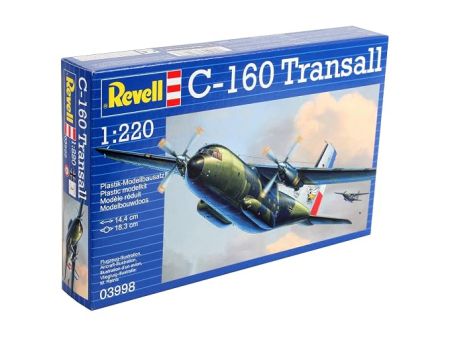
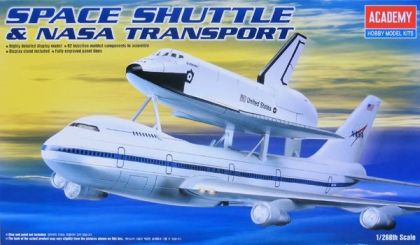
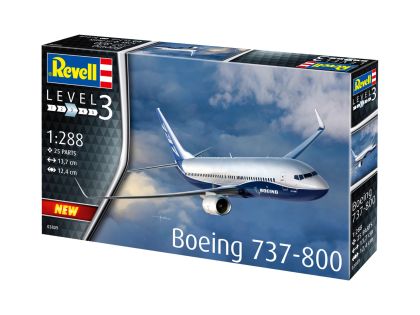
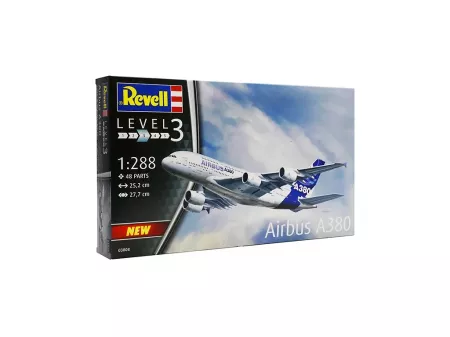
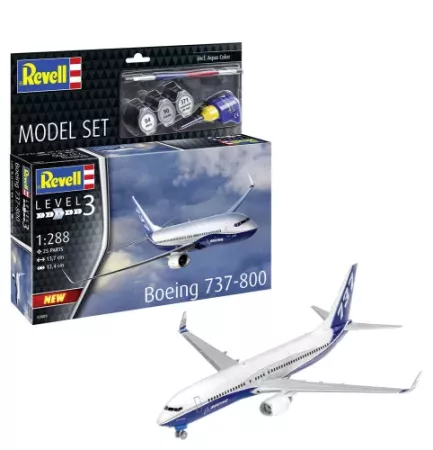
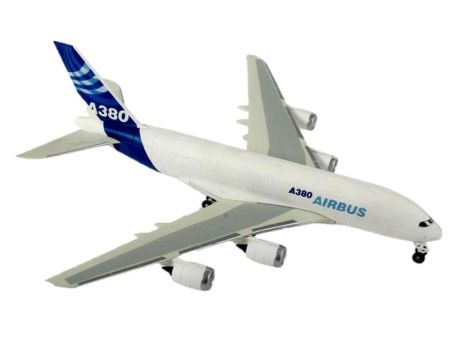
If you want a finished airliner on the shelf quickly, this is the shortest route there is. A 737-800 in these ratios comes out at just under 14 centimetres and an A380 at a little over 25, and either goes together over a few evenings; starter boxings include paints, glue and a brush, which makes them a sensible gift for someone taking up the hobby. The group covers 1:220 transports alongside civil subjects in 1:288.
Below we set out what to expect from miniature airliners and what small amount of equipment makes the build more enjoyable.
This page brings two small ratios together: transport aircraft such as the C-160 Transall in 1:220, and civil types including the 737-800 and the enormous A380 in 1:288. Neither is a collector standard the way 1:144 is. They are accessible kits with modest parts counts, where a complete beginner reaches a presentable result. Liveries are handled by the decal sheet, so there is no multi-colour fuselage to mask: spray or brush a basic white and grey, and the printed artwork does the rest. That is precisely why these scales make such a good first step into plastic modelling.
A starter boxing supplies basic colours, glue and a brush alongside the parts, so a child or a newcomer needs nothing else and has a finished aeroplane by the end of a weekend.
Experienced modellers use them as palate cleansers: a few dozen parts, one simple scheme, and something on the desk that looks right. After a long large-scale project, a build like this is a genuine reset.
The A380 is the largest airliner in service, and at 1:288 it fits in two cupped hands. For most people that is the only realistic way to own the type at all.
Ready for more detail? Move on to 1:144 aircraft kits or the larger 1:200 aircraft kits, with the full catalogue at aircraft model kits.