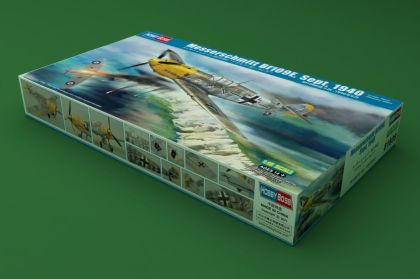
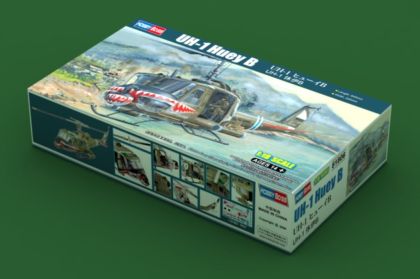
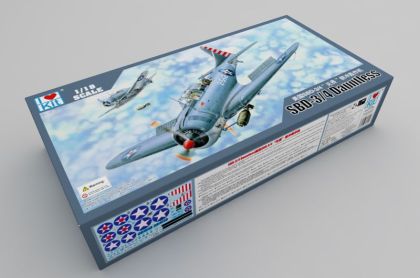
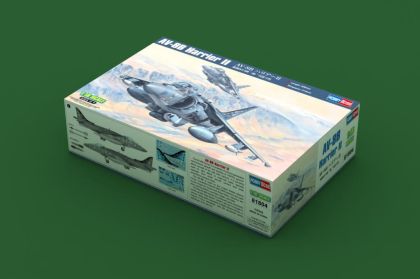
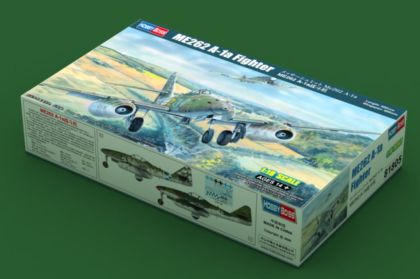
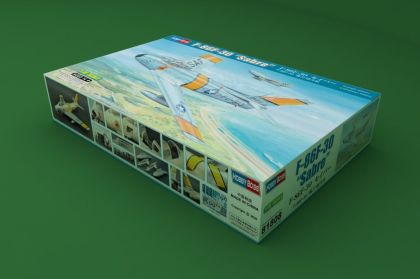
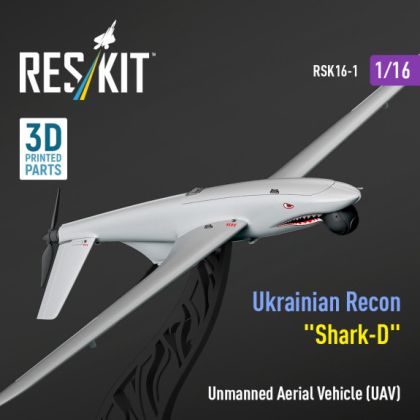
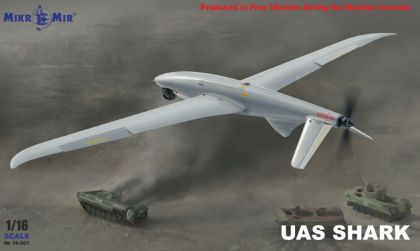
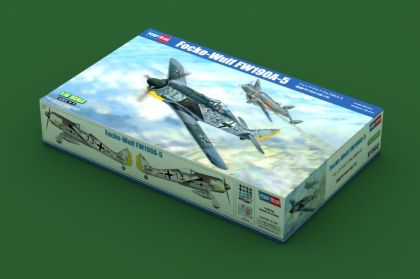
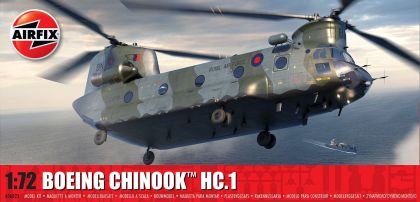
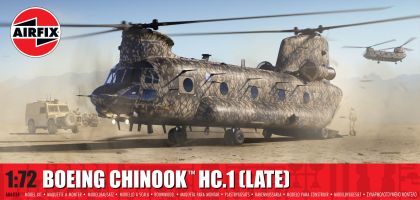
Few kits make an entrance like a 1:18 aircraft model. A Sabre, a Harrier or a UH-1 Huey in this ratio runs to half a metre and beyond, which makes it a study or shop-window centrepiece rather than one shelf model among many. Alongside the injection-moulded classics sit modern unmanned aircraft in the closely related 1:16, including reconnaissance types that have become familiar from recent news footage.
Below we set out who this format suits, how much room to clear before ordering, and which parts and tools make a build of this size behave itself.
Eighteenth scale is better known from die-cast cars; applied to aircraft it produces a kit that competes with a television set for space once finished. Manufacturers reserve it for famous airframes, from early-war single-seat fighters through carrier dive bombers to the first generation of swept-wing jets, with helicopters adding rotor spans that stretch the footprint further still. The nearby 1:16 brings in contemporary unmanned types, which look entirely at home next to them.
Collectors who would rather own one exceptional model than a shelf of small ones, and builders with a few completed kits behind them. Large components need firm, square joints, and spraying surfaces this big is a different exercise from covering a 1:72 wing.
A fighter in 1:18 occupies roughly 50 by 60 centimetres, a helicopter with its rotor rather more. Measure the cabinet or shelf before ordering, and plan for a base from the outset, because a model this heavy looks wrong sitting straight on a wooden surface.
Cockpits, wheel wells and weapon pylons are moulded to survive inspection from a few centimetres away. The flip side is that seams, uneven panel lines and dust in the paint are just as visible. Viewers examine a model this size the way they examine a real aircraft in a museum.
If half a metre is simply too much, step down to 1:24 aircraft kits or to the most widely supported large scale, 1:32 aircraft kits. The complete range of sizes is listed under aircraft model kits.