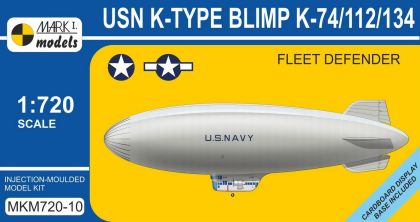
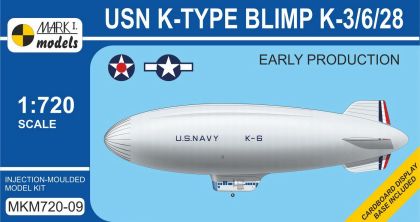
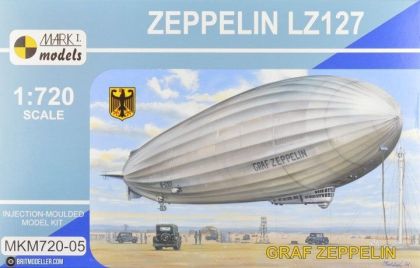
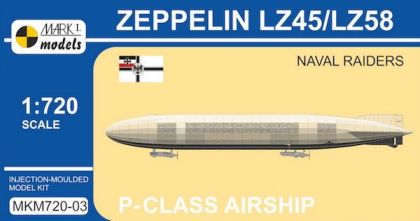
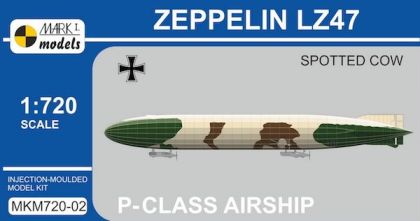
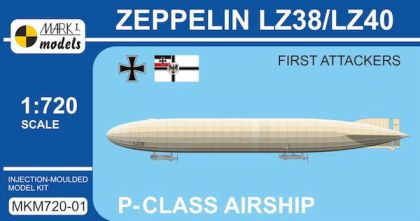
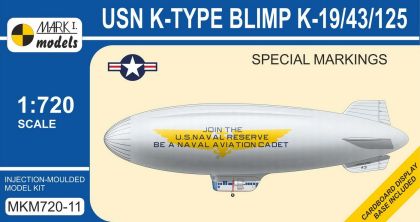
This ratio belongs almost entirely to airships. The Graf Zeppelin LZ127 is the headline subject, joined by the German P-class ships of the First World War and the American K-type patrol blimps of the Second. The scale itself is tiny, yet because the real craft were enormous, the finished hulls still run to 20 centimetres and more.
Read on for what makes these unusual kits rewarding and how to deal with the one thing that decides the result: a very long, very smooth hull.
Seven-hundred-and-twentieth scale comes from ship modelling, which is exactly why it works for the giants of the air. LZ127 was over 230 metres long in reality, so even at 1:720 the model reaches a respectable 32 centimetres. The kits cover three eras: the P-class bombing airships of the First World War, the interwar passenger Zeppelin on its South American route, and the K-type blimps that escorted Atlantic convoys and hunted submarines in the Second.
Collectors who want something in the cabinet that nobody else has, and anyone drawn to the early history of flight. Parts counts are low, so the build is within reach of a moderately experienced modeller.
Most of the model is one long cigar-shaped envelope assembled from two halves. Sand that seam properly, because an uninterrupted surface advertises every scratch left behind. In exchange you get an elegant silhouette that comes together quickly.
Individual boxings differ mainly in which specific craft the decals represent, including early and late K-type blimps. Choose according to the story you want to tell: a patrol blimp over an Atlantic convoy is a completely different subject from a passenger airship on a scheduled transatlantic service.
Other miniature formats worth a look are 1:700 aircraft sets for warship decks and collector-sized 1:144 aircraft kits; the conventional aviation scales are listed under aircraft model kits.