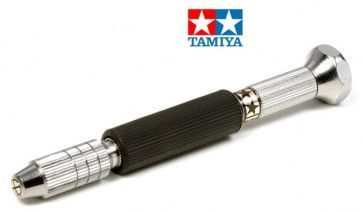
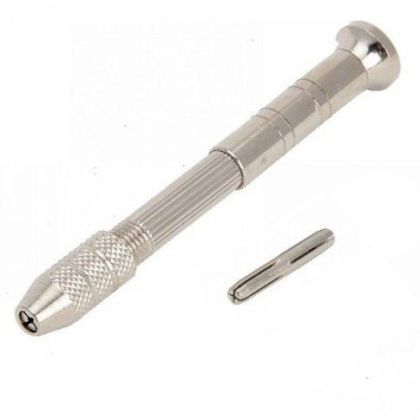
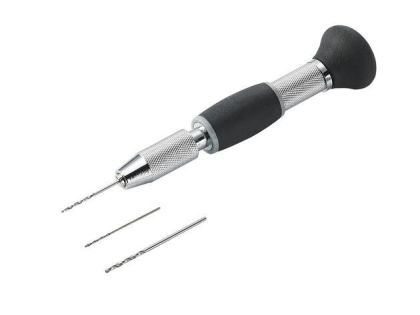
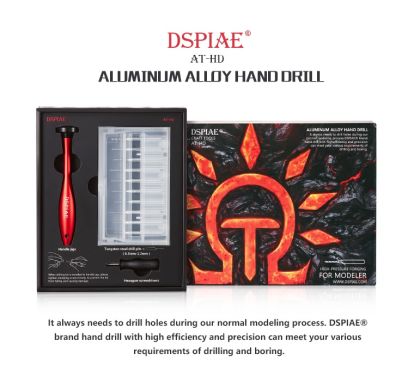
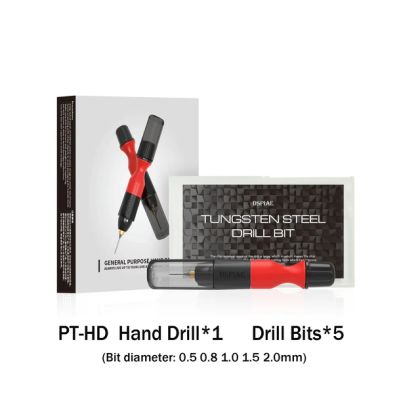
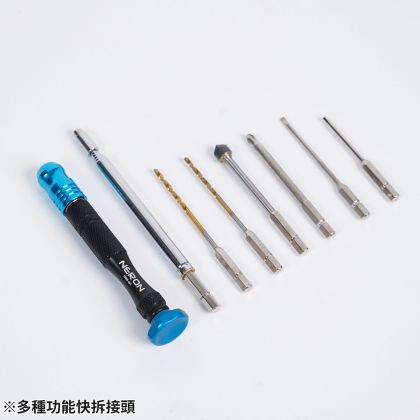
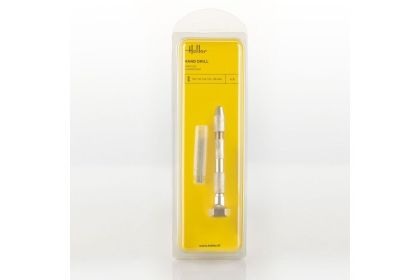
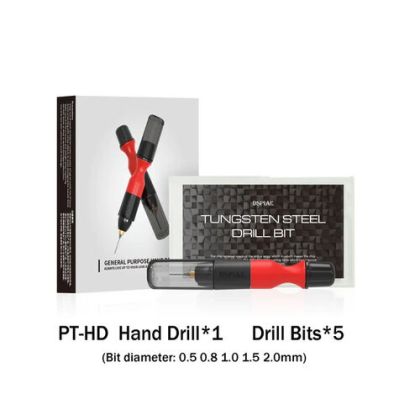
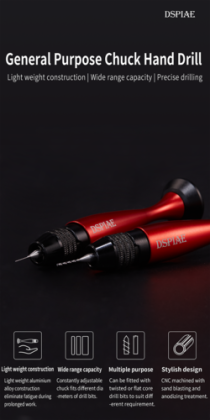
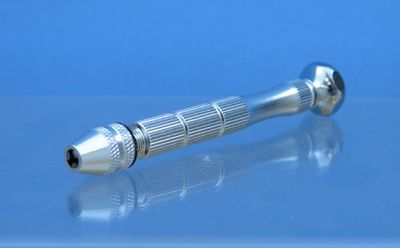
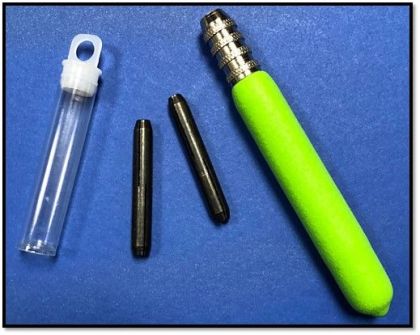
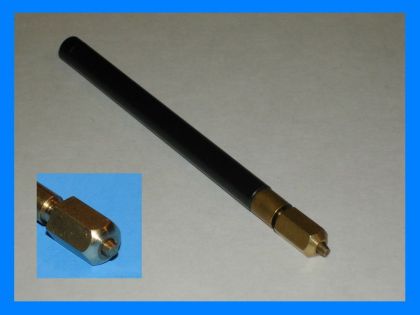
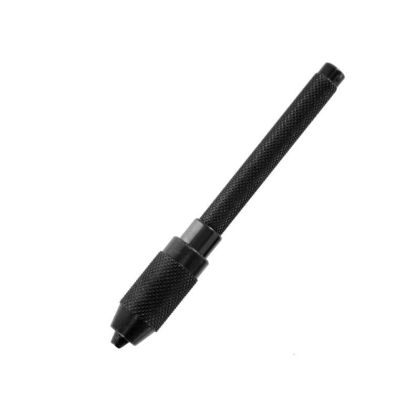
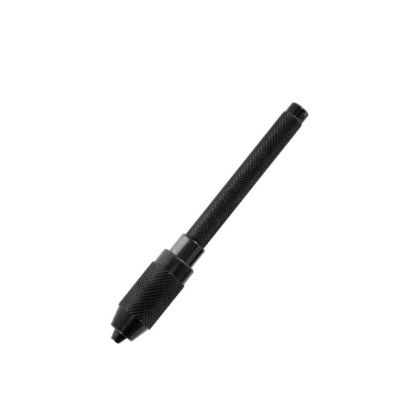
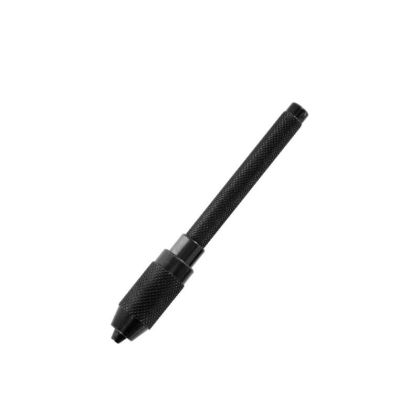
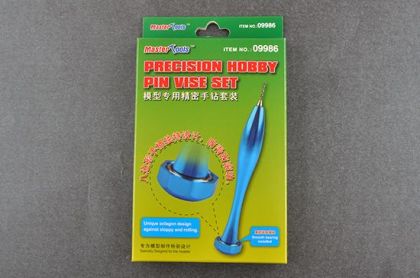
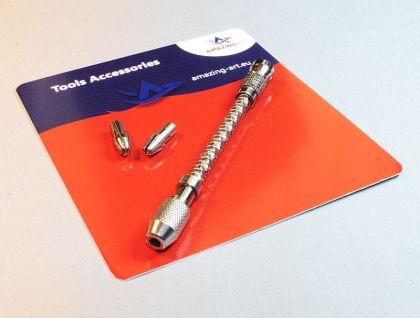
A pin vice is a drill holder turned by the fingers. Its advantage over a machine is feel: you sense the resistance of the material and know the moment the bit breaks through, so you neither overrun the hole nor damage the inside of a part. They come as the classic slim body, as a pattern with a swivel cap for comfortable turning, with a set of interchangeable collets for different diameters, and in complete sets that arrive with a selection of bits.
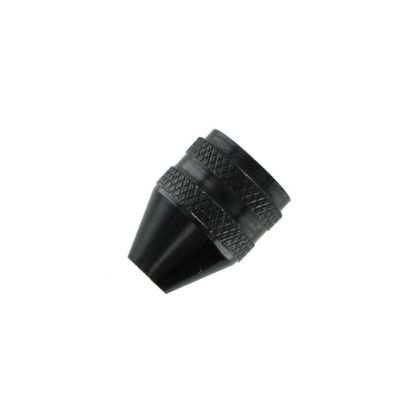
Each pin vice covers a certain span of diameters. Because one collet cannot do everything, packs usually hold three or four inserts — one for the finest bits around a tenth of a millimetre, others for medium and heavier shanks. Check the range against the diameters you genuinely use.
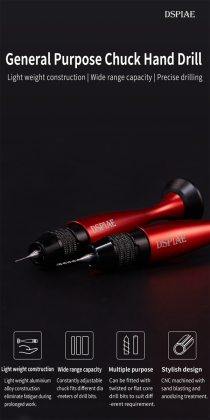
The most comfortable arrangement is a swivel cap: you rest it against the pad of a finger and turn the body, so pressure and rotation are separated. Plain rod-type vices are lighter, but you have to re-grip as you go.
Some pin vices carry collets at both ends, so two diameters are ready and nothing needs swapping mid-job. When drilling in series that is noticeable.
What really matters is how accurately the collet grips the shank. A loosely made vice lets a fine bit run slightly out of true, which at tenth-millimetre diameters means an inaccurate, often oval hole. A good tool holds the bit on axis even under light pressure and turns drilling into routine rather than a gamble. Weight counts too: a heavier metal body sits better in the hand and damps small tremors.
Clamp the bit with the shortest free length you can — the more that sticks out, the more easily it snaps and the worse it holds square. Mark the spot with a dimple so the tool cannot skate. Turn smoothly in both directions and without pressure; a fine bit clears the material by itself. The moment the resistance eases you are through, and it is time to slow down. Check the hole afterwards and ease the edge with a tool from files.
For a large number of holes or for hard materials it is worth moving up to a tool from micro drills.