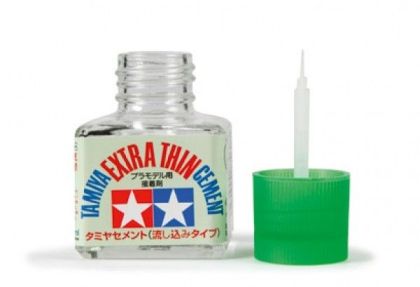
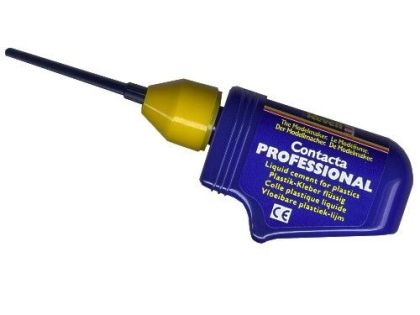
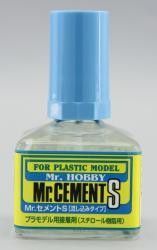
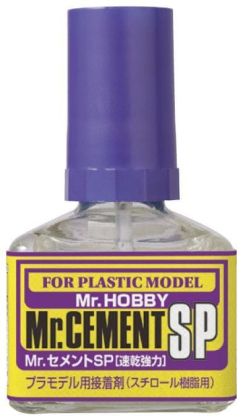
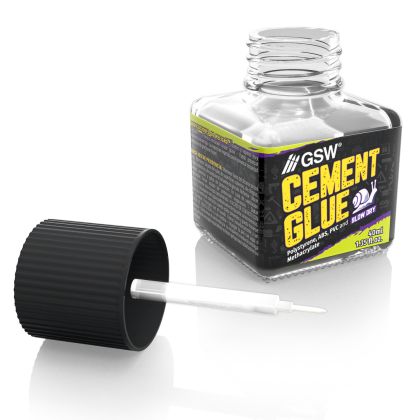
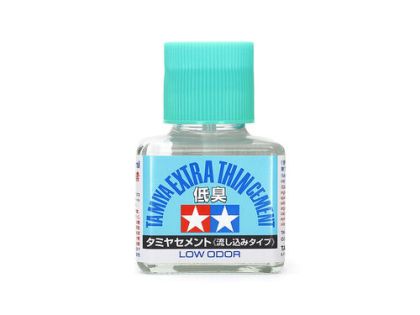
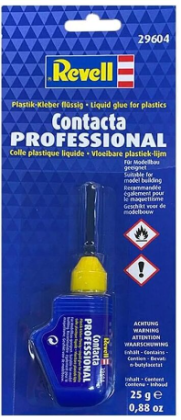
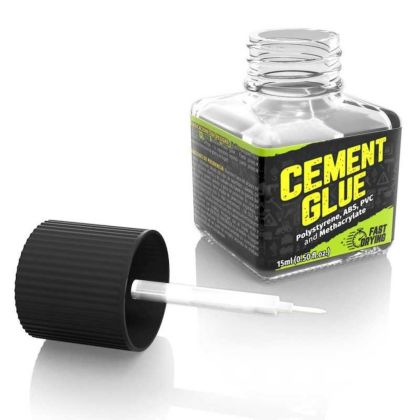
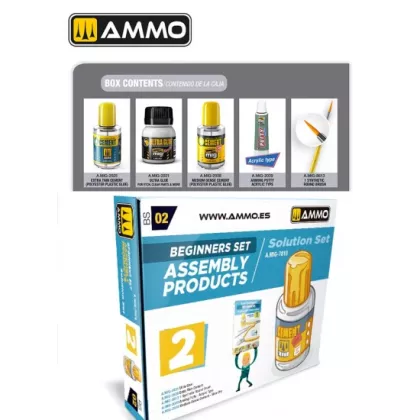
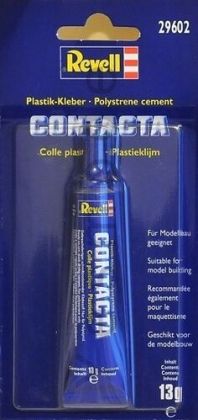
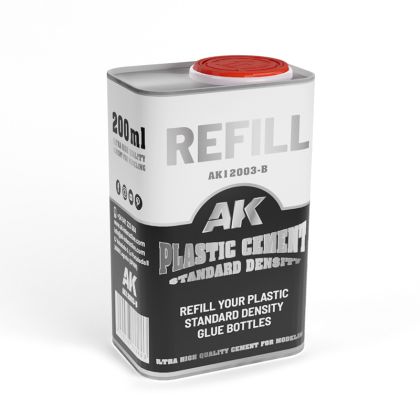
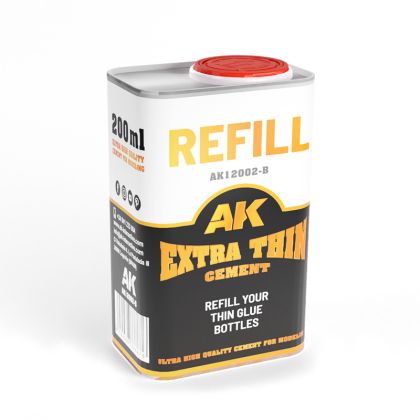
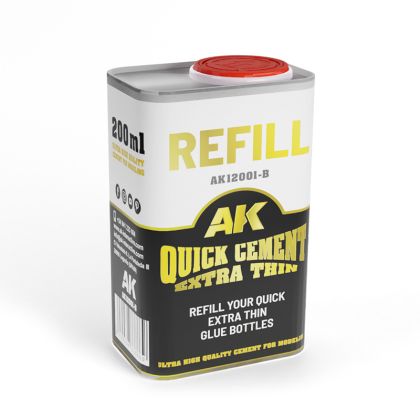
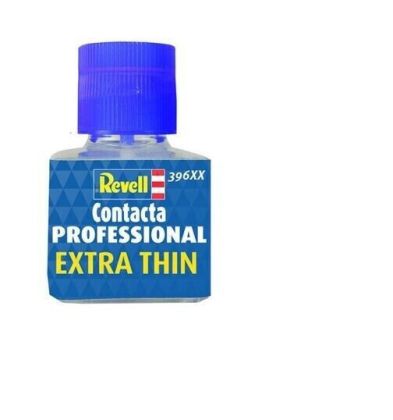
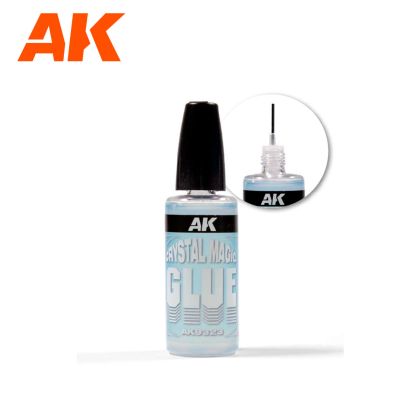
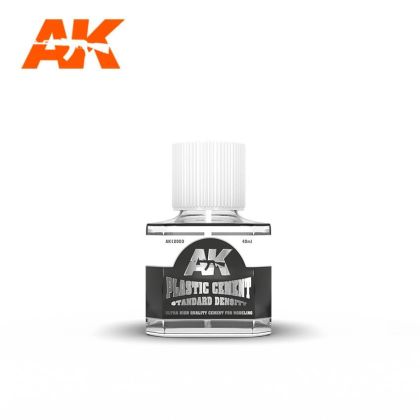
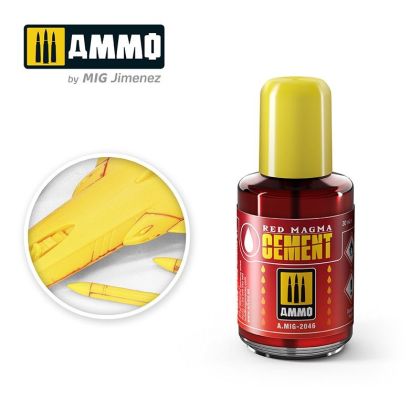
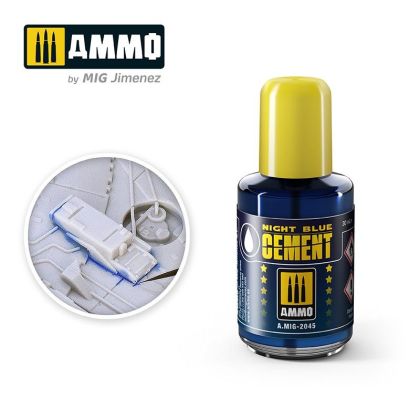
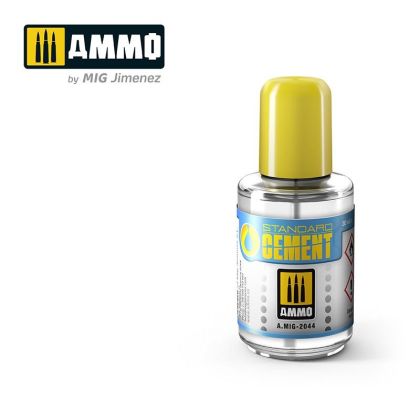
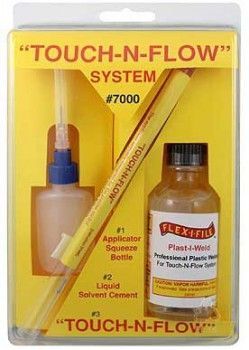
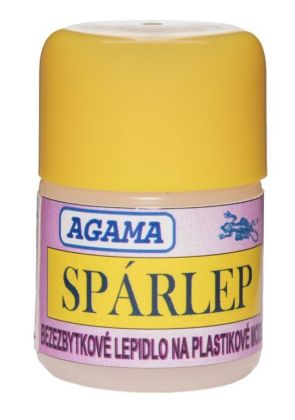
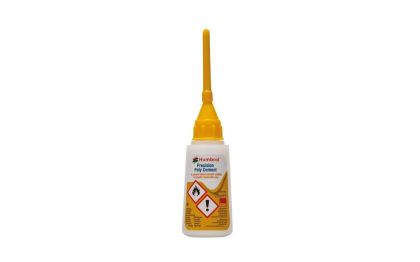
Plastic cement is the one bottle every styrene build depends on. It works by solvent action: the surface of both mating faces softens, and once the solvent has gassed off what remains is a single piece of material that sands exactly like the plastic around it. The category covers extra thin capillary grades with a brush in the cap, thicker paste cements in a tube, versions with a deliberately long open time for aligning big parts, and tinted cements where you can see precisely where the liquid has travelled.
Other glues hold on the surface. This one dissolves the surface first, the softened faces are pressed into each other, and after curing the joint is homogeneous. The practical consequence matters: a properly cemented seam can be sanded flat and a scribed panel line will run straight across it as if no joint were there. That is also why cyanoacrylate makes a poor substitute on styrene — it grabs instantly, but the joint is hard, brittle and tends to break out under abrasive.
The thin grade, usually sold as extra thin, is laid against an already closed seam with a fine brush and draws itself in. A thick grade stays put, so it suits large mating surfaces and parts that hang where a runny cement would travel. Paste cements in a tube fill a little as they go, which quietly replaces filler on less precise kits.
Long fuselage halves, bonnets and joined wings want to be closed progressively, a section at a time. For that you need a slower cement that still lets the parts move. A small part held in tweezers is the opposite case — a quick grab saves you holding it for minutes.
The brush in the cap is the all-rounder. For fine work a metal glue applicator is far more precise: it releases only as much as the seam will take, which removes most of the risk that solvent etches the surrounding detail or fogs a clear part.
If the joint holds but a visible groove remains, carry on in fillers, where filling and levelling are dealt with properly.