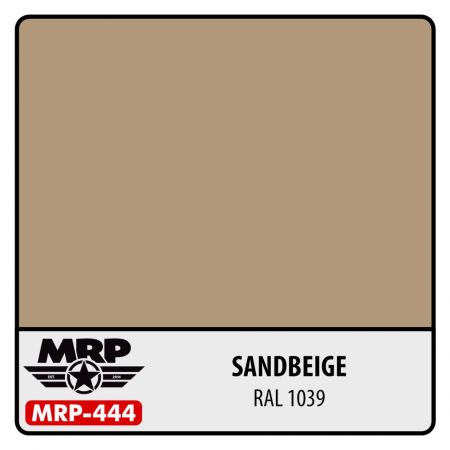
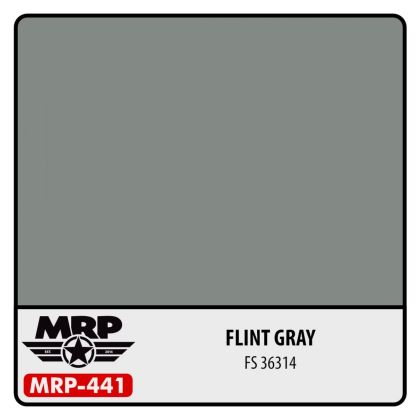
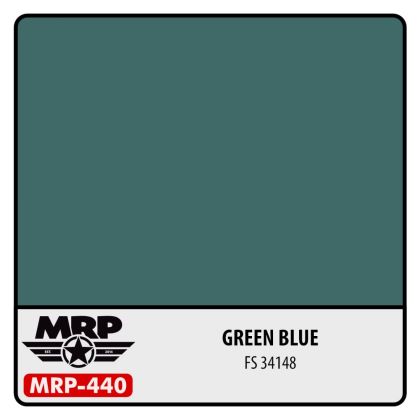
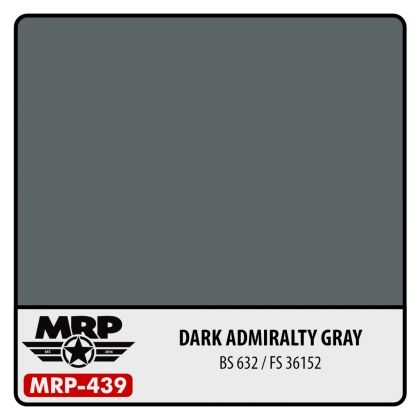
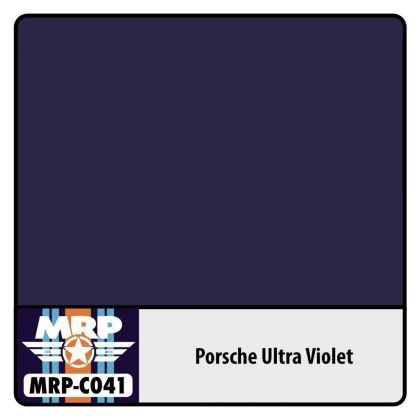
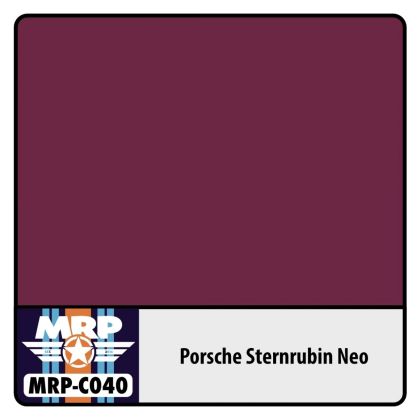
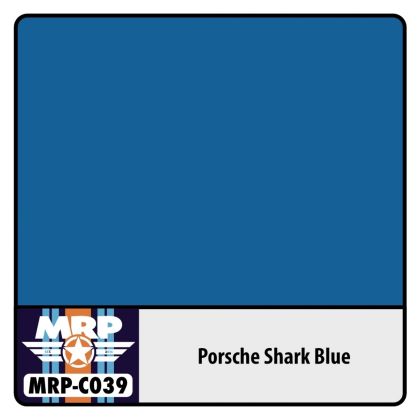
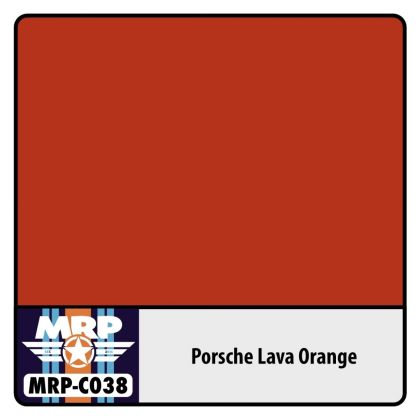
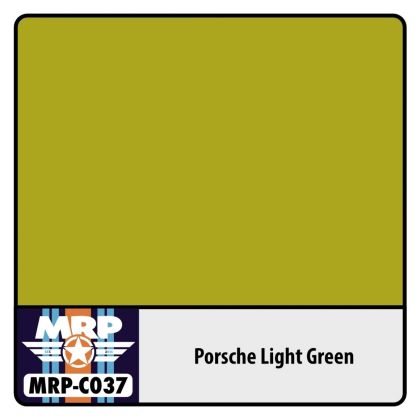
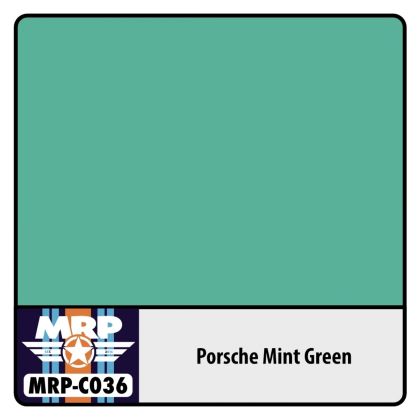
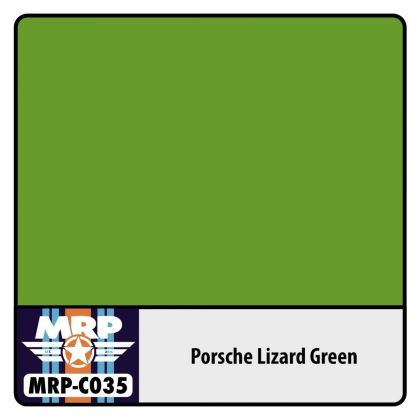
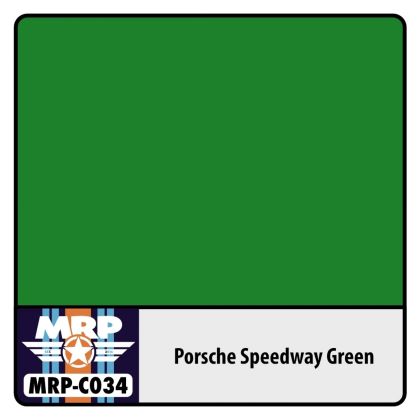
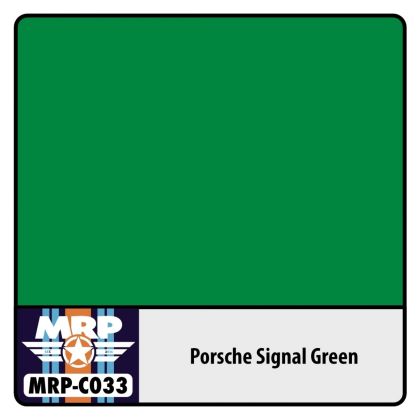
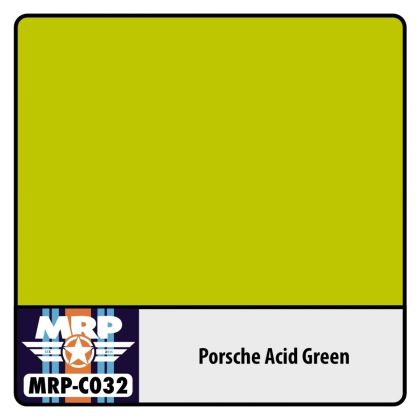
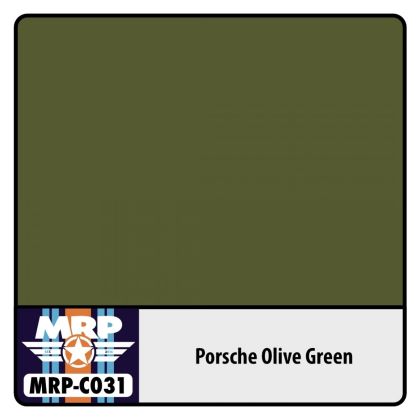
The Mr.Paint acrylic line is made first and foremost for spraying. The paint arrives at airbrush consistency and goes on in thin coats that leave a smooth surface with no grain. The catalogue joins two worlds: aircraft shades with standard references — greys, greens and admiralty tones — and factory colours for sports car bodies in saturated purple, orange and a long row of greens.
Both halves share the same consistency and differ in everything else: surface preparation, the base underneath and what comes after the colour. Treating them as one kind of paint is the quickest way to a disappointing body shell, so the notes below separate them.
The main quality is fineness of deposit. The paint is thinned to a value even a narrow nozzle handles, so it passes through fine masks and does not flood engraved detail. For an aircraft modeller that means freehand camouflage transitions without a ridge forming along the edge.
The car body shades are used differently: laid over a perfectly prepared smooth base, followed by a gloss clear that seals the surface and gives it depth.
The line is set up to spray, so every extra drop of thinner raises the risk of a run on a vertical surface. If you do adjust body, use a product intended for this type of paint from thinners and cleaners.
The paint dries fast, which helps when layering and hinders on the needle. Work in shorter bursts and flush the gun between shades; equipment is in airbrush equipment.
Aircraft shades go over grey or black depending on how dark you want the result. Factory body colours need white or very light grey with no flaw whatsoever, because a gloss layer finds a scratch nobody would notice on a matt coat. A test spray on an offcut of sprue tells you about coverage and smoothness in one go.
The brand's full catalogue is under Mr.Paint model paints.