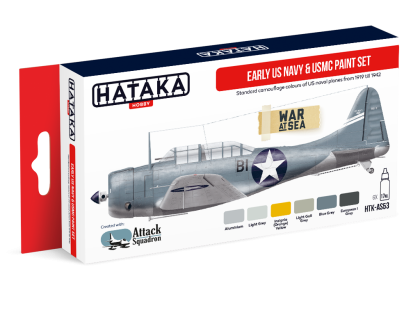
Six shades for American naval aircraft from 1919 to 1943, including the yellow upper surface of the wing and the blue-gray of the first months of the war.
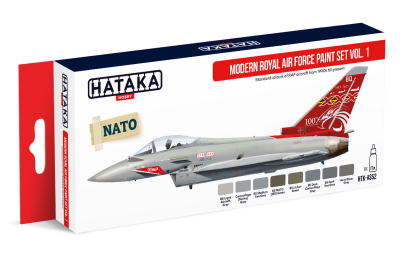
Eight tones that the postwar British camouflage schemes are made up of. From the blue-gray coats of the Tornados and Hawks through the pair of greens for helicopters and Harriers to the uniform gray finish that the fifth-generation machines wear today.
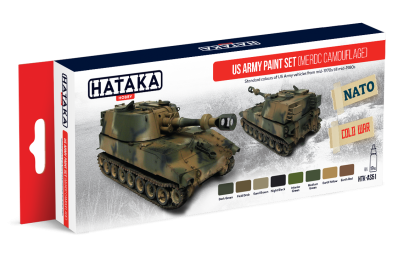
Eight shades of the American army MERDC camouflage with numbers to the FS standard, covering the variants from the tropics through snow to desert terrain.
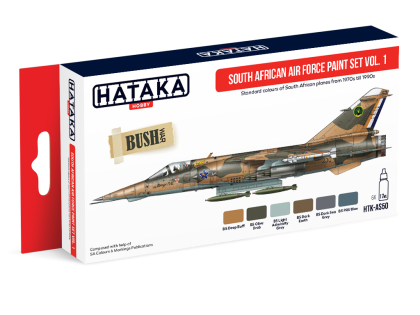
Six shades for the machines of the South African Air Force from the sixties to the nineties. It covers the oldest desert pattern and the later earth scheme into which the Mirage F1, the Impala and the Buccaneer changed. The shades are listed to the British standard BS381C.
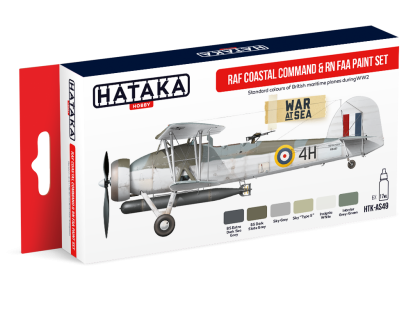
British naval and patrol aircraft of the Second World War in six tones, from the two-color camouflage of the upper surfaces to the white underside of the later years.
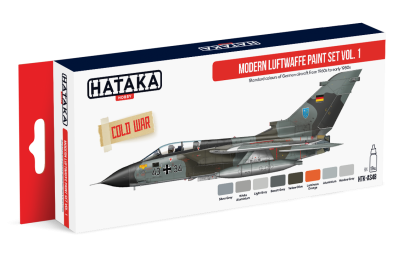
The postwar Luftwaffe in eight tones. The palette covers the Norm 62, 72 and 76 regulations including the naval variant and adds the aluminum shades of the first jet machines.
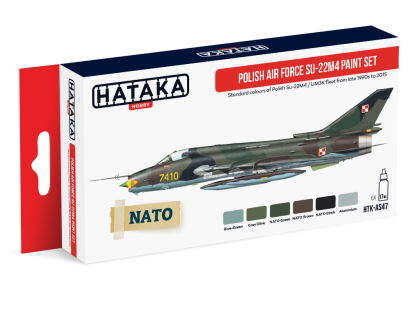
Six shades for Polish Su-22M4 and UM3K aircraft after overhaul: the four-color upper camouflage, the blue-green underside and aluminum on the rear fuselage.
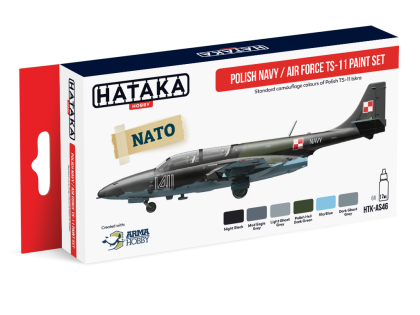
The Polish jet trainer in six tones. It includes the camouflage of the training-reconnaissance variant and the darker finish of the machines serving with naval aviation.
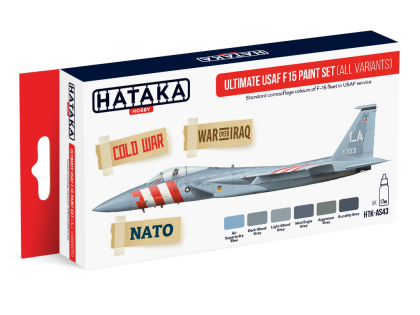
The American heavy fighter in the six grays and blues it carried from the first production batches to the present day. It includes the early blue finish, the pair of ghosts and the current darker pattern.
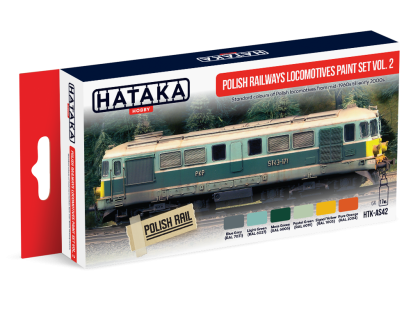
The second part of the railway range aims at the older finishes of Polish locomotives. It carries two more saturated greens, a faded alternative, a signal yellow and the orange of the headstocks.
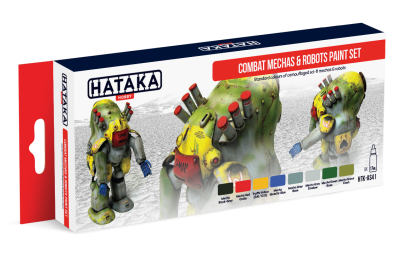
A palette of eight tones for building combat robots and mecha. It holds pairs of a base with a shadow and with a lightening, complemented by a warning yellow and a metallic blue.
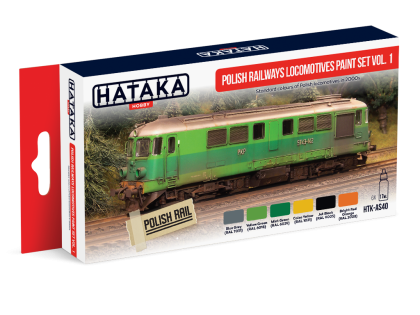
A railway palette of six tones for Polish machines of the later period, from the blue-gray roof through the pair of greens on the carbody to the orange of the headstocks.
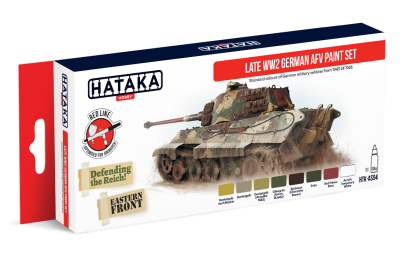
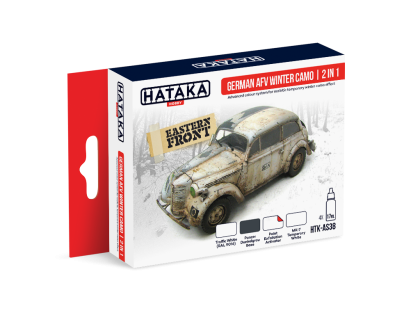
A four-part lineup for the winter whitewash of German vehicles: two paints, a temporary white with a special formula and an activator for controlled peeling.
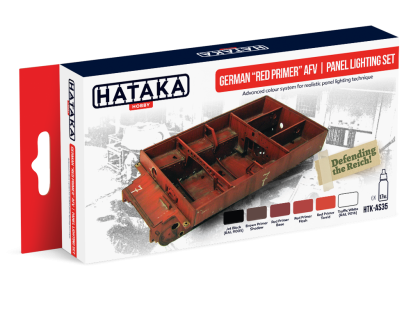
A set for the factory anti-corrosion red of German armored vehicles: four steps of red primer plus black and white for deepening shadows and highlights.
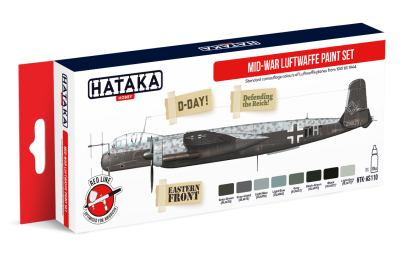
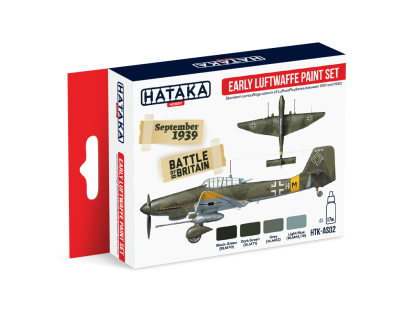
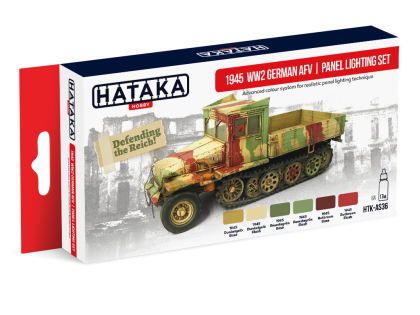
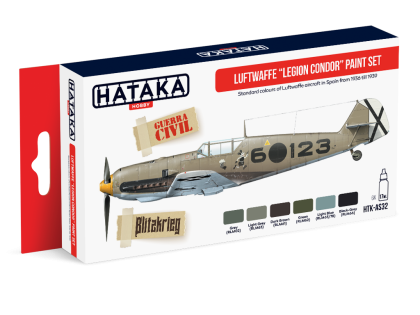
Six shades of the Luftwaffe from the Spanish Civil War. It includes the early pattern to the regulation of 1937 and the cockpit gray that the machines carried for the whole following decade.
With your consent, we may use the information below for the following purposes or share it with selected partners. You can adjust your settings for individual purposes (types of processing) and confirm your choice with the "Save settings" button:
Always active
Necessary cookies
These are technical files that are necessary for the correct behavior of our website and all its functions. They are used, among other things, to store products in the shopping cart, display products on request, control filters, personal settings and also set consent to the use of cookies. Your consent is not required for these cookies and it is not possible to remove it.
Analytical cookies
They count website traffic and, by collecting anonymous statistics, enable the operator to better understand their visitors and thus constantly improve the site.
Marketing cookies
They collect information to better tailor advertising to your interests, both on and off this website.
To make it easier for you to browse the site, to offer you customized content or advertising, and to analyze traffic anonymously, we use cookies that we share with our partners for social media, advertising, and analytics. You can adjust their settings with the "Edit settings" link and you can change it at any time in the footer of the website. You can find more detailed information in our Policy on the protection of personal data and the use of cookies.