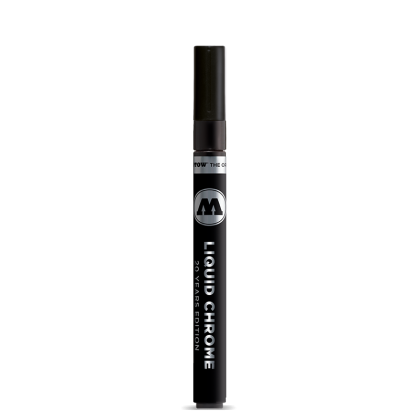
Modelling markers are pens loaded with pigment or paint that go on straight from the tip, with no brush and no thinning. Two uses dominate. The first is panel lines, where a fine tip carries colour precisely along a groove. The second is metal effect — chrome and bronze markers lay down a mirror gloss that is hard to achieve by brush at all. Alongside those sits an opaque matt pen for touch-ins and small details. Tip width and pigment type matter more than the colour on the barrel, so it is worth knowing which job you are buying for.
In three situations. The first is a fine line where you want constant pressure and width: a marker tip is firm and does not flex the way bristles do. The second is a metallic surface — mirror pigments need to go on evenly and thinly, which a marker manages without brush marks. The third is a quick touch-in on a finished model, when thinning paint and cleaning a brush for one spot is more trouble than it is worth.
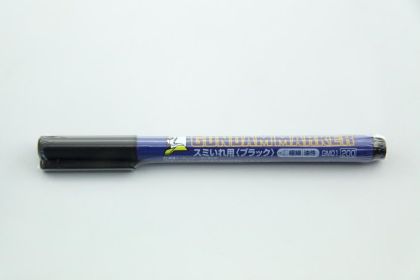
A very fine tip and an ink that flows into a groove without bleeding beside it. The excess is wiped back, leaving only a shadow in the line. It is the fastest way to accent panel lines and works especially well in smaller scales. The result can then be refined with products from weathering.
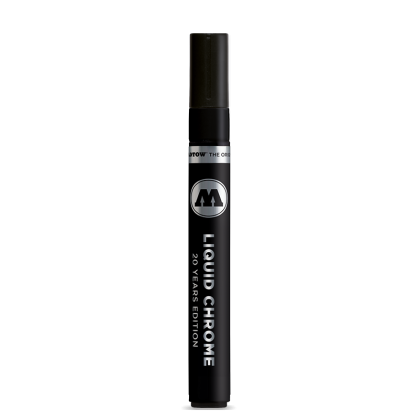
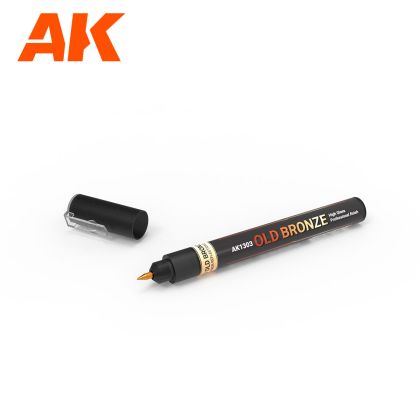
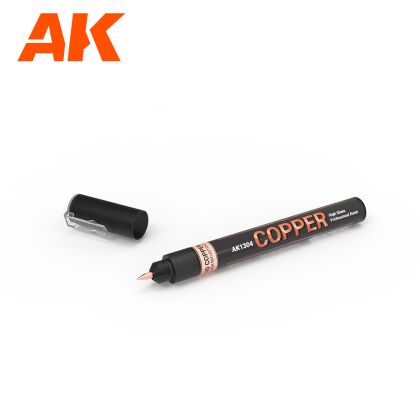
These carry an extremely fine metal pigment and produce a high gloss that reads as plating on a model. They are used on exhausts, frames, trims and interior detail, and anywhere a metal colour is needed as a thin line. Shake before use and charge the tip by pressing it down.
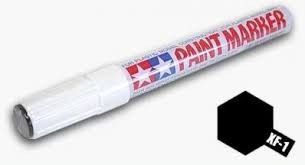
These lay down an opaque shade and serve for touch-ins and small details. Some versions are made to be blended out, so they behave half like a marker and half like a wash.
For larger areas and a full finish the classic route through an airbrush remains the right one.