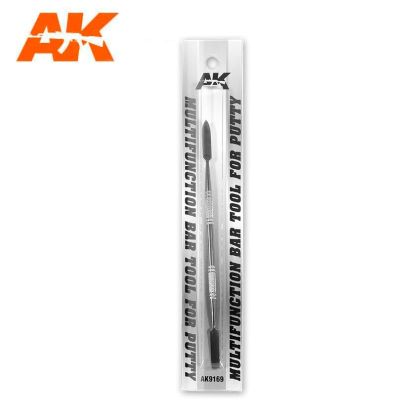
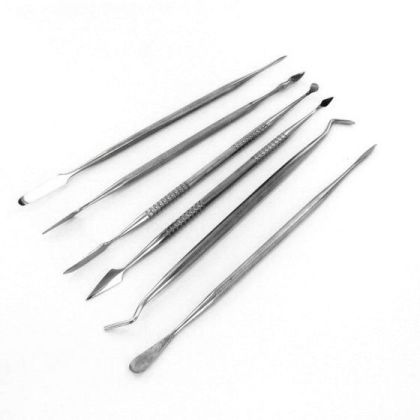
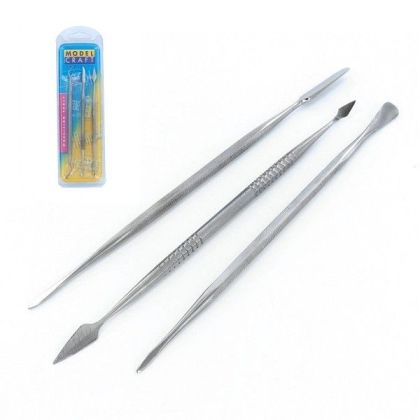
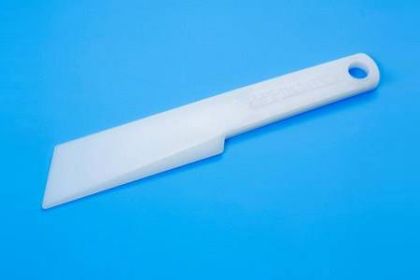
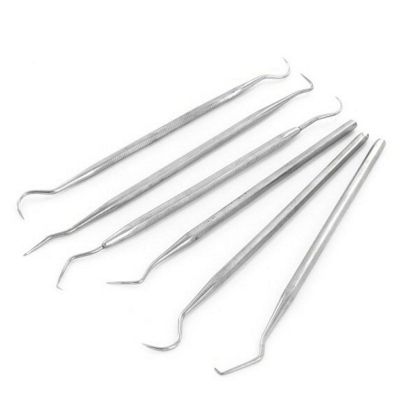
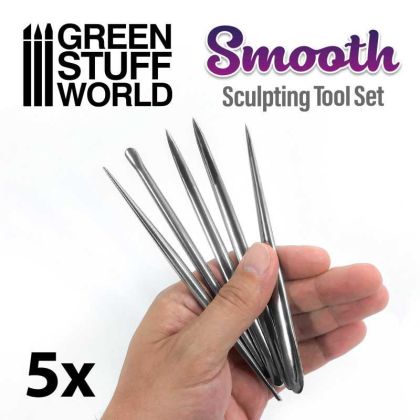
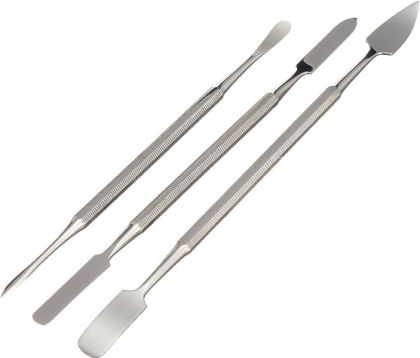
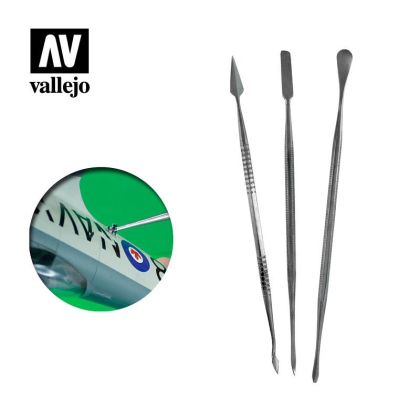
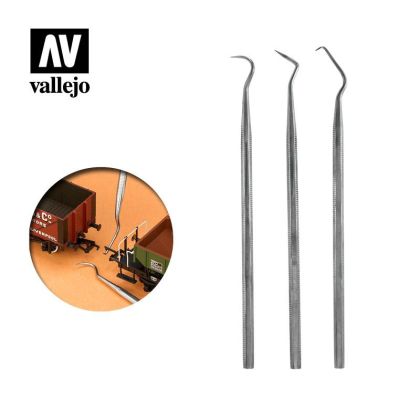
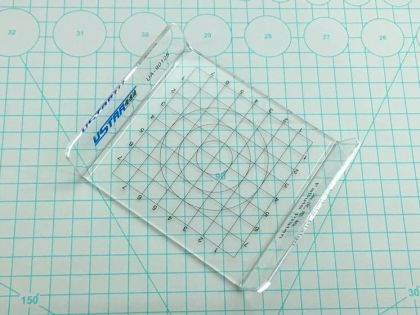
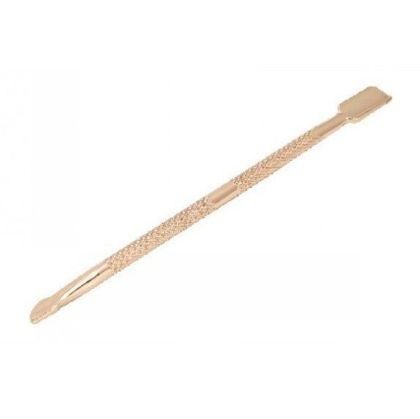
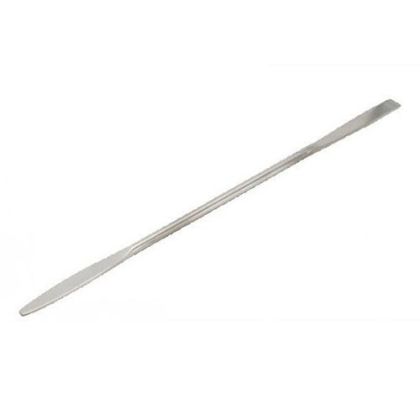
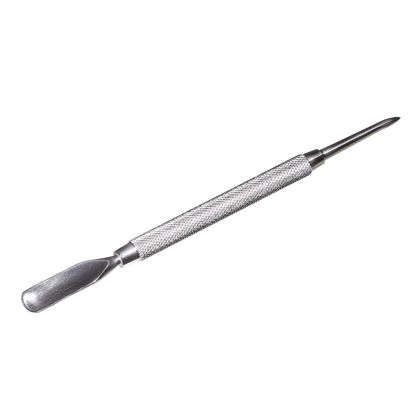
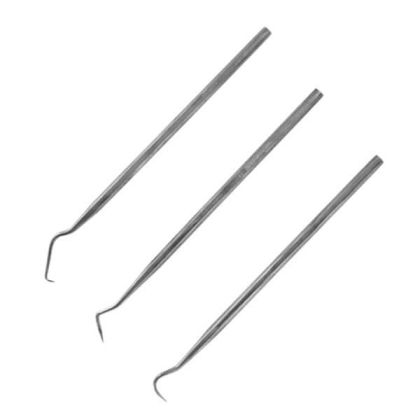
These are the tools you shape material with — filler, kneadable epoxy or polymer clay. They include spatulas and spreaders for picking compound up and drawing it flat, smoothers with a rounded profile for working a surface level, ball-ended probes for pressing in hollows, and small blades and gouges for cutting detail away. Beside the metal tools sit wooden sculpting sets, which compound clings to far less and which therefore suit fresh epoxy and clay.
Filler is a material like any other and a fingertip takes it only so far. You can smear compound across a panel with a finger, but you will not produce a fold in a tarpaulin, mud build-up on running gear, a missing cowling or an armour patch. A tool gives shape: an edge, a groove, a hollow, a texture — and above all it lets you work at a scale a finger would simply flatten.
These pick compound up and draw the surplus off. A flat spatula levels a fill to the surrounding surface, a narrow one reaches into a seam. They are tools you will also use in ordinary filling work — see fillers.
These have a polished, rounded surface that compound slides over. Dampened with water or a drop of detergent they create a smooth transition with no tool marks — the difference between a repair you can see and a repair that disappears.
These press in hollows, sink an edge and cut a groove with a rounded bottom. They are used on fabric folds, on leather castings and on anything organic, where a sharp edge looks false.
These remove material — either while the compound is still half-set and the shape can still be changed, or after it has hardened. Wooden tools are gentle on soft material and do not stick to it the way metal does, which makes them the choice for clay and fresh epoxy.
When the shape starts as a wire skeleton that is then clothed in compound, the stock for it is in wire and rod.