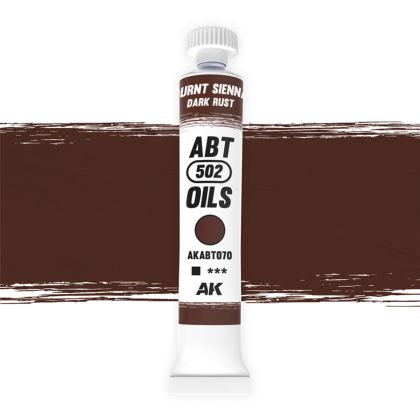
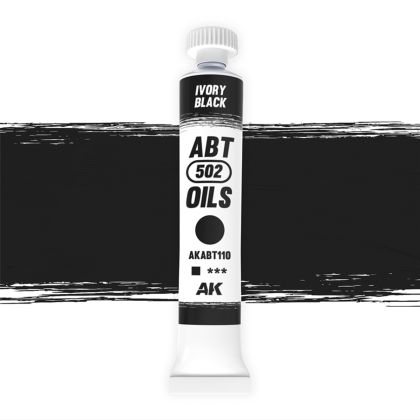
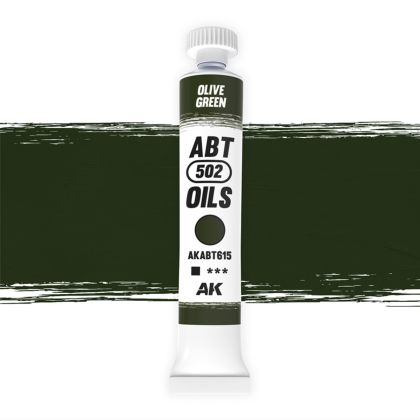
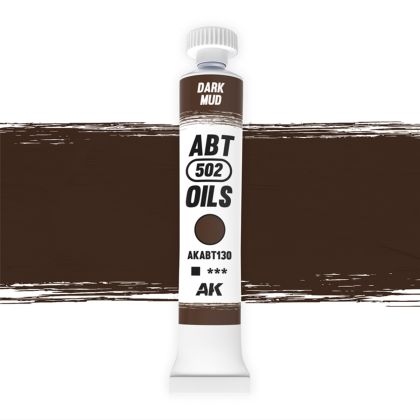
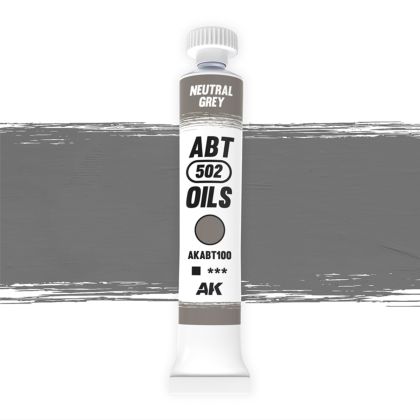
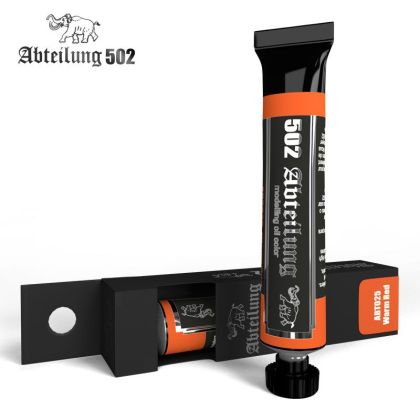
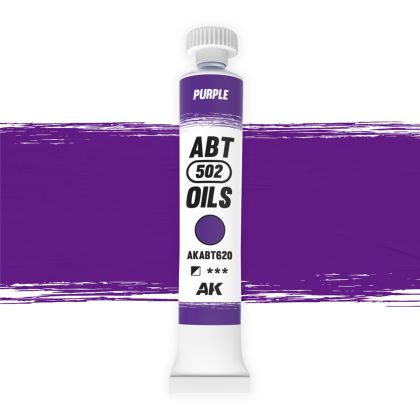
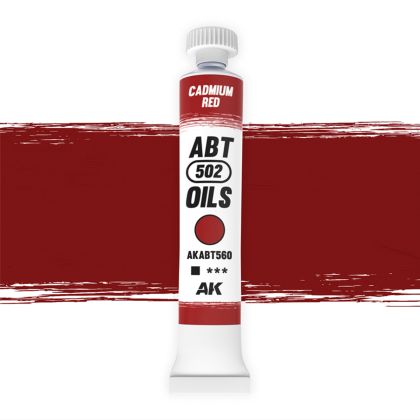
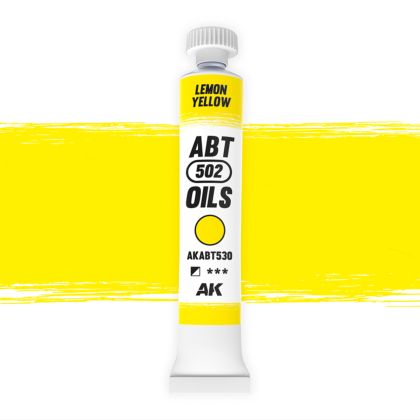
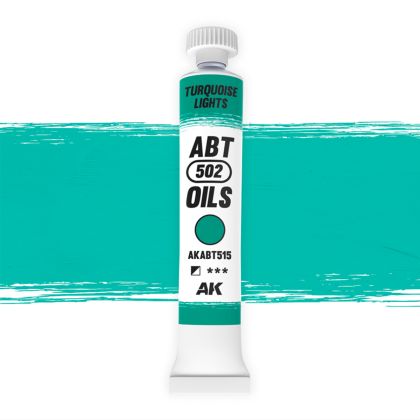
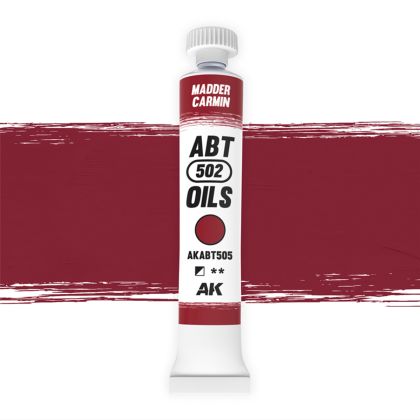
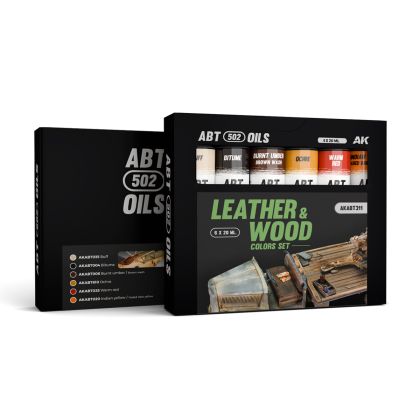
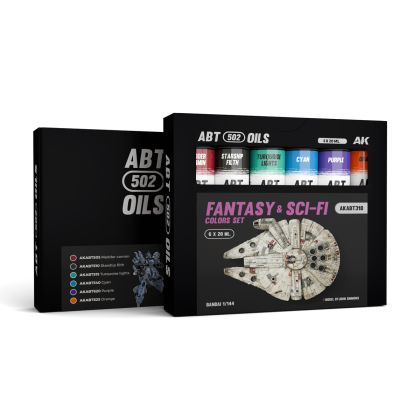
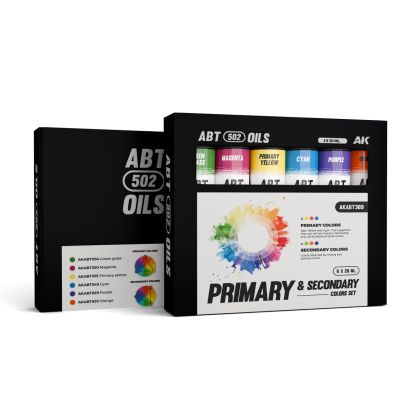
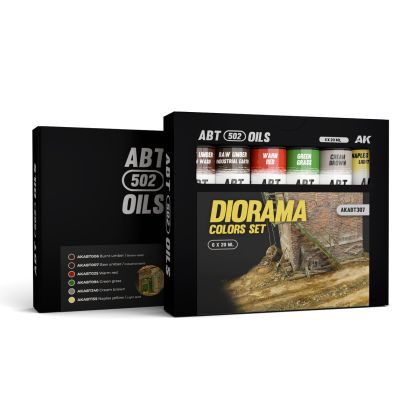
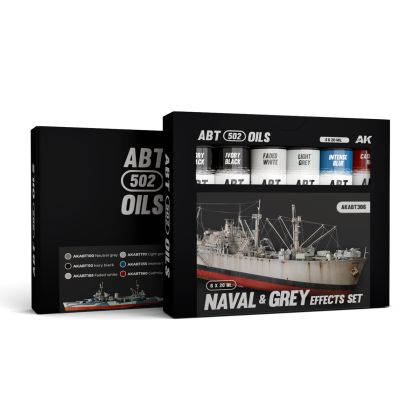
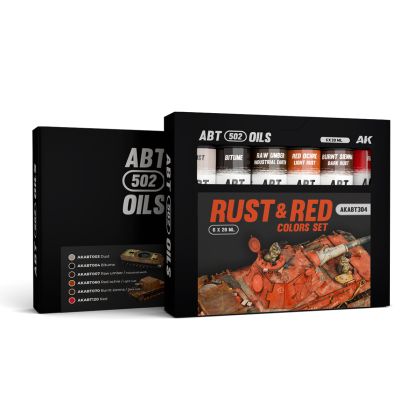
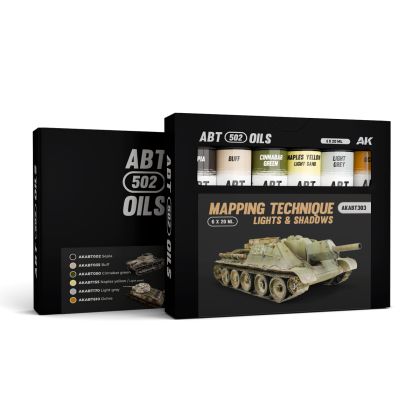
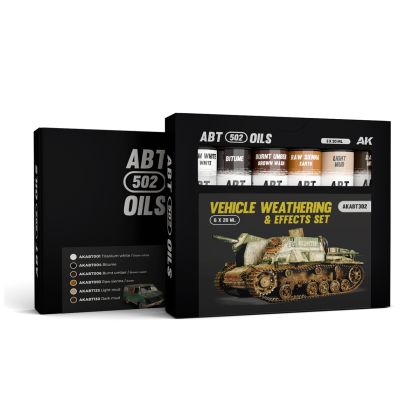
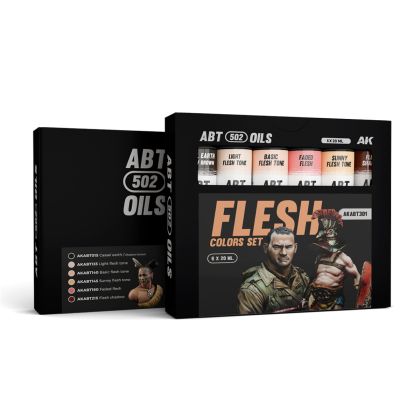
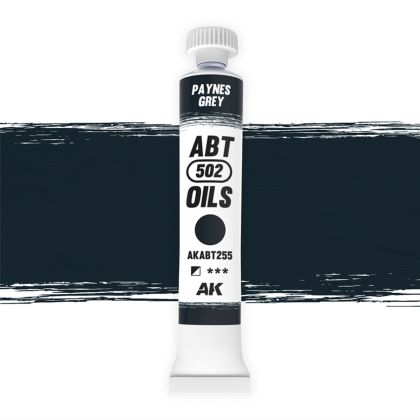
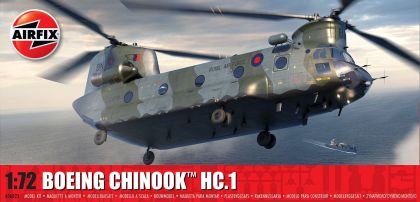
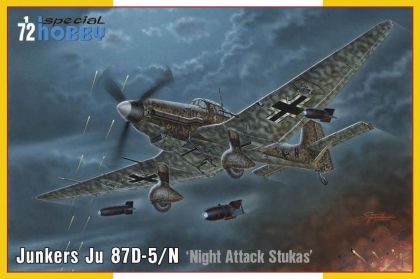
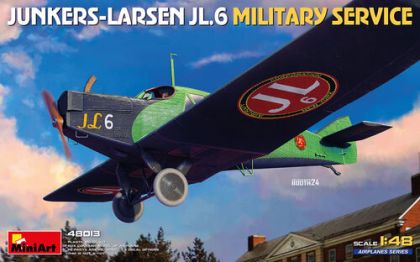
Oil paints for modelling work on the same principle as artists' oils: pigment ground in a slow-drying oil. For a modeller that slowness is the whole point, because blending a shadow on a uniform fold or pulling a rain streak down a fuselage side takes longer than an acrylic allows. Translucency is the second property, since an oil glaze shifts the tone beneath it without hiding engraved detail. The shelf here holds single tubes and themed sets, for wood and leather, for dioramas and for fantasy subjects.
Acrylic on a model skins over before a transition can be softened. Oil gives hours, so a shadow in a fabric fold can be worked back and forth until it looks right. Because the glaze is translucent, it changes a tone without burying the detail underneath, and that is the difference between a filter and a repaint.
Put a dot of colour on the surface, leave it a moment, then drag it with a clean brush in the direction water would run. That is how stains below drains and rain marks on a fuselage appear. Ready-made versions of the same effect are in panel line washes and oilbrushers.
On skin and cloth, oil produces transitions few painters manage in acrylic. Work with an almost dry point from model paint brushes and build volume in stages; suitable subjects are in model figures.
A very dilute oil glaze over an entire model unifies the spray work and takes the plastic look off it. That step is called a filter, and prepared products are among the weathering filters.
Oil earns its keep most clearly on military model kits, where almost every surface carries staining of some kind. The other binders, from acrylic to metal, are in the parent section model paints.