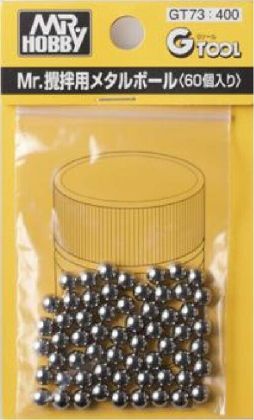
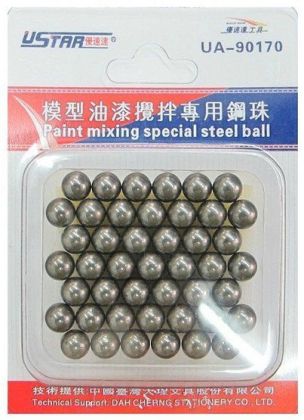
Pigment settles in the jar, and shaking alone will not lift it off the bottom. That is the reason mixing balls go into the paint: glass or stainless, they break up the sediment as the jar is agitated and bring the shade back to what the label promises.
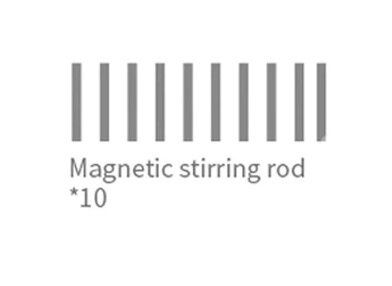
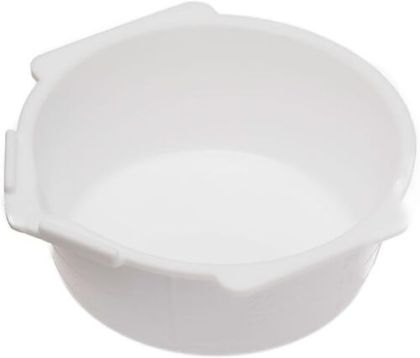
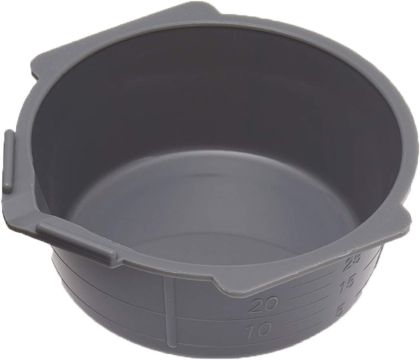
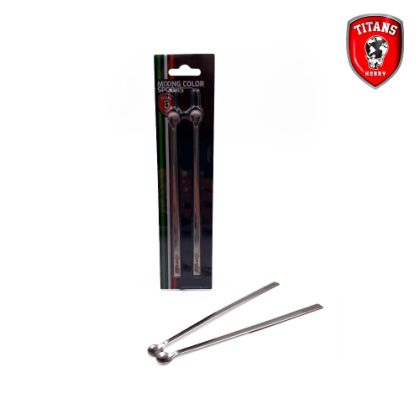
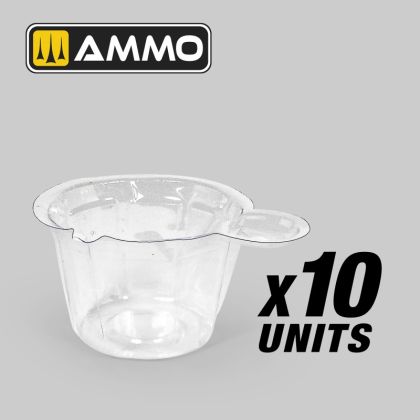
Alongside the balls you will find wooden and plastic stirrers, magnetic and rotary shakers, cups and scoops. Small items, but they decide whether the colour you apply matches the one you bought. Which material to pick and when a shaker starts to earn its keep is covered further down.
Paint contains heavy pigment particles and a lighter binder. After a few weeks standing, a firm sediment forms at the bottom that shaking will not dissolve: you are only agitating the thinner layer above it. The result is a coat that fails to cover, sits a shade off and behaves unpredictably once dry. A ball inside the jar breaks that sediment up mechanically.
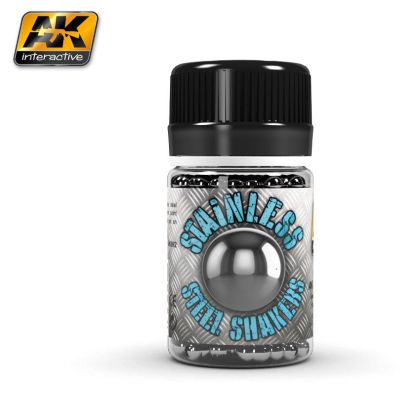
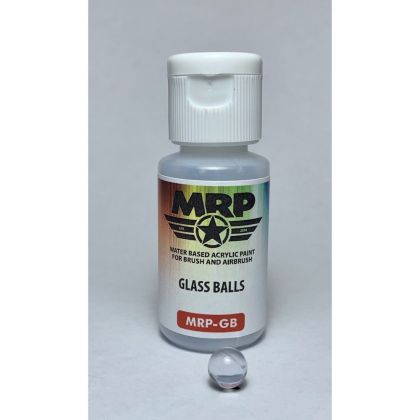
Glass balls are lighter, chemically inert and safe in every paint type. Stainless balls carry more mass, so they shift denser pastes and the sediment in metallic paints, where the metal pigment drops hardest. Two or three to a jar is the sensible number; more only steals volume.
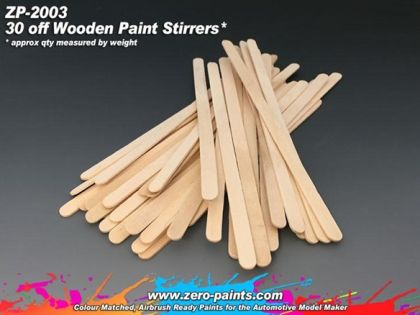
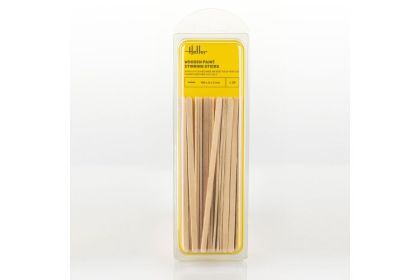
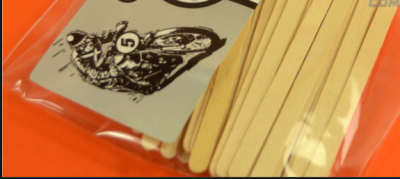
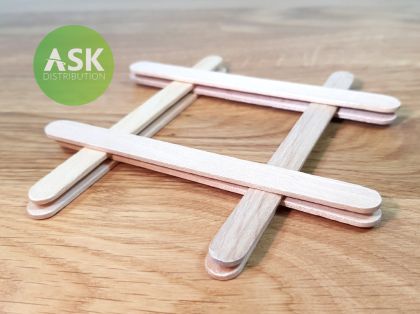
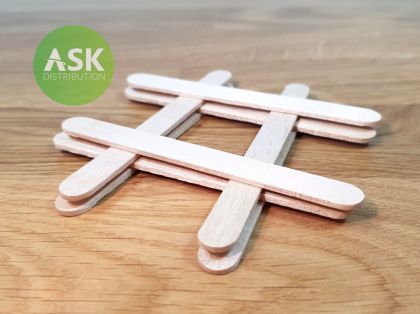
Wooden sticks and plastic paddles reach where a ball cannot: a mixing cup, a palette, or a custom shade you are building. For one-off work they are practical for another reason too, since they go in the bin afterwards and leave nothing to clean.
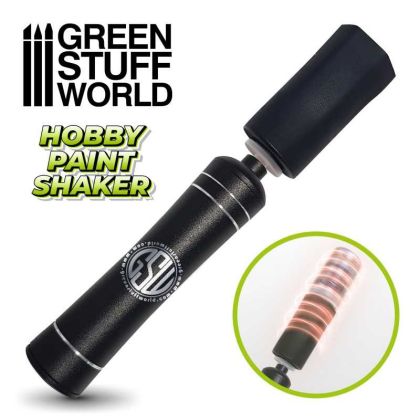
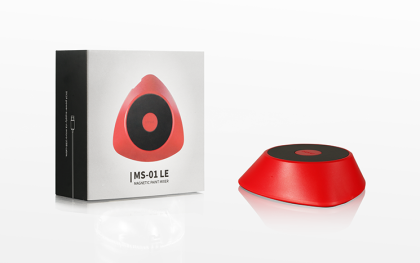
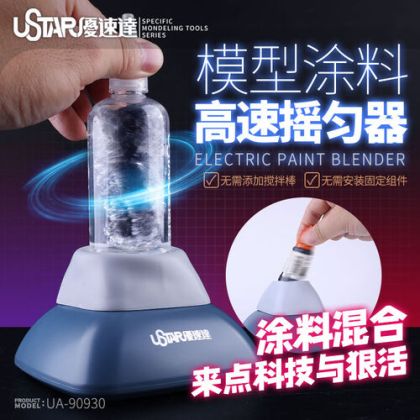
If you hand-shake a dozen jars before every session, a magnetic or rotary shaker starts to pay for itself. It works evenly, takes far less time and spares your wrist. It is especially welcome with thicker oil paints and paste-like products.
Properly mixed paint is the foundation of all work with model paints, and doubly so when it goes into an airbrush, where one lump of pigment blocks the nozzle on the spot. Bench space for a shaker and a row of cups is a job for the workbench section.