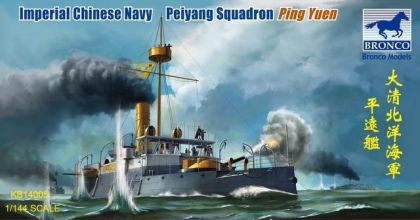
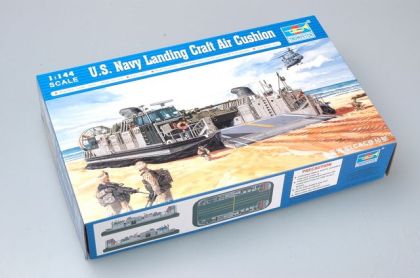
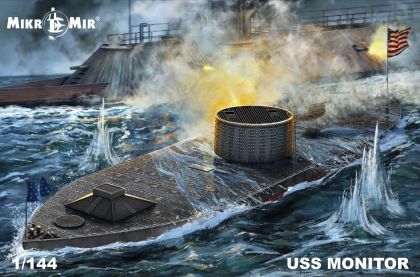
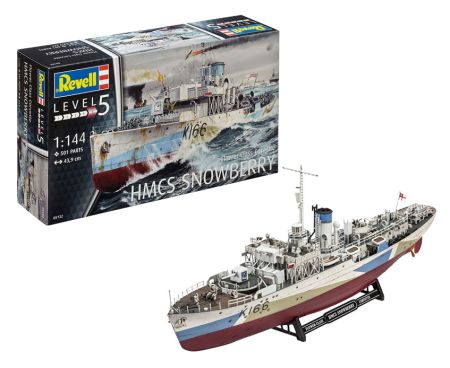
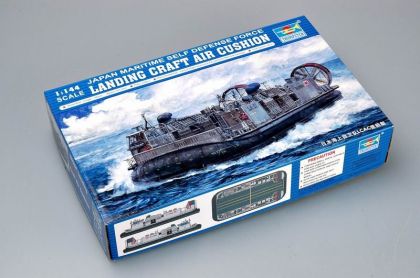
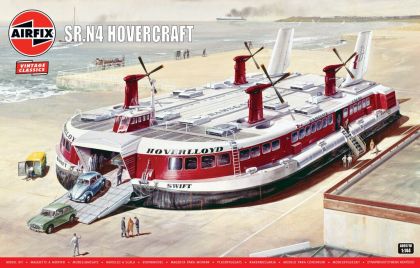
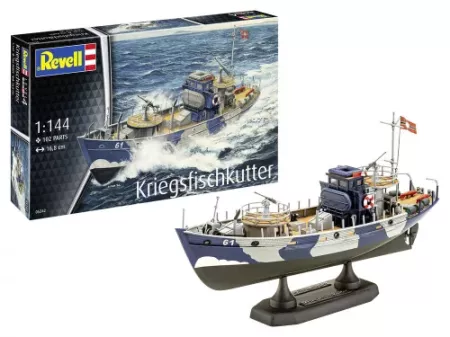
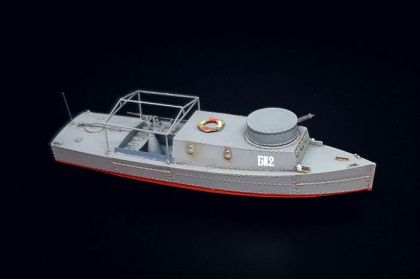
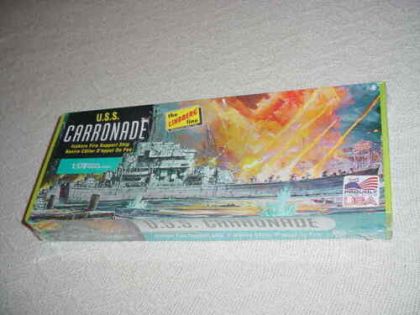
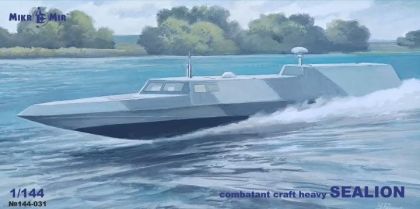
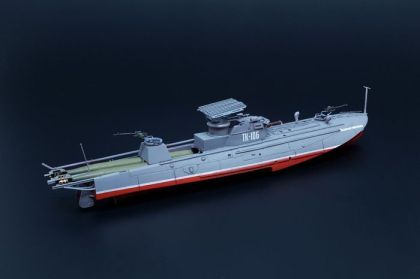
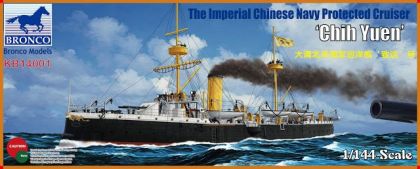
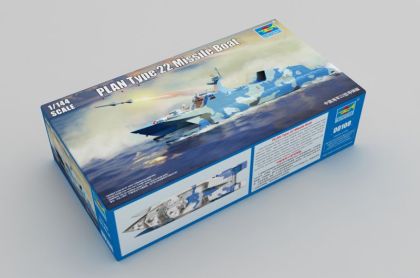
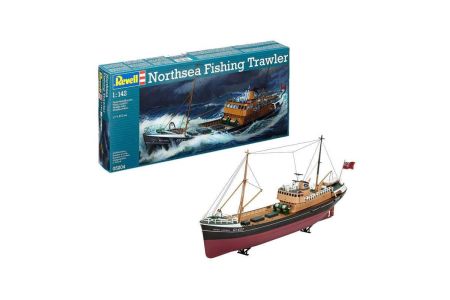
From a hovercraft to a Civil War ironclad, 1:144 ship model kits are the most varied of the smaller ship scales. The shelf holds armed fishing cutters, river gunboats, missile craft, a torpedo glider and the legendary USS Monitor. Sharing a size with a popular aircraft scale brings a solid supply of detail sets and the option of a shared display case. Sharing a size with a popular aircraft scale also means the masts and aerial rigging are fine work rather than brute force. Below, what to look for when choosing and which parts take these small hulls further.
This is the scale of modest vessels: a twenty-metre cutter comes out at fourteen centimetres, so even a busy hull fits a narrow shelf and the build finishes in a few evenings. The range runs from German multi-purpose armed fishing cutters through Soviet river gunboats and torpedo gliders to modern missile boats and hovercraft. The historical highlight is USS Monitor, the American Civil War ironclad with its revolving turret. Low river craft all but ask for a water diorama with a bank and reeds.
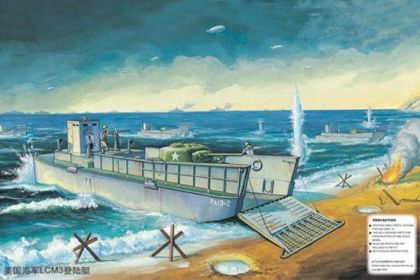
Cutters and river craft stand for the Second World War, missile boats and landing craft for the Cold War and the present day, ironclads for the nineteenth century. That spread suits a collection tracing how small combat vessels developed across the centuries.
Part counts are lower than on large ships and the hulls hold their shape, so builders new to ships can manage. The delicate work waits at the masts and aerial rigging, where stretched sprue or fine elastic thread does the job. On camouflaged cutters, map the scheme out first: angled patches mask far more easily on a hull that is not yet closed up.
Aftermarket support is unusually good for the size: 1:144 ship photo-etched parts add railings and radar, 1:144 wooden decks bring real timber to the deck, and 1:144 turned barrels stiffen the armament. Under the surface sit 1:144 submarine model kits.
The complete scale index sits at ship model kits.