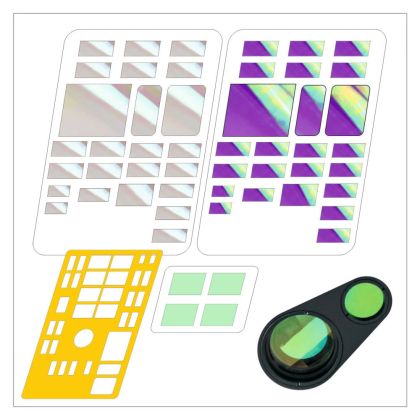
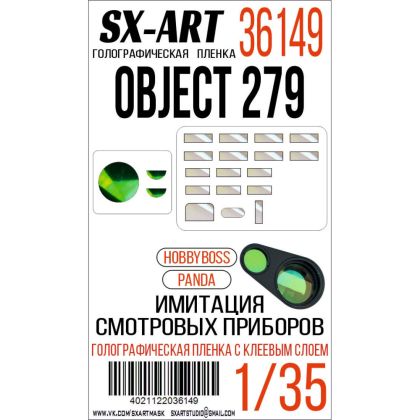
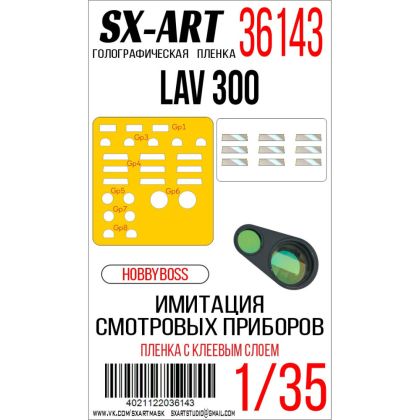
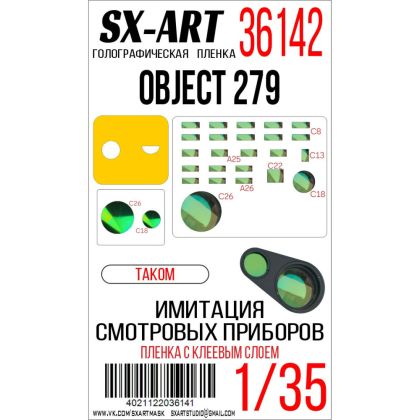
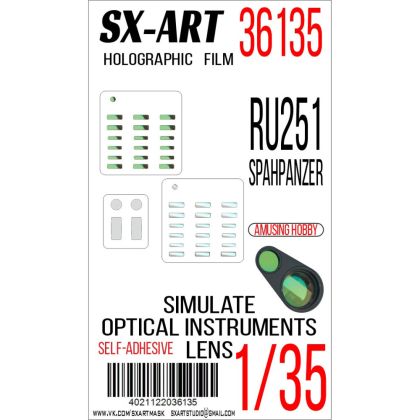
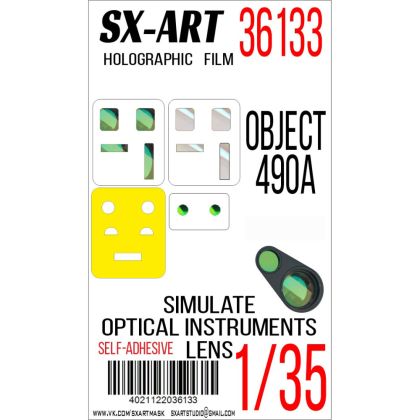
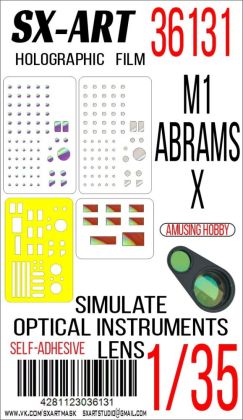
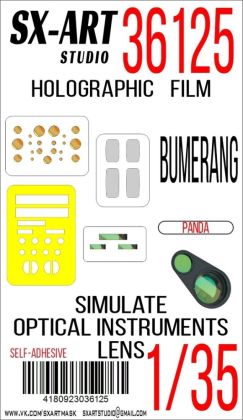
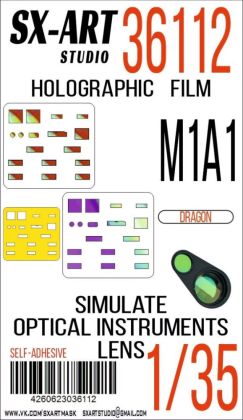
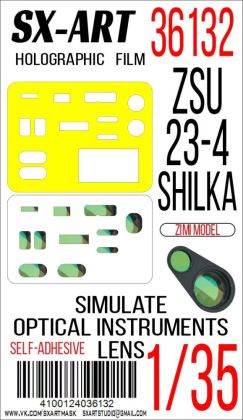
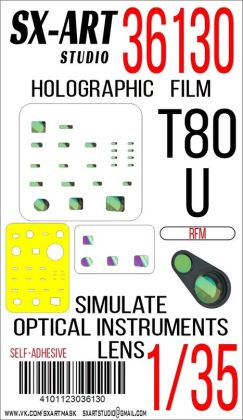
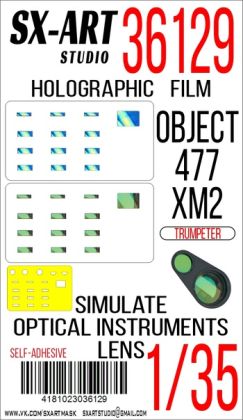
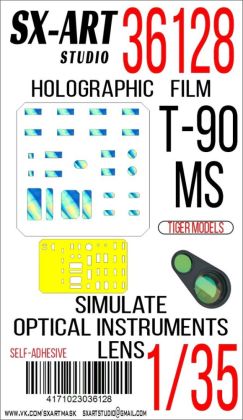
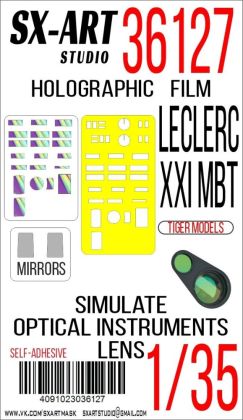
Optics are the detail that gives a military vehicle model away at a glance. Kits render headlamps as a solid lump of styrene and periscopes as blind blocks, whereas a lens that catches the light reads as real glass. This shelf holds three groups. The largest is self-adhesive holographic film cut to the vision blocks of individual 1:35 subjects. Next come cast imitations of vision blocks and periscope heads, clear and tinted, which go in place of the kit part rather than onto its surface. Last are lights and loose lenses: LED searchlight sets, vehicle tail lights and clear, red and amber lenses and rods from 1 to 4 mm, some of them meant for aircraft. Below, how to pick the right size and what to glue clear parts with.
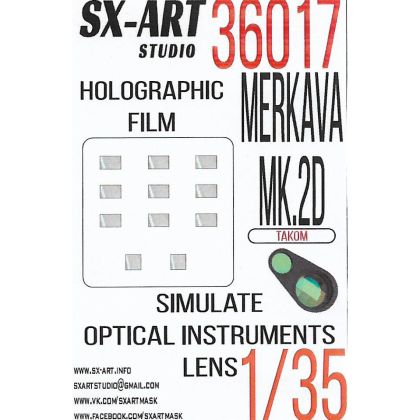 1:35 Imitation of MERKAVA MK viewing devices.2D (TAKOM)
4.76 €
1:35 Imitation of MERKAVA MK viewing devices.2D (TAKOM)
4.76 €
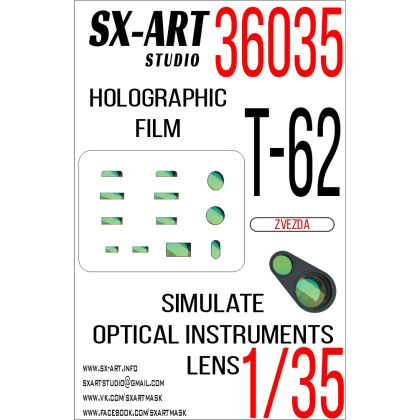 1:35 Imitation of T-62 inspection devices (Zvezda)
4.76 €
1:35 Imitation of T-62 inspection devices (Zvezda)
4.76 €
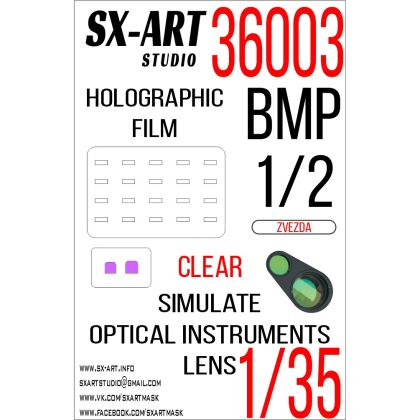 1:335 35 Imitation of BMP-1/BMP-2 inspection devices (Zvezda) Transparent
4.76 €
1:335 35 Imitation of BMP-1/BMP-2 inspection devices (Zvezda) Transparent
4.76 €
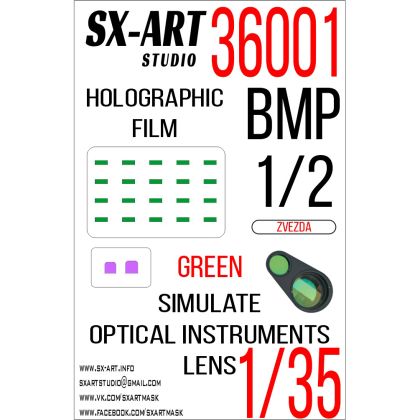 1:35 Imitation of inspection devices BMP-1/BMP-2 (Zvezda) Green
4.76 €
1:35 Imitation of inspection devices BMP-1/BMP-2 (Zvezda) Green
4.76 €
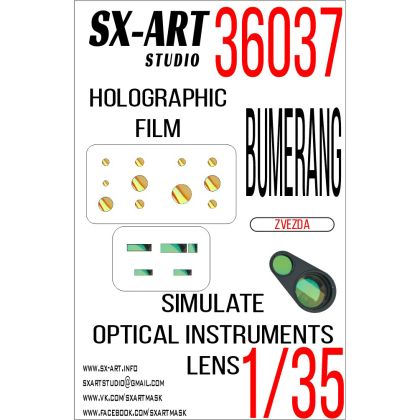 1:35 Imitation of BMPT "Boomerang" (Zvezda) viewing devices
4.76 €
1:35 Imitation of BMPT "Boomerang" (Zvezda) viewing devices
4.76 €
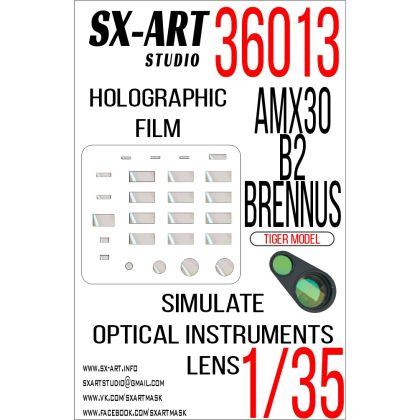 1:35 Imitation of AMX-30B2 BRENNUS inspection instruments (TIGER MODEL)
4.76 €
1:35 Imitation of AMX-30B2 BRENNUS inspection instruments (TIGER MODEL)
4.76 €
A viewer's eye goes first to the places where light behaves differently from painted plastic: headlamps, periscopes, the driver's vision block. A solid plastic imitation sits there dead, while a clear lens or a holographic film returns the refraction and the faint green or violet sheen that real armoured glass has. It is a small intervention with a large effect, straightforward enough for a first attempt, and the model gains life immediately.
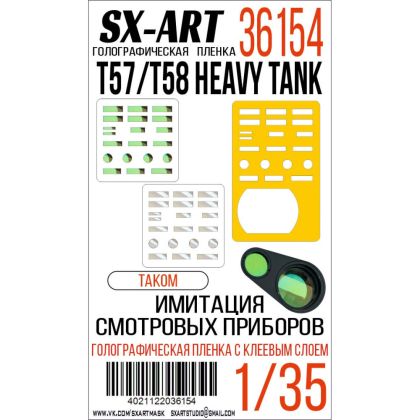
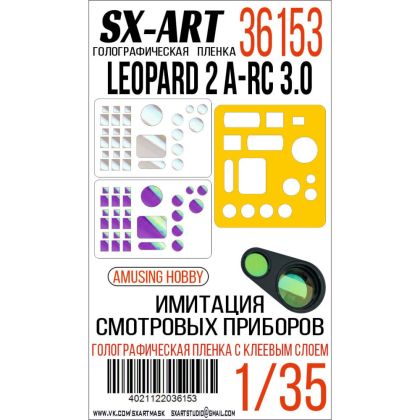
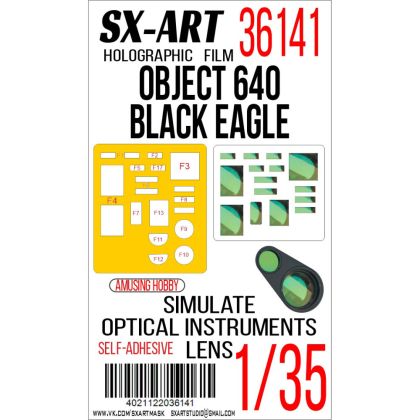
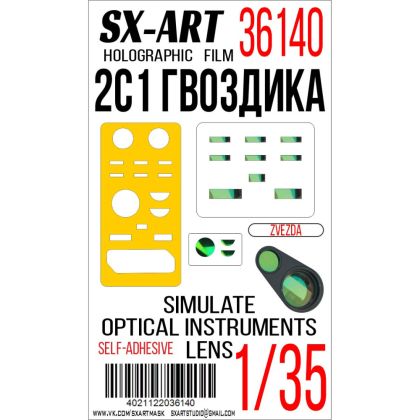
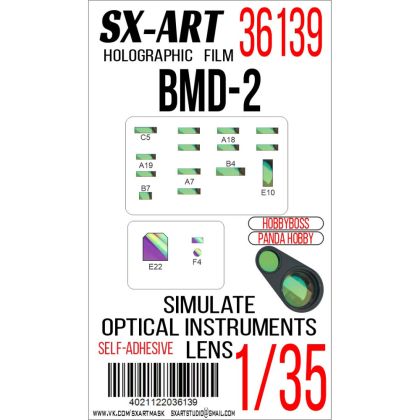
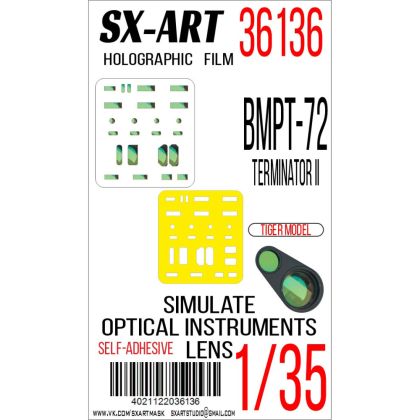
Holographic film sets are cut for the vision blocks of a named vehicle and a named kit, so follow the product description rather than measuring anything. Headlamp lenses are chosen by diameter in millimetres instead, so measure the reflector recess on your own kit with callipers first.
A film goes onto the plastic and changes the way its surface behaves. A cast vision block or periscope head takes the plastic part's place instead, so the opening in the turret or hull sometimes needs easing before it drops in. Tinted versions let you set the colour of the glass by vehicle rather than by paint.
Cyanoacrylate will reliably fog clear parts with a white bloom. Use white dispersion adhesives made for clear parts, or water-based glues that dry invisible and can be washed off if a part goes down in the wrong place.
Optics go onto a model strictly after painting and weathering. If you have to fit them earlier, cover them with a mask: a single dusting of paint or matt varnish will kill the reflection for good.
Further metal, resin and printed detail for finishing a vehicle is signposted from military vehicle accessories.