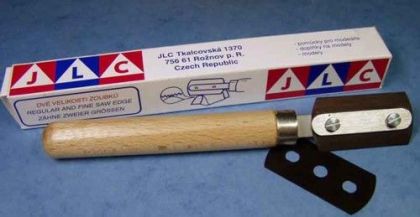
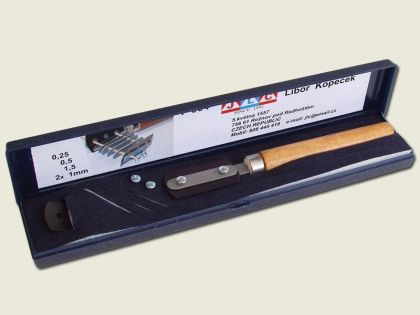
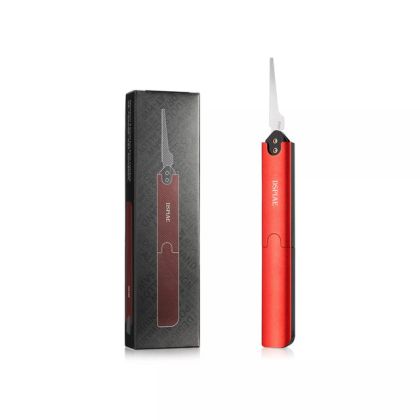
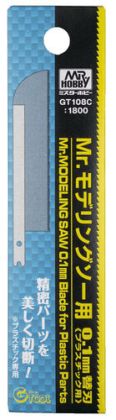
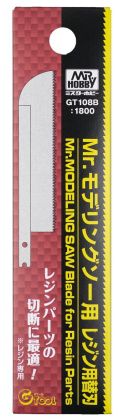
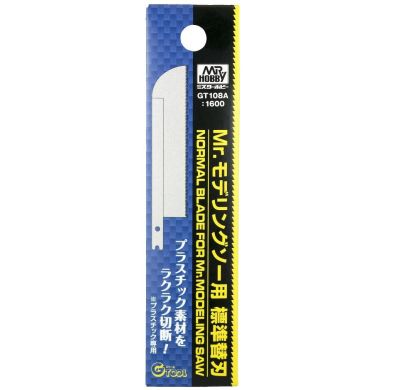
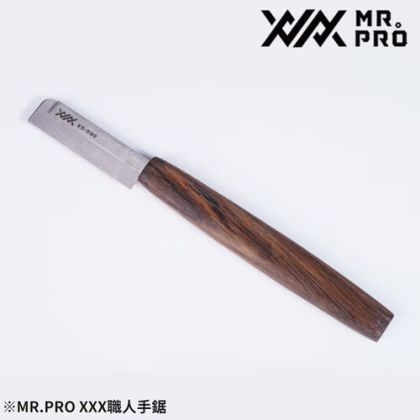
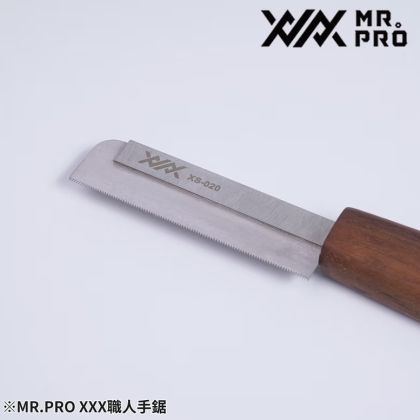
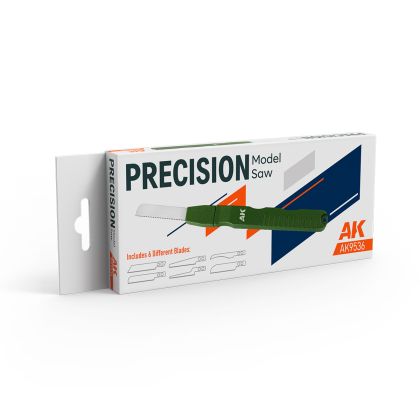
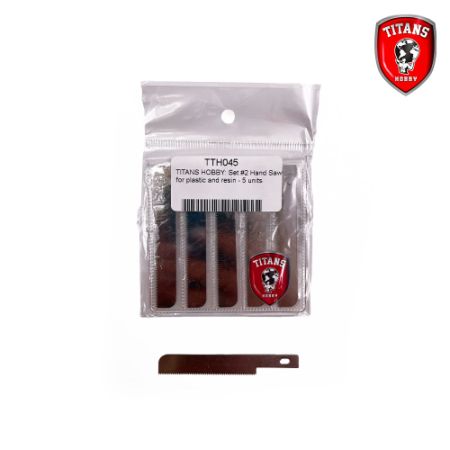
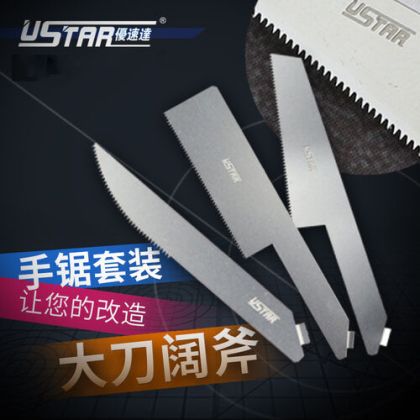
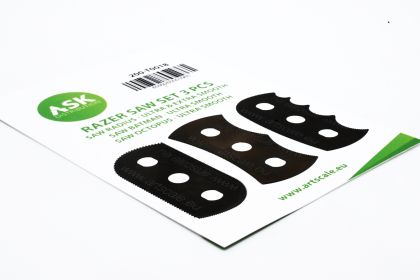
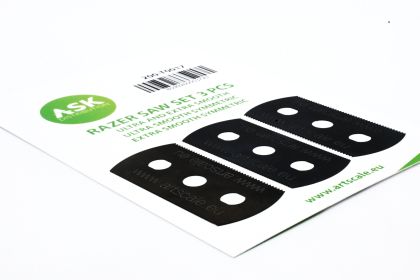
A saw is the one tool that goes through thick material without wandering. Modelling saws carry a blade measured in tenths of a millimetre, so the kerf takes almost nothing with it and two separated pieces will still meet when they are put back together. The category covers saws with a fixed handle and replaceable blade, thin blades for styrene and for resin, etched saw plates for work in tight detail, frame saws with tensioned blades, and clamping jigs that hold a part square during the cut.
Every cut removes exactly as much material as the tool is wide. On a workshop saw that is over a millimetre; on a modelling saw it is often one to three tenths. When you cut a fuselage intending to rejoin it after a conversion, or remove an engine cowling that has to go back, that figure is the difference between a part that seats and a part you end up filling.
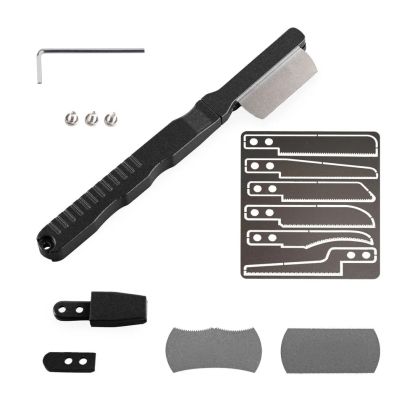
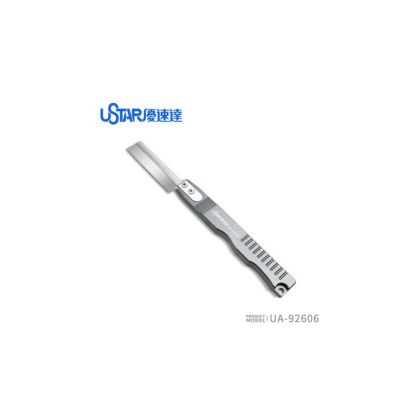
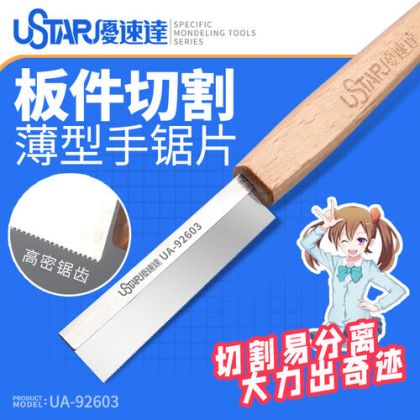
The most comfortable for everyday work. The handle gives confident control and the blade is replaceable. It pays to keep two tooth pitches — fine for styrene and thin profiles, coarser for resin and heavier sections.
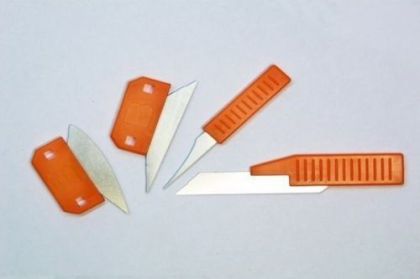
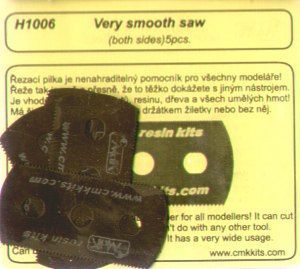
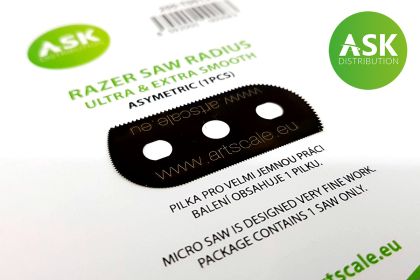
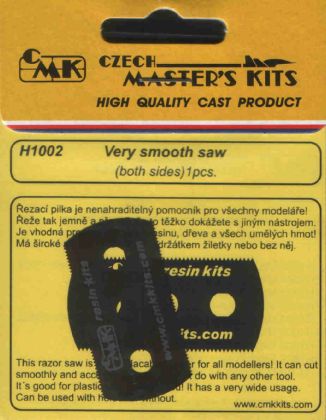
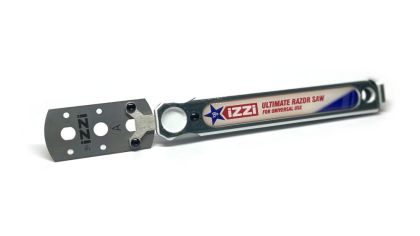
Very thin sheets, often without a handle or with a simple holder. They flex, so they reach a surface and can cut a part off hard against a wall. Their territory is work in detail, where a rigid saw would not fit.
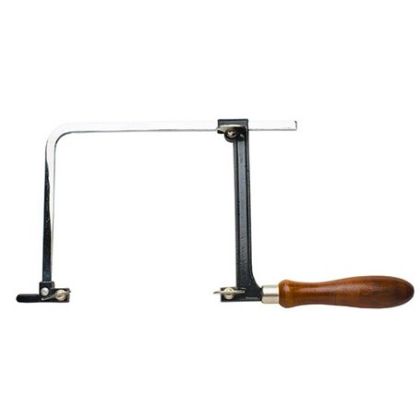
The blade is tensioned in a bow, which allows curved cuts and internal shapes to be cut out from a drilled start hole. They are used on heavier material and in scratch building.
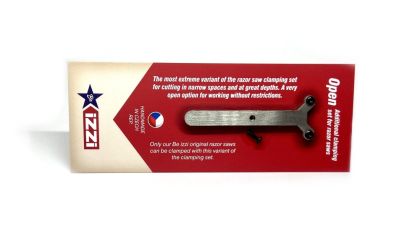
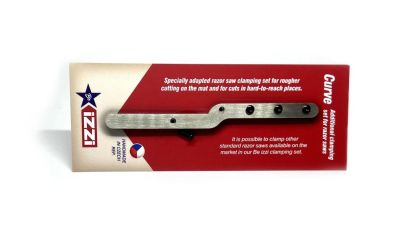
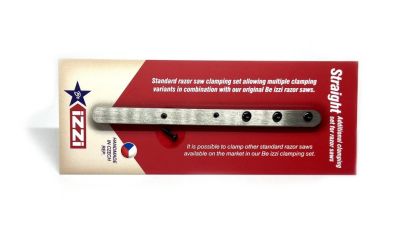
A jig that holds the part and keeps the blade at a constant angle. On cuts where squareness matters — dividing a fuselage, for instance — it is the difference between an accurate joint and a skewed face you then have to true up.
Start with a pull stroke to establish a guide groove, then saw smoothly and without pressure. Pressure sets the blade vibrating and it wanders. Work slowly on styrene — a fast stroke heats the material by friction and the plastic welds itself shut behind the blade. Clamp the part in a vice from stands and clips, because holding it in your fingers has never helped an accurate cut.
On thin styrene sheet it is faster to score the line with a blade from knives and snap the material in the groove.