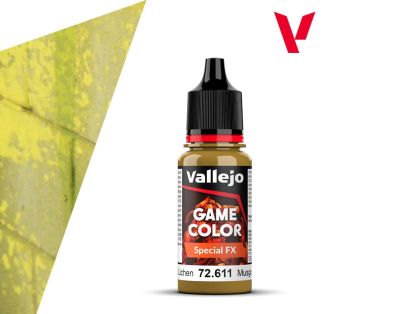
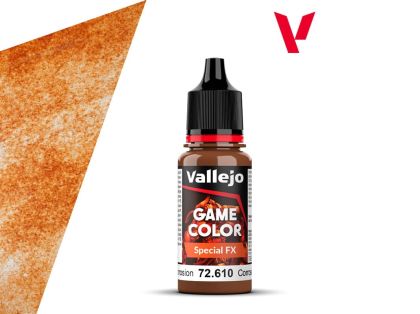
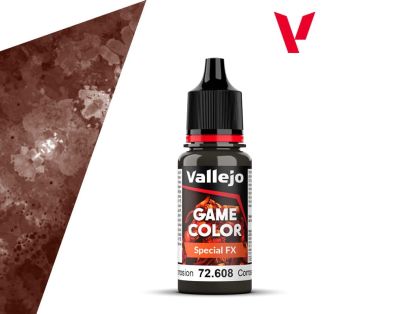
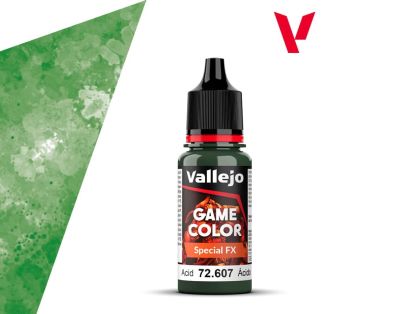
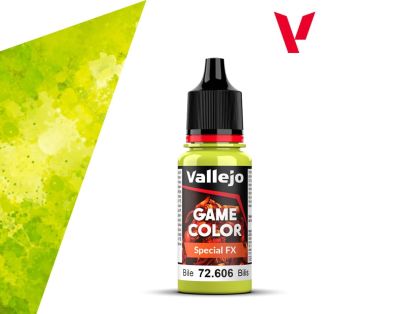
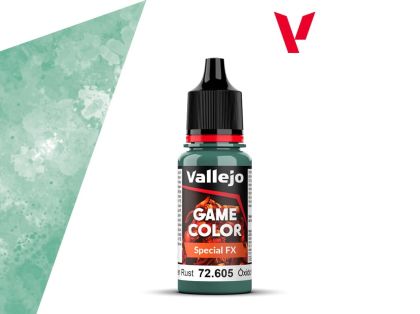
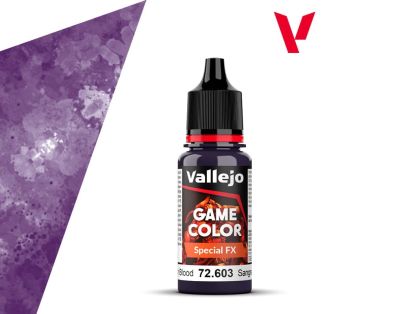
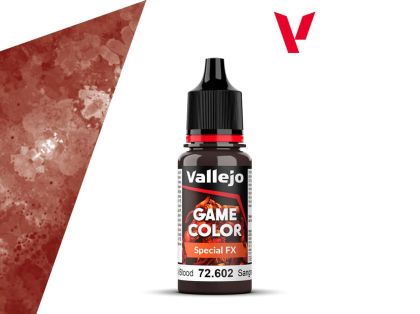
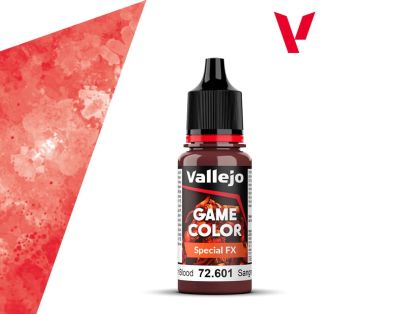
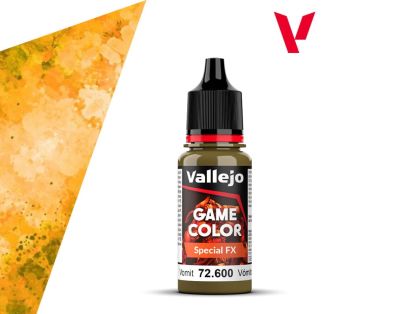
Game Color Special FX are effect paints that are not meant to deliver a shade but a finished phenomenon. Instead of a green you get moss and lichen; instead of a brown, galvanic corrosion or verdigris; and alongside them thick and fresh blood, acid and bile. The material is deliberately heavier bodied and often satin.
That texture is the whole product, and it is also the thing to plan around: once an effect has dried, it cannot be painted over smoothly. How much to apply so it reads as real, and which stage of the build it belongs in, is covered below.
Ordinary paint covers a surface. An effect paint carries texture and sheen as well, so what remains after drying is visible matter: a dried puddle, a crust of corrosion, growth on stone. One step therefore replaces a sequence that would otherwise need paste, pigment and varnish separately.
The selection covers two large groups. The first is ageing and attack on material — corrosion, verdigris and the galvanic corrosion that forms where two metals meet. The second is fluids and organics: blood in two consistencies, acid, bile, and moss with lichen for a base. Both share one property worth knowing in advance: the uneven surface shows through any coat laid over it.
Effects belong at the end of the build, on a sealed and dry coat. If varnish is still to follow, try the combination on an offcut of sprue first — a matt coat suppresses glossy effects and blood loses its wet look.
Apply drop by drop into logical places: corrosion to welds, rivets and lower edges, blood to weapons and their edges, moss to the shaded side of a stone. An effect spread over a whole surface reads as false immediately. Gravity is the best guide — fluid runs down and collects where it meets an edge.
Heavier material meters better from a stiff or older brush, or a toothpick, than from a fine point. Suitable pieces are among special brushes, which this use will not ruin.
To treat ageing on a larger scale and layer it technique by technique, the deeper selection is in weathering.